Virtual reality (VR) is emerging as a powerful tool to combat loneliness and foster genuine social connections among older adults in retirement communities, transforming a typically isolating technology into a catalyst for shared experiences.
From Virtual Adventures to Real Conversations
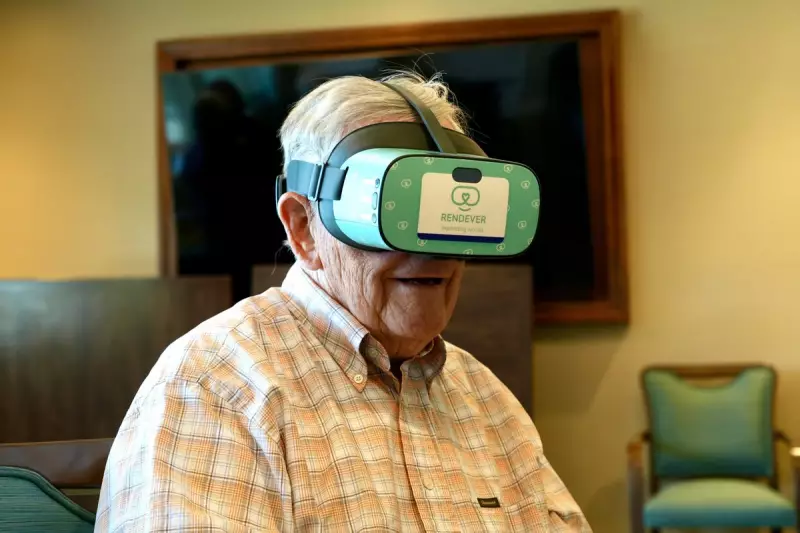
At communities like The Terraces in Los Gatos, California, residents in their 80s and 90s are regularly swapping traditional activities for VR headsets. Within minutes, they can be transported to European landmarks, swim with dolphins in ocean depths, or experience the thrill of hang-gliding, all from the comfort of their chairs.
This curated programming is provided by Rendever, a company that has turned VR into a tool for better cognition and social connection in 800 retirement communities across the United States and Canada. During a session earlier this year, residents were seen paddling their arms as they virtually swam alongside a pod of dolphins. "We got to go underwater and didn't even have to hold our breath!" exclaimed 81-year-old Ginny Baird.

Reviving Memories and Building Bridges
The technology's impact goes beyond mere entertainment. It can virtually return users to their childhood neighbourhoods, offering poignant emotional journeys. For 84-year-old Sue Livingstone, a trip to her old neighbourhood in Queens, New York, was transformative. "It isn't just about being able to see it again, it's about all the memories that it brings back," she said.
Adrian Marshall, The Terraces' community life director, observes that VR experiences become powerful social catalysts. "It turns into a conversation starter for them. It really does connect people," Marshall noted. "It helps create a human bridge that makes them realise they share certain similarities and interests. It turns the artificial world into reality." The activity has even proven popular enough to draw residents away from other community favourites like the dominoes-based game Mexican Train.
Beyond Fun: Cognitive Benefits and Wider Adoption
The potential applications are attracting serious investment and research. Rendever recently received a grant of nearly $4.5 million from the National Institutes of Health to study how VR can reduce social isolation for seniors living at home and their caregivers. Studies suggest limited, purposeful VR use can help maintain cognitive function, sharpen memories, and strengthen social bonds.
Experts caution that VR should complement, not replace, other activities. "There is always a risk of too much screen time," said Katherine 'Kate' Dupuis, a neuropsychologist and professor at Canada's Sheridan College. "But if you use it cautiously, with meaning and purpose, it can be very helpful. It can be an opportunity for the elderly to engage with someone and share a sense of wonder."
Researchers also note that VR headsets can be more intuitive for some older adults than smartphones. "The stereotypes that older adults aren’t willing to try new technology needs to change," said Pallabi Bhowmick of the University of Illinois Urbana-Champaign. She highlights an intergenerational benefit: "younger people who find out they use VR and say, ‘Grandpa is cool!’"
The market is growing, with companies like Dallas-based Mynd Immersive also offering VR services tailored for senior living. Both companies' platforms are being explored as tools to potentially slow the deleterious effects of dementia. At the Forum, another Silicon Valley retirement village, resident Bob Rogallo, who has dementia, smiled and nodded during a virtual hike through Glacier National Park, celebrating his 83rd birthday.
Rendever's origins lie in co-founder Kyle Rand's desire to help his own grandmother. His insight underscores the technology's core strength: "A group of elderly residents who don't really know each other that well can come together, spend 30 minutes in a VR experience together and then find themselves sitting down to have lunch together while continuing a conversation." This simple yet profound outcome is redefining connection for a generation.