
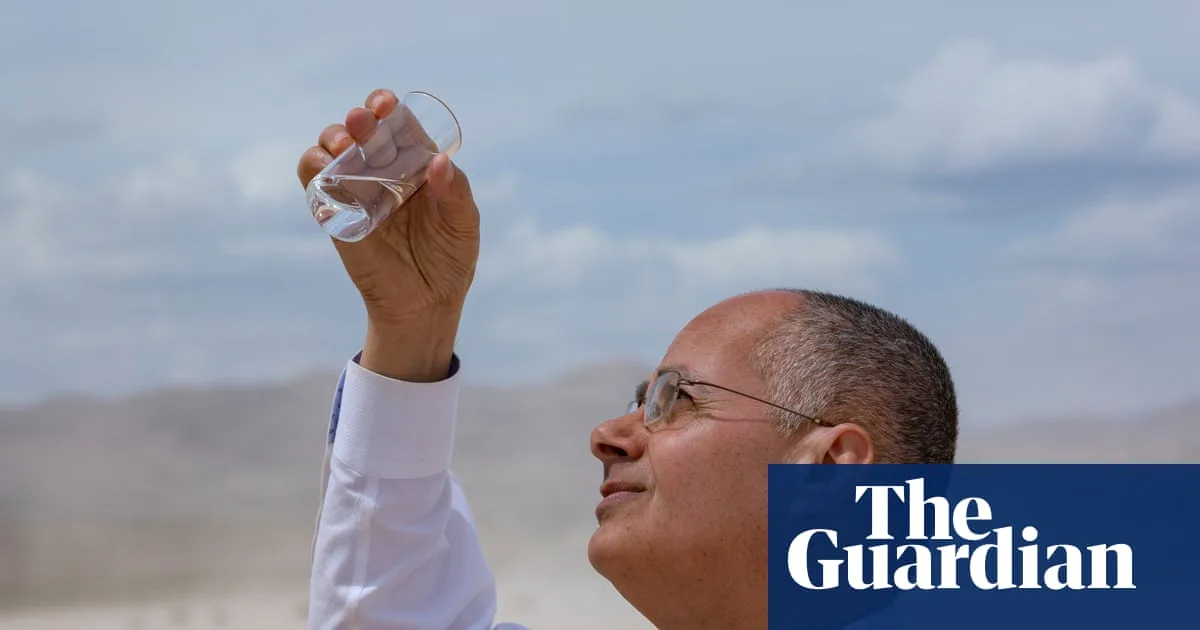
Omar Yaghi, a Nobel laureate in chemistry, has invented a machine that harvests water from dry air using ambient thermal energy, capable of producing up to 1,000 litres of clean water daily. The device, developed by his company Atoco, is housed in a 20-foot shipping container-sized unit and operates entirely off-grid, making it ideal for regions where central water supplies are disrupted by hurricanes or drought.
Yaghi, who won the 2025 Nobel prize in chemistry, said the invention could transform water access in vulnerable areas such as Caribbean islands, which face frequent storms and droughts. He highlighted the devastation caused by hurricanes like Beryl and Melissa, which left thousands without water, and stressed the need for resilient water supply systems in small island nations.
The technology uses reticular chemistry to create molecularly engineered materials that extract moisture from the air, even in arid conditions. Unlike desalination, which can harm ecosystems by releasing concentrated brine, Yaghi’s method is climate-friendly and sustainable. A recent UN report noted that nearly three-quarters of the world’s population lives in water-insecure countries, underscoring the urgency of such innovations.
In Grenada, which was hit by Hurricane Beryl in 2024, the device offers hope for the islands of Carriacou and Petite Martinique. Local official Davon Baker said the technology’s off-grid capability is crucial for these islands, which currently rely on water imports from Grenada and face worsening dry seasons. Baker added that the system addresses the high cost, carbon intensity, and contamination risks of water importation, as well as the vulnerability of centralised infrastructure to storms.
Yaghi, who grew up in a refugee community in Jordan without running water or electricity, said his personal experiences inspired the invention. Recalling the irregular water deliveries to his desert home, he urged leaders to embrace the science and take bold climate action. “The science is here. What we need now is courage,” he said.




