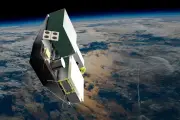
UK launches Titania military observation satellite into orbit
Britain has launched the Titania military observation satellite to help armed forces monitor activity on Earth, the Ministry of Defence announced.

Britain has launched the Titania military observation satellite to help armed forces monitor activity on Earth, the Ministry of Defence announced.
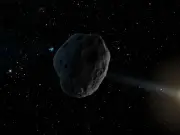
Earth has gained a second tiny moon after space rock 2026 QQ8 was captured by gravity; it will orbit until December before escaping.
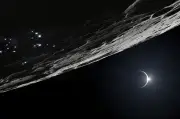
Nasa successfully tested new technology that will help spacecraft autonomously find safe landing sites on the Moon and other planets, completing simulated lunar descent manoeuvres in California.
A veteran pilot says he has seen unidentified flying objects on six or seven occasions over four years, including flashing lights over Brussels, Belgium.

After a 42-year search, Cern researchers witnessed a one-in-10 billion beauty meson decay into two muons, opening the door to the zeptoverse.
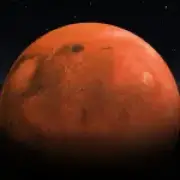
Evidence of volcanic activity on Mars, including hydrogen chloride gas near Alba Mons, suggests hydrothermal systems that could support life, according to a new study.
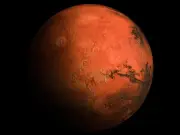
Gas seeping above volcanic rifts on Mars, detected by an ESA orbiter, suggests the planet is not geologically dead but dormant, hinting at possible life.
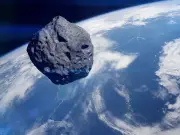
A pink meteorite found in the Sahara, named Teghaza 001, is over 4.1 billion years old, making it one of the oldest Martian rocks on Earth.
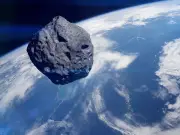
A NASA-funded study reveals the 800-gram Teghaza 001 meteorite, found in Mali's Sahara, is 4.1 billion years old, among the oldest Martian rocks on Earth.
NASA's 1,500kg Neil Gehrels Swift Observatory will re-enter Earth's atmosphere within hours after 22 years in orbit, with a 1-in-2,500 injury risk.
A nearly 1,500kg Nasa spacecraft has a one-in-2,500 chance of injuring someone as it re-enters Earth's atmosphere within hours after 22 years in space.
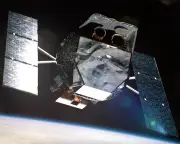
NASA's Neil Gehrels Swift Observatory, launched in 2004, is expected to re-enter Earth's atmosphere on Wednesday, burning up after a failed rescue mission.

UK-led scientists have reached the 'Zeptoverse', a realm 100 billion times smaller than an atom, using the LHCb detector at CERN to probe fundamental particles and mysteries like dark matter.
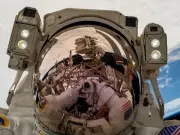
NASA released photos from the 100th US spacewalk at the ISS, where astronauts installed a new solar array to boost power.
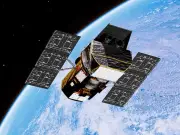
NASA's Neil Gehrels Swift Observatory, a 1,470kg telescope, is expected to crash into Earth after a failed rescue attempt, with fragments possibly landing in Asia, Africa or Australia.
Nearly 2,000 UFOs logged in UK over five years; interactive map reveals triangle sightings mirroring US reports near military sites.
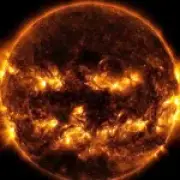
NASA Universe shares Halloween-themed space images, including ghostly eyes, a screaming skull, and a pumpkin-like Sun, ahead of October 31.
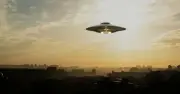
A new map reveals 164 black triangle UFO sightings across the UK, with Manchester as the top hotspot at 245 reports between 2021 and 2026.

Former NASA astronaut Winston Scott says aliens are 'out there some place' and warns Earth could face combat in space amid US-Russia and US-China tensions.
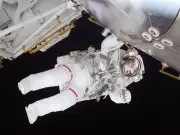
Astronauts Joshua Kutryk and Anil Menon will perform NASA's 100th US spacewalk to install a Roll-Out Solar Array on the ISS, adding power.
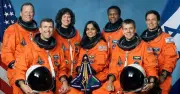
The Columbia space shuttle disintegrated on re-entry on February 1, 2003, killing all seven astronauts, who were unaware of the catastrophic damage until moments before their deaths.
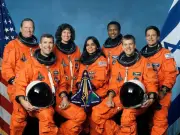
The Columbia shuttle crew were unaware they had minutes to live as they re-entered Earth's atmosphere, with NASA watching catastrophic data unfold before losing contact.
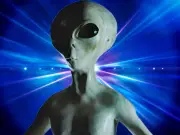
Declassified US files reveal a 2010 report on warp drives, part of a DIA program, analyzing faster-than-light travel to hunt for aliens.
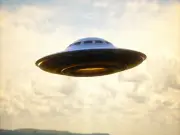
Declassified Pentagon files reveal a secret 1947 Roswell account describing an egg-shaped spaceship and dead child-sized alien bodies recovered by the military.

Ukraine's military reports a stable Starlink connection after restrictions were lifted, restoring speeds needed for frontline logistics and air defence operations.
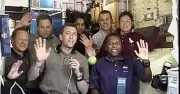
Seconds after the Columbia disaster, NASA locked doors and silenced communications. Learn the final moments and the chilling order that followed.
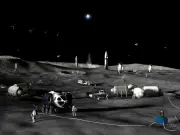
NASA chief Jared Isaacman says the agency is "giving a lot of thought" to lunar meteor strikes as it advances Moon base plans, following a 2024 impact that left a crater 728 feet wide.
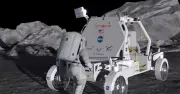
NASA chief Jared Isaacman says the agency is giving 'a lot of thought' to meteor strikes on the lunar surface as it develops plans for a Moon base by 2032.
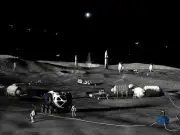
Nasa is 'giving a lot of thought' to meteor strikes on the lunar surface for its Moon base, after a 2024 impact left a 728-foot crater.
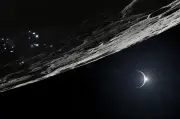
Nasa is giving a lot of thought to meteor strikes on the lunar surface as it develops plans for a permanent Moon base by 2032, after a building-sized comet or asteroid hit the Moon in 2024.