Smart T-Shirt Revolutionises Heart Condition Detection
Hundreds of thousands of individuals across the United Kingdom could soon benefit from a groundbreaking 'smart T-shirt' capable of detecting hidden heart conditions, according to a major announcement from scientists. This innovative garment, developed through a collaboration between the British Heart Foundation and Imperial College London, aims to simplify the diagnosis of rare, inherited cardiac issues that currently pose significant challenges for medical professionals.
Current Diagnostic Limitations
Presently, patients experiencing symptoms such as chest pain or dizziness are typically provided with portable devices to monitor their heart's electrical signals. These conventional tests involve precisely positioned sticky electrodes connected via leads to a waist-worn monitor, requiring careful removal and reattachment during activities like showering. This cumbersome process often limits monitoring periods to just one or two days, potentially missing irregular heart rhythms that occur infrequently.
The Smart T-Shirt Solution
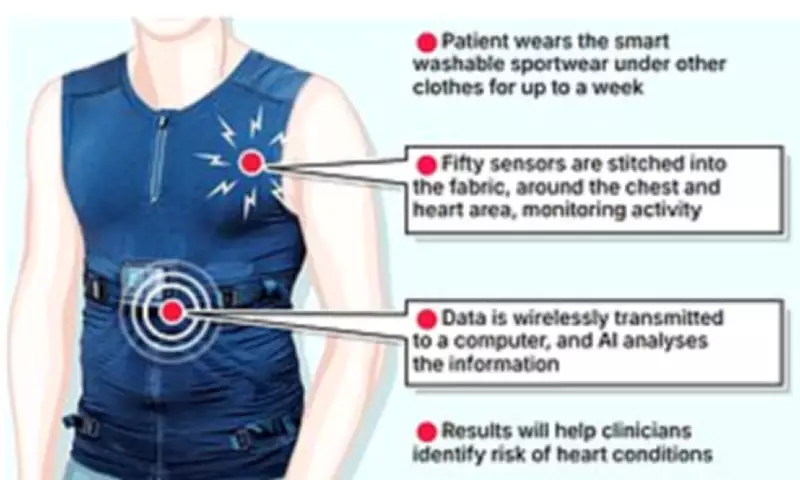
The newly developed smart T-shirt incorporates up to fifty sensors seamlessly stitched into the fabric, creating a far simpler and more comfortable monitoring solution. Designed to be worn continuously for up to a week, this extended monitoring period significantly increases the likelihood of detecting intermittent heart rhythm abnormalities compared to traditional portable ECGs.

The device operates by wirelessly transmitting collected data to a computer system, where a specially-designed artificial intelligence algorithm analyses the information and flags any concerning patterns to medical professionals. This AI-assisted approach represents a substantial advancement in cardiac diagnostics.
Targeting Inherited Heart Conditions
This technology could prove particularly beneficial for approximately 340,000 people in the UK living with inherited heart conditions that increase their risk of dangerous heart rhythms and sudden cardiac death. These conditions are estimated to claim the lives of twelve young people under thirty-five each week in Britain alone.
Professor Zachary Whinnett, Cardiology Professor at Imperial College London, emphasised the diagnostic challenges: 'Far too many people die from inherited heart conditions which could be treated if they were identified earlier. Irregular heart rhythms may not always occur during routine hospital ECGs or even 48-hour home monitoring.'
How the Technology Functions
The smart T-shirt is constructed from comfortable sportswear-style material that can be worn discreetly beneath regular clothing during daily activities including sleeping, working, and exercising. The fifty sensors embedded around the chest and heart area function similarly to an ECG, continuously monitoring the heart's electrical signals throughout wear.
Patients can wash the garment normally, and the sensors wirelessly transmit data for AI analysis. This combination of extended wearability and advanced analytics could transform how clinicians identify patients at risk of serious heart conditions.
Real-World Application and Testing
The development process has involved collaboration with individuals like Carly Benge, a thirty-eight-year-old teacher from Watford diagnosed with Brugada syndrome—a dangerous heart rhythm disorder the T-shirt aims to detect. Since such conditions often run in families, Ms. Benge's children, ten-year-old Jake and seven-year-old Imogen, also face potential risks that earlier detection could mitigate.
A prototype will soon undergo testing with two hundred patients and volunteers at Hammersmith Hospital's Peart-Rose Research Unit. Participants will wear the T-shirt continuously for up to three months to evaluate its effectiveness in detecting serious heart conditions.
Future Implications and Availability
Researchers anticipate the technology could become available for clinical use within approximately five years. While initial development focuses on adult applications, if proven effective, the smart T-shirt could provide a more comfortable monitoring solution for children in the future. The technology also holds promise for identifying other heart rhythm conditions like atrial fibrillation more easily.

Professor Whinnett expressed optimism about the project's potential: 'We hope our AI-assisted T-shirt will provide a practical and comfortable solution, allowing longer-term scanning that could improve diagnosis. By harnessing AI power, we hope to transform doctors' abilities to spot these conditions and improve lives.'
This innovation represents a significant step forward in cardiac care, potentially saving thousands of lives through earlier detection and intervention for inherited heart conditions that currently claim numerous young lives annually across the United Kingdom.