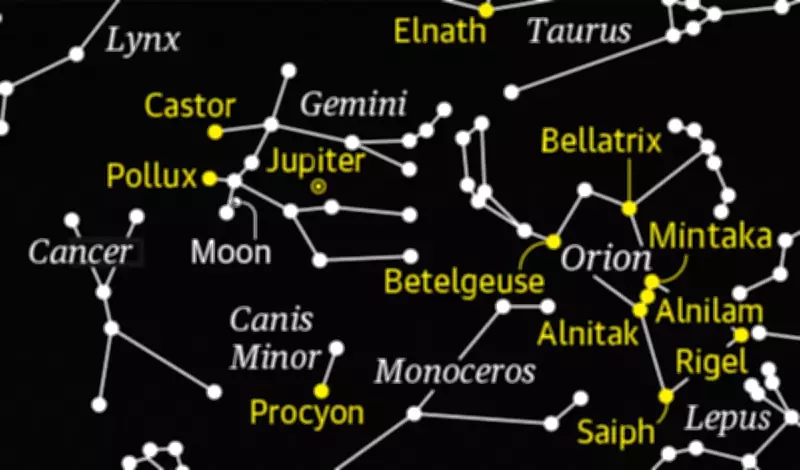
Jupiter's Luminous Presence in Gemini Captivates Skywatchers
This week, the night sky presents a spectacular celestial display as Jupiter, the largest planet in our solar system, shines with a steady and brilliant glow within the constellation of Gemini. Astronomers and amateur stargazers alike are encouraged to look upwards to witness this remarkable astronomical event, which offers a clear and unobstructed view of the gas giant's radiant presence.
Optimal Viewing Conditions for Jupiter's Display
The positioning of Jupiter in Gemini provides an excellent opportunity for observation, as the planet appears prominently against the backdrop of the twin stars Castor and Pollux. Its steady shine is due to its current orbital alignment, which minimizes atmospheric interference and allows for crisp visibility even with basic binoculars or small telescopes. This event highlights the dynamic nature of our solar system and the ever-changing tapestry of the night sky.
Why Jupiter's Steadiness Matters for Observers
Unlike some celestial bodies that may twinkle or vary in brightness, Jupiter's consistent luminosity in Gemini makes it an ideal target for both educational purposes and personal enjoyment. This steadiness is attributed to its immense size and reflective cloud tops, which efficiently scatter sunlight. Observers can note its distinct yellowish hue and potentially spot some of its largest moons, such as Io or Europa, adding depth to the viewing experience.

Tips for Enhancing Your Stargazing Experience
To make the most of this astronomical event, consider the following recommendations:
- Find a location with minimal light pollution, such as rural areas or designated dark sky parks.
- Use a star chart or mobile app to accurately locate Gemini and Jupiter in the night sky.
- Allow your eyes to adjust to the darkness for at least 20 minutes to improve visibility.
- If using optical aids, start with binoculars before moving to a telescope for detailed views.
This celestial occurrence serves as a reminder of the wonders of our universe and the importance of preserving dark skies for future generations. Whether you're a seasoned astronomer or a curious novice, take a moment this week to appreciate Jupiter's steady shine in Gemini, a testament to the beauty and order of the cosmos.