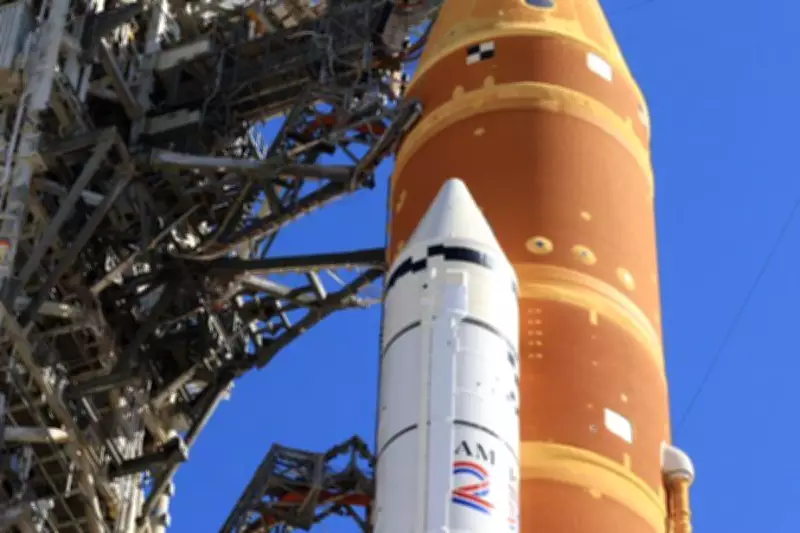
NASA's Artemis II Moon Rocket Heads Back to Hangar for Critical Repairs
NASA's giant moon rocket is being rolled back to the hangar this week for urgent repairs, further delaying the first crewed lunar mission in over half a century. The space agency announced on Sunday that the Artemis II rocket will make a slow, four-mile journey across Kennedy Space Center to the Vehicle Assembly Building, weather permitting, with the move targeted for Tuesday.
Helium System Malfunction Halts Launch Plans
This setback comes just days after NASA completed a repeat fueling test on Thursday to verify that dangerous hydrogen fuel leaks had been successfully resolved. Engineers had recently tamed those persistent hydrogen leaks and had settled on a March 6 launch date—already a month behind schedule—when a new problem emerged.
The latest issue involves a malfunction in the rocket's helium system. Helium is crucial for purging the engines and pressurizing the fuel tanks during launch preparations. The flow of helium to the rocket's upper stage was disrupted, creating another technical hurdle that must be addressed before astronauts can safely embark on their journey.

Return to Vehicle Assembly Building Required for Diagnosis
"Returning to the Vehicle Assembly Building at Kennedy is required to determine the cause of the issue and fix it," NASA stated in an official announcement. The space agency emphasized that this rollback preserves the possibility of an April launch attempt, though that timeline depends entirely on the progress of repairs.
NASA faces tight scheduling constraints for lunar missions, with only a handful of suitable launch days available each month. The complex orbital mechanics required to send a crew around the moon and back create narrow windows that cannot be missed without significant delays.
Artemis II Crew Remains on Standby
The four astronauts assigned to the Artemis II mission—three Americans and one Canadian—continue to wait in Houston as engineers work to resolve the technical issues. These crew members are poised to become the first humans to travel to the moon since NASA's Apollo program, which sent 24 astronauts to lunar orbit and the lunar surface between 1968 and 1972.
This mission represents a critical step in NASA's Artemis program, which aims to establish a sustainable human presence on the moon and eventually serve as a stepping stone for future Mars exploration. The current delays highlight the technical challenges inherent in returning humans to deep space after decades of focusing on low-Earth orbit missions.
NASA officials stress that safety remains the paramount concern, with thorough testing and repairs taking precedence over schedule pressures. The space agency will provide updates on the repair timeline as engineers assess the helium system malfunction in the controlled environment of the Vehicle Assembly Building.