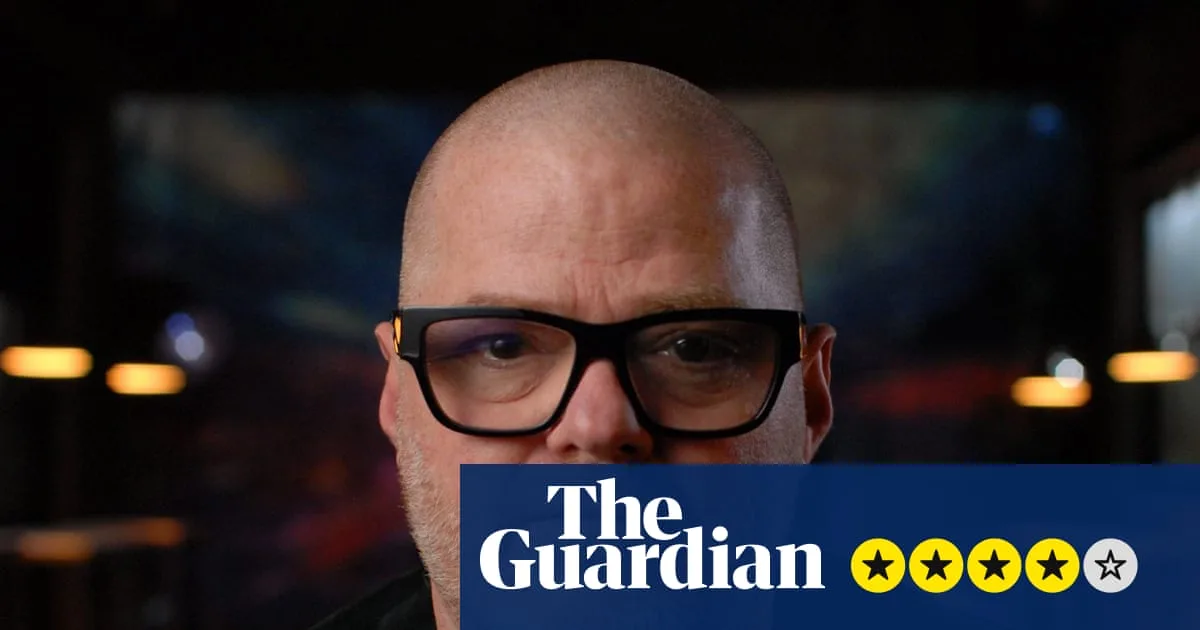
When Melanie Blumenthal was told to hide her husband Heston's bipolar diagnosis, she decided to do the exact opposite. Now, the couple are speaking out to challenge stigma and encourage others to seek help, revealing the life-saving power of conversation.
The Crisis That Led to a Diagnosis
French-born entrepreneur Melanie Blumenthal, 39, had been married to the celebrated chef and molecular gastronomy pioneer for only a few months when she faced every partner's worst nightmare. In November 2023, during a severe manic episode, she had to invoke the mental health act to have Heston, now 59, sectioned in France. He was admitted to a psychiatric ward and received a bipolar diagnosis.
"We were told, 'Don't talk about it. Don't say anything, hide it,'" Melanie recalls of the initial advice they received. With a determined smile, she adds: "Unfortunately for them, we are people who, if you tell us: 'Don't do that,' we do it."
Breaking the Silence to Save Lives
The couple have since become vocal advocates, with Melanie recently appointed as an ambassador for Bipolar UK. They cite alarming statistics as their motivation. According to the charity, 56% of people living with bipolar are undiagnosed, and on average, it takes over nine years to receive a correct diagnosis. Perhaps most devastatingly, more than one in five people with the condition will attempt to take their own life.
"These numbers are enormous, and I feel we have to do something about it," says Melanie. Heston, sitting beside her, emphasises the widespread impact: "You look at the number of people it affects; you've got more than one million diagnosed. How many more are undiagnosed? And then the loved ones that care for people with bipolar."
A Lifetime of Undiagnosed Symptoms
Heston built his culinary empire, including the three-Michelin-starred The Fat Duck in Bray, while living with undiagnosed bipolar. In retrospect, the signs were clear for decades. His sister Alexis also has the condition. Melanie felt initial anger: "Why has no one done anything before? Why has no one spotted anything?"
Looking back with psychiatrists, she says, "everything was there for decades – everything! He was ticking the boxes." Heston had previously seen a psychiatrist for ADHD, which may have been a misdiagnosis; the NHS states that one in six people with bipolar also have ADHD.
The Role of the 'Anchor' and Finding a Way Forward
Melanie describes the terrifying day before Heston's admission, after a week-long manic episode where he hadn't slept. "It's really deceptive," she explains. "They feel full of energy... to bring him to go and see a doctor: Mission impossible."
She now sees herself and other loved ones as "anchors". She attends Heston's monthly medical meetings and supports his routine and medication. "It's turned down the peaks," Heston says of his treatment. "[I] haven't gone into the suicidal troughs."
The couple are now supporting Bipolar UK's 'Maybe it's bipolar?' campaign, encouraging people to take an online test. "It's a first door you can push," says Melanie. "Try to do the test, and then after, whatever happens, Bipolar UK has the network in place."
Their message is ultimately one of hope and forgiveness. "It wasn't you," Melanie tells Heston. "Forgive, because it's the condition that was taking over the person." Heston adds that talking has brought "self-forgiveness". They urge anyone struggling to persist: "There is lots of hope... some moments are going to be tough, but keep on, it's for the best."




