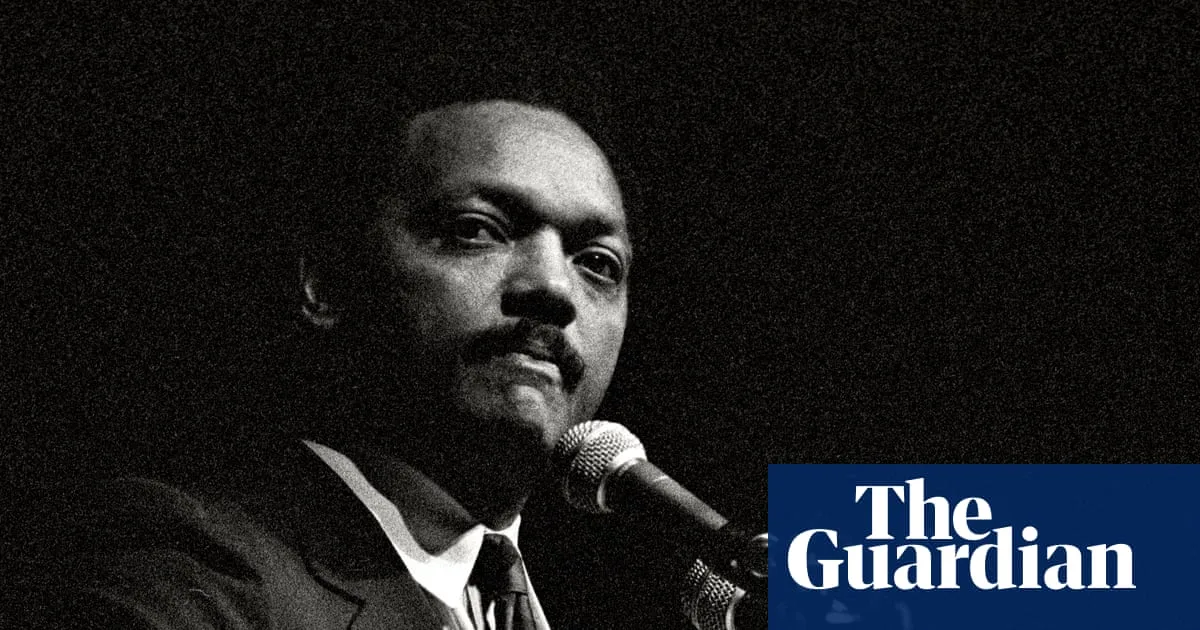
When Jesse Jackson died on Tuesday at the age of 84, tributes focused on his domestic civil rights work, but his global impact was equally profound. From opposing apartheid in South Africa to supporting Palestinian rights, Jackson left his mark across the world. He was a trenchant critic of US imperialism and a believer in the solidarity of oppressed people everywhere.
Jackson’s advocacy for Palestinian statehood was ahead of its time. At the 1988 Democratic National Convention, he called for the party platform to include Palestinian statehood, facing fierce pushback. James Zogby, deputy manager of Jackson’s campaign, recalled being told by Dukakis negotiators that even saying the “P-word” would destroy the Democratic party. Despite the failure at the convention, 10 Democratic state parties passed resolutions in favour of Palestinian self-determination, and over decades, more progressives came to share Jackson’s stance.
Jackson also played a vital role in mainstreaming the Palestinian cause among African American leaders. After Andrew Young was forced to resign as US ambassador to the UN in 1979 for meeting a PLO representative, Jackson led a delegation to the Middle East, meeting Yasser Arafat. He argued for direct negotiations with the PLO and drew parallels between the Palestinian cause and the African American struggle, saying, “We understand the cycle of terror, the cycle of pain.”
Beyond the Middle East, Jackson was an advocate of normalising relations with Cuba and a scourge of racial apartheid in South Africa. He also embarked on missions to Syria, Iraq and Serbia to free US prisoners. Martha Biondi, a professor at Northwestern University, described Jackson as one of the most prominent figures of the American left, a precursor to Bernie Sanders, and an early advocate of Palestinian rights.
Jackson’s internationalism was rooted in his belief in the solidarity of oppressed people. James Zogby noted that Jackson was as comfortable in the West Bank or Egypt as he was in Chicago, because he did not look down on Arab people. His legacy as a global hero endures, mourned from Havana to Johannesburg to Ramallah.