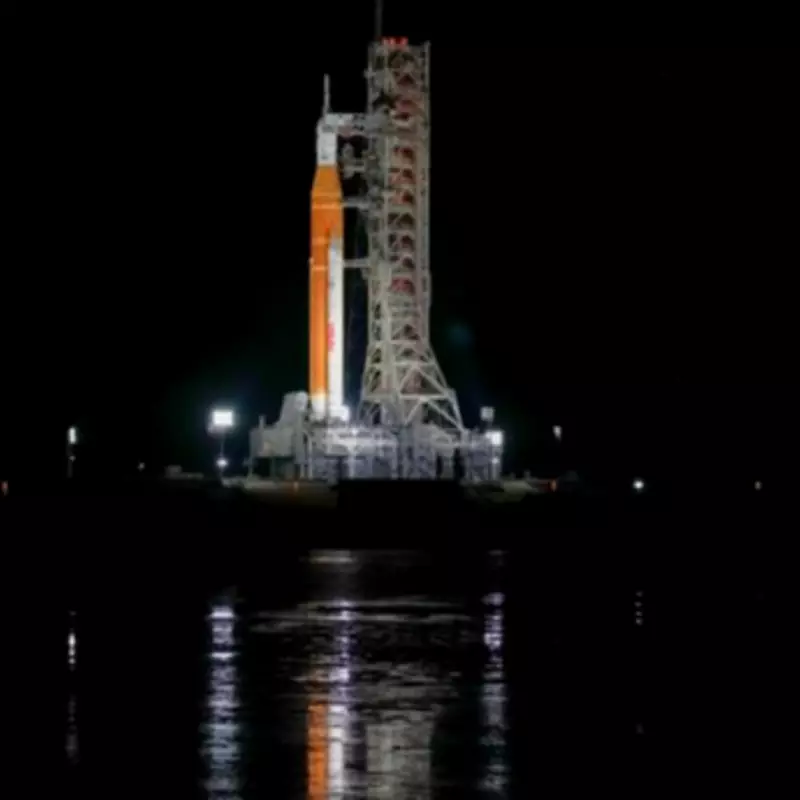
NASA has announced a significant setback for its highly anticipated Artemis 2 mission, stating it will almost certainly delay the first crewed lunar flight in over fifty years. The agency revealed that problems during pre-flight testing will almost assuredly force a postponement of the launch, originally targeted for March.
Technical Issue Forces Rocket Rollback
The decision follows an interruption in helium flow within the SLS interim cryogenic propulsion stage, a critical component that powers the spacecraft through space after atmospheric exit. NASA Administrator Jared Isaacman confirmed that teams are troubleshooting the issue and preparing to roll the massive Artemis 2 rocket back inside the Vehicle Assembly Building at Florida's Kennedy Space Center.
Testing Reveals Persistent Challenges
This development comes despite recent successful testing where launch teams pumped more than 700,000 gallons of supercold fuel into the rocket with only minimal hydrogen leaks within safety limits. The spacecraft had been undergoing final preparations atop the launchpad for its planned mission carrying four astronauts around the moon.

Administrator Isaacman addressed the disappointing situation on social media, drawing parallels to NASA's historic challenges during the 1960s Apollo era. "I understand people are disappointed by this development," he stated. "That disappointment is felt most by the team at NASA, who have been working tirelessly to prepare for this great endeavor."
Historical Perspective on Setbacks
Isaacman highlighted how even Neil Armstrong's space career faced early technical issues, with his Gemini 8 mission ending prematurely after less than eleven hours in space. "A little over three years later, he became the first man to walk on the Moon," the administrator noted, emphasizing that setbacks have historically preceded major achievements in space exploration.
Commitment to Long-Term Lunar Goals
Despite the current delay, NASA remains committed to its ambitious Artemis program objectives. "The President created Artemis as a program that will far surpass what America achieved during Apollo," Isaacman declared. "We will return in the years ahead, we will build a Moon base, and undertake what should be continuous missions to and from the lunar environment."
The agency plans to provide a more extensive briefing later this week outlining the path forward not just for Artemis 2, but for subsequent missions in the program. This setback represents another hurdle in NASA's effort to establish sustainable human presence on the moon, building upon but aiming to exceed the accomplishments of the Apollo era.