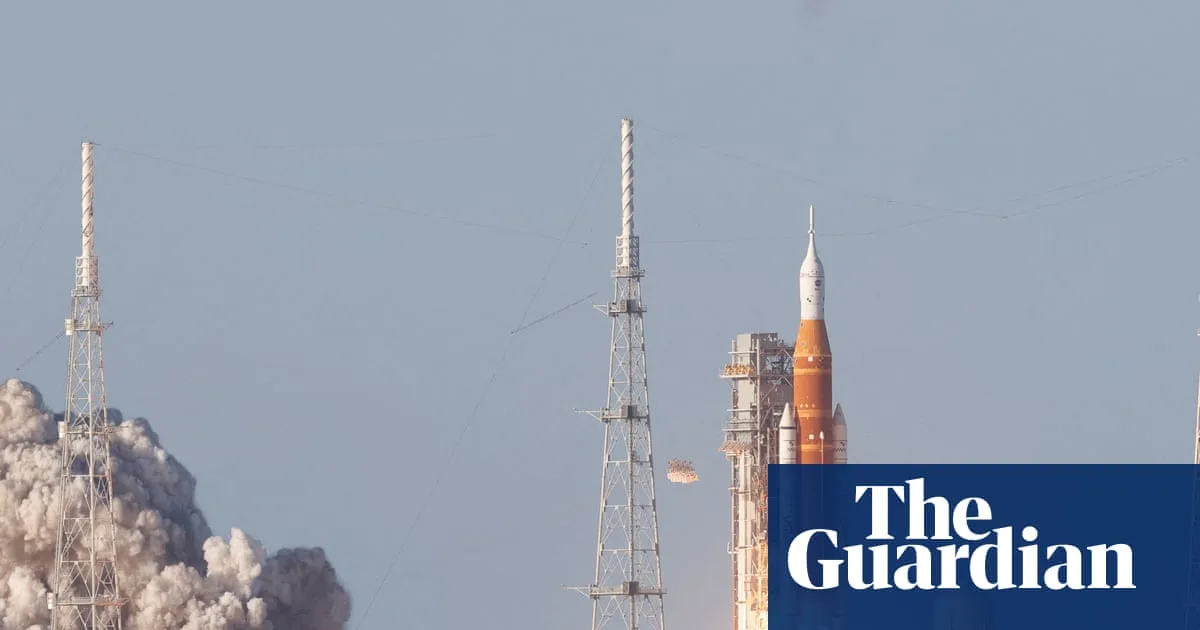
Nasa’s Artemis II rocket lifted off from Florida on Wednesday evening, carrying four astronauts toward the moon for the first time in almost 54 years. The launch drew crowds of spectators as the Orion capsule reached orbit, where it will remain until Thursday’s translunar injection burn sends it on a 240,000-mile journey to the moon.
Flight controllers confirmed that all four solar arrays deployed successfully, providing continuous power. The crew began assessing spacecraft performance after the 17,500mph ascent. This mission marks the first time humans have left low Earth orbit since Apollo 17 in December 1972.
The 10-day test flight includes several milestones. Christina Koch and Victor Glover will become the first woman and first person of colour to fly into cislunar space, while Canadian astronaut Jeremy Hansen becomes the first non-American to do so. The crew may reach over 4,600 miles beyond the far side of the moon, breaking the distance record set by Apollo 13.

Nasa has downplayed diversity recognition following an executive order eliminating DEI practices. Glover and Koch emphasised the mission’s broader significance. “If we’re not going for all and by all, we’re not truly answering all of humanity’s call to explore,” Koch said.
The mission aims to photograph the moon’s south pole for future landing sites and a proposed $20bn lunar base by the decade’s end. Astronauts will test life-support systems and monitor health effects of radiation and microgravity in the cramped Orion capsule before splashdown in the Pacific after 685,000 miles.