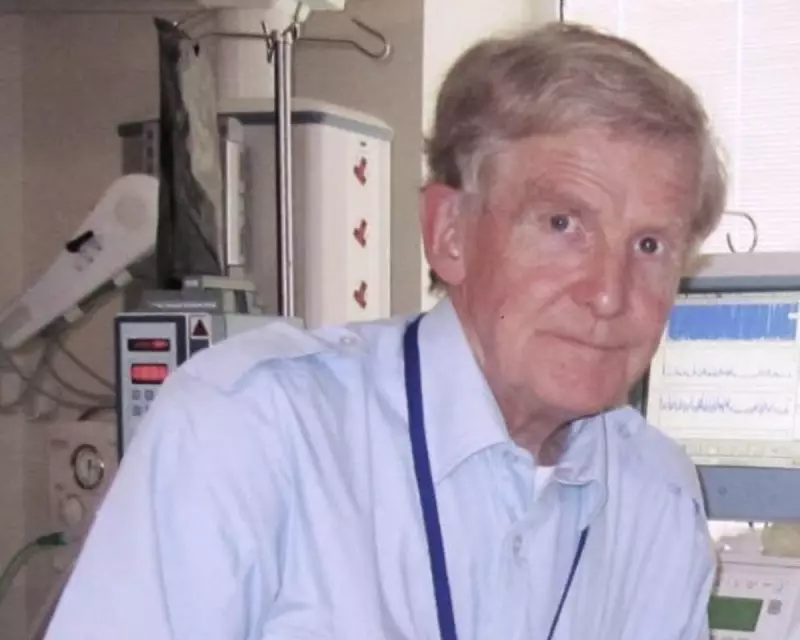
The medical world is mourning the loss of Professor Andy Whitelaw, a visionary neonatologist whose groundbreaking techniques transformed the care of premature and oxygen-deprived newborns. He has died at the age of 79.
A Lifelong Mission to Protect the Newborn Brain
Andy Whitelaw dedicated his career to unlocking the mysteries of the newborn brain, which he once described as a "black box". Beginning his work in the 1970s, he harnessed emerging scanning technologies to diagnose and treat conditions in living babies that were previously only identifiable after death. This shift marked the dawn of a new era in neonatal intensive care.
His illustrious career saw him serve as a consultant at London's Hammersmith Hospital from 1981 to 1989. He then moved to Norway, becoming a professor of paediatrics at Aker University Hospital in Oslo after passing a language exam. In 1998, he returned to the UK to take up the post of Professor of Neonatal Medicine at Bristol University, a role he held until his retirement in 2011.

Groundbreaking Innovations in Treatment
Professor Whitelaw tackled two major causes of brain injury in infants: brain bleeds and oxygen deprivation. For babies suffering from intraventricular haemorrhage, where fluid builds up due to blocked drainage channels, he pioneered the Drift trial (Drainage, Irrigation and Fibrinolytic Therapy) in 2003.
This delicate procedure involved flushing clot-busting fluid through catheters in the brain to remove dangerous blockages. Years of teaching the technique globally were vindicated when the Drift10 follow-up study showed treated children had significantly improved IQ scores a decade later.
His second major innovation addressed oxygen deprivation at birth. Alongside his second wife, Professor Marianne Thoresen, he hypothesised that cooling could prevent damage. This led to the CoolCap trial in 1999 and the larger Toby (Total Body Hypothermia) trial in 2002.
For 30 months, Whitelaw was on constant call to personally explain the procedure to anxious parents. His dedication paid off; "therapeutic cooling" is now a global standard for protecting newborns from brain swelling and long-term injury.
Championing Compassionate Care and Legacy
Whitelaw's innovations were not solely technological. In the 1980s, after witnessing its success in Colombia, he became a leading advocate for skin-to-skin "kangaroo care" for premature infants. His early trials at Hammersmith Hospital helped establish a practice now widely endorsed by the NHS for its profound benefits for both baby and parent.
Born in Derby on 31 August 1946, Whitelaw studied medicine at King's College, Cambridge. A car crash in 1969 left him with a permanent eye injury, which contributed to migraines throughout his clinical career. Despite this, his passion was undimmed.
He was inspired early on by seeing technology save tiny lives and gained crucial experience at Great Ormond Street and Toronto's Hospital for Sick Children. He served as President of the Neonatal Society from 2006 to 2009.
In retirement, he split his time between Norway and the UK, enjoying cross-country skiing, playing guitar and the bagpipes in a Bristol marching band. Professor Andrew George Lindsay Whitelaw died on 9 November 2025. He is survived by his wife Marianne, four children, two stepchildren, and fourteen grandchildren and step-grandchildren.