The meteoric rise of Reform UK has reshaped British politics, positioning the hard-right party as the dominant force on the right. If current polling is to be believed, Nigel Farage could be walking into 10 Downing Street after the next general election. But beyond the sweeping manifesto promises and headline-grabbing rhetoric, what would a Reform-led government actually look like in practice? The answer may lie in its turbulent first six months running local councils.
From Triumph to Turmoil in Local Government
Reform's performance in the May local elections was a political earthquake. The party, which rebranded from the Brexit Party in 2021, won 677 council seats, securing control of 10 English councils. However, this triumph rapidly gave way to reports of chaos, infighting, and scandal.
In Cornwall, where Reform emerged with the largest bloc of 28 seats, their local operation unravelled within six months. A wave of resignations, suspensions, and internal disputes meant the party failed to form an administration, allowing the Liberal Democrats and independents to create a governing coalition instead.
The situation in Kent, which Farage billed as Reform's "flagship council", has been similarly turbulent. The party has already lost nine of the 57 councillors elected in May. The instability was highlighted by a leaked recording of a fiery internal meeting where the Reform council leader told dissenting colleagues they had to "fucking suck it up" if they disagreed with her decisions.
Warwickshire: A Case Study in Governing Reality
To understand the on-the-ground reality, attention turns to Warwickshire County Council, where Reform is now the largest party under the leadership of 19-year-old George Finch. Finch took charge after the previous leader resigned just five weeks after the May elections.
Sam Jones, a Green Party councillor elected for Warwick and Leamington Spa last May, offers a critical perspective from the opposition benches. The Greens hold seven seats compared to Reform's 23, leaving the party short of the 29 needed for a governing majority.
"They've run into resistance in the form of the truth," Jones told The Guardian. "They promised their voters that there were all sorts of inefficiencies that they would be able to find and resolve, but they've run into the cruel reality that the council is actually underfunded. They're trying desperately to figure out how this actually works."
Broken Promises and Symbolic Battles
Jones notes that one of Reform's first moves in Warwickshire was to restore political adviser roles at a cost of £150,000 a year – a surprising decision for a party campaigning on eliminating bureaucratic waste.
Where cuts were proposed, backlash followed swiftly. Council leader George Finch wrote to Education Secretary Bridget Phillipson seeking permission to revise rules governing eligibility for free school transport. The move triggered anger over plans that could see children as young as eight walking up to five miles to school.
Phillipson accused Reform of trying to send "children back to the Victorian era", while Finch later denied planning to increase the statutory distance to five miles. Jones took to TikTok to raise the alarm, with his video amassing 340,000 views.
Subsequently, Reform has appeared less bullish about cuts. Finch has condemned the constant underfunding of local councils, while the party's deputy leader has admitted they cannot deliver the £90bn in tax cuts promised in their national manifesto.
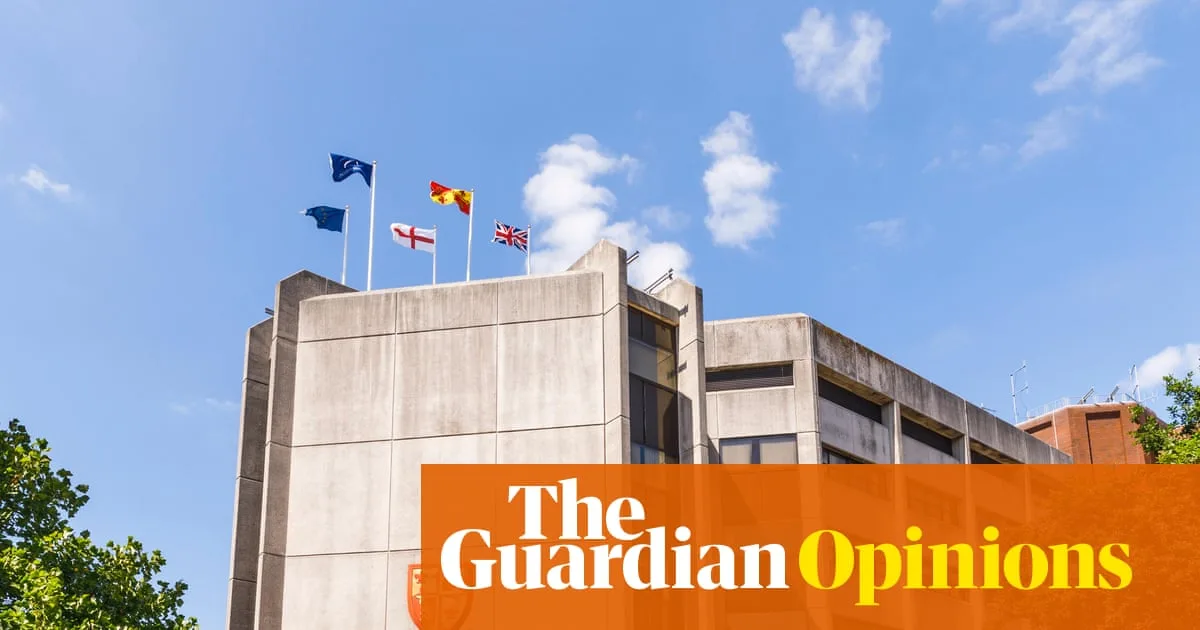
Substantive policy has often been overshadowed by symbolic battles. A row dubbed "flag gate" erupted after the council's chief executive blocked Reform's attempts to remove a Pride flag from Shire Hall. Reform eventually prevailed, stripping the chief executive of the power to decide which flags could fly, arguing that only the Union Flag, St George's Cross, or Warwickshire county flag should be displayed.
"Symbolically, that's an important thing," Jones says. "But does that matter? Is it substantial change? No, it's symbolic."
A Glimpse of a Reform Future?
The past six months in local government reveal the difficulties Reform faces with what they describe as bureaucracy, but Jones insists is simply the daily reality of governance.
Jones draws a distinction between the party's national operation and its local representatives. "The top of Reform is a very well-oiled machine," he observes. "It's very efficient, very direct, very intentional in what it does. When you get to the lower levels, these are councillors who, at the end of the day, are Farage fans. They're not in the inner sanctum of Reform."
He warns that the left cannot simply wait for Reform to implode. "Right now, we're in a battle of ideas. And while we have time, we can fight forward with different ideas: better ideas, ideas that more closely align with the reality of the world around us."
As Reform UK positions itself for potential national power, its turbulent apprenticeship in local government serves as a revealing preview of the challenges that await – where sweeping promises meet the complex reality of actually running things.