President Donald Trump offered glowing praise for Usha Vance, the pregnant wife of Vice President JD Vance, as she attended the high-profile State of the Union address in Washington, D.C., on Tuesday night. The 40-year-old Second Lady, who recently announced her fourth pregnancy, made a stylish appearance at the event, drawing significant attention from both the President and Republican attendees.
A Prominent Presence at the Political Gathering
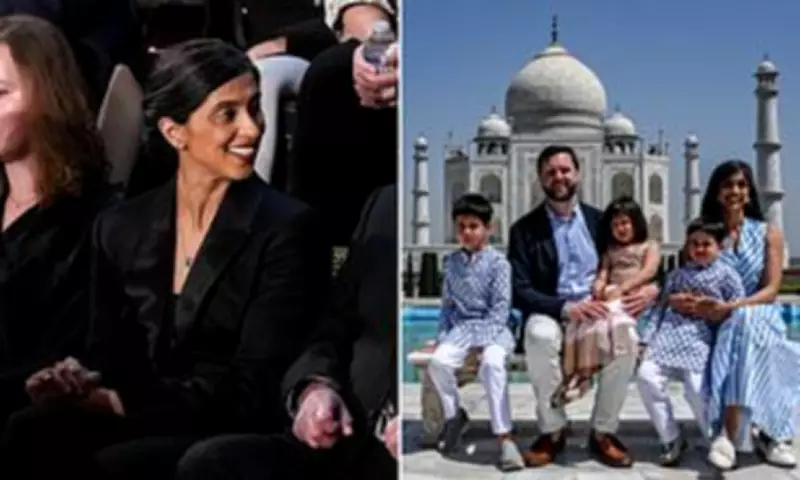
Usha Vance elegantly draped her visible baby bump in a sophisticated black tailored jacket for the occasion. She complemented her ensemble with a sleek low bun hairstyle, sweeping her black locks back and tucking her fringe away from her face. The mother of three appeared in excellent spirits as she listened to the presidential address from the audience, accessorizing subtly with stud earrings and a necklace.
Family Dynamics on Display
For his part, Vice President JD Vance, who sat directly behind President Trump during the address, chose a classic navy suit paired with a white shirt and baby blue tie. The couple's coordinated presence highlighted their status as a prominent political family. Usha, along with former First Lady Melania Trump, received immediate acknowledgment from President Trump at the beginning of the event, followed by standing ovations from Republican supporters throughout the chamber.

The overwhelmingly positive reception visibly left Usha Vance beaming with pride and appreciation. This public moment came just months after the couple announced via social media in January that they are expecting their fourth child—a baby boy—this summer. Their official statement expressed excitement about the pregnancy and gratitude toward military medical staff who provide care for their family.
Expanding the Vance Family
The Vice President and Second Lady already parent three children: eight-year-old son Ewan, five-year-old son Vivek, and four-year-old daughter Mirabel. Their pregnancy announcement contributed to what some Trump supporters have dubbed a "MAGA baby boom," following similar announcements from other figures in Trump's political circle, including Press Secretary Karoline Leavitt and Katie Miller, wife of Homeland Security Advisor Stephen Miller.
Reflections on Family Planning
In a recent extensive interview with Meghan McCain, Usha Vance opened up about her family planning journey and previous pregnancy experiences. She revealed that she and JD, both Yale Law School graduates, always intended to have children but remained flexible about the final number. Originally considering two children, Usha found she enjoyed parenting so much that she became "the driver" for having a third child, which surprised both partners.
Regarding the possibility of a fourth child, Usha told McCain "Never say never," noting that while she felt content with three children, her husband occasionally expressed interest in expanding their family further. This candid conversation highlighted the couple's thoughtful approach to family decisions amid their demanding public roles.
Navigating Pregnancy Challenges
Usha Vance also spoke frankly about her medical experiences during pregnancy, particularly her struggles with anemia. She described how this condition caused significant exhaustion, especially during her third pregnancy when she had just completed a demanding trial as an accomplished lawyer. Despite these challenges, she noted that overcoming anemia provided valuable perspective, making subsequent periods feel "like high on life" by comparison.
She reflected that these difficulties served as a meaningful "test run" for the demands of parenting, preparing her for the sleepless nights and constant responsibilities that come with raising young children. Her openness about these personal health matters has resonated with many expectant mothers facing similar challenges.
The State of the Union appearance marked a significant public moment for Usha Vance as she balances her role as Second Lady with her impending motherhood. The visible support from President Trump and Republican allies underscores the political significance of family narratives within contemporary American politics, while Usha's personal reflections reveal the human dimensions behind public personas.