Record Winter Rainfall Hits Three English Counties Amid Climate Context
Provisional figures from the Met Office have confirmed that this winter was the wettest on record for three English counties: Cornwall, Leicestershire, and the West Midlands. Southern England as a whole experienced its fourth wettest winter since comparable records began in 1836, highlighting a season of exceptional precipitation across many regions.
Regional Variations and Storm Impacts
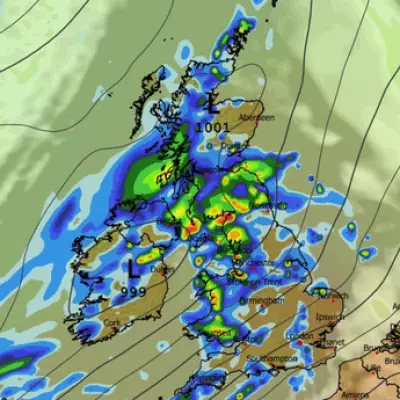
Dorset and Warwickshire recorded their second wettest winter on record, while a string of low-pressure weather systems moved across the UK from the Atlantic over the past three months. This brought repeated outbreaks of wet and windy conditions, significantly disrupting daily life. Three named storms in January – Goretti, Ingrid, and Chandra – delivered intense downpours to numerous areas, leading to widespread flooding and travel chaos. The rain persisted through much of February, although drier and sunnier conditions finally arrived towards the end of the month.
At a national level, no records were broken, with the UK receiving 390.1mm of rain during winter 2025/26. This represents a 13% increase above the long-term seasonal average but remains well below the all-time high of 539.9mm set in 2014. However, regional disparities were stark. England received 42% more rain than usual, while Scotland finished the winter 14% below its seasonal average. Within England, a geographical divide was evident: rainfall in the north was 17% above average, but in the south, it soared to 58% above average.

Climate Change Provides Critical Context
The Met Office emphasised that while natural variability and atmospheric patterns heavily influenced this winter's weather, climate change offers important context. A warmer atmosphere can hold more moisture – approximately 7% more for every degree Celsius of warming. This means that when rain occurs, downpours can be heavier and more intense. This characteristic is already being observed in the UK and globally, with rainfall totals on the wettest days increasing over recent decades.
"The wet conditions were particularly pronounced across southern and central England, where saturated ground from early season rainfall left areas more sensitive to impacts from further wet weather," the Met Office stated. Northern Ireland received 27% more rain than the long-term average, while Wales had 20% more rain.
Additional Counties Affected and Temperature Anomalies
Devon, Hampshire, Nottinghamshire, and Northamptonshire were among several counties that experienced one of their five wettest winters on record. Berkshire, Kent, Oxfordshire, and Surrey saw one of their top 10 wettest winters. Despite the excessive rainfall, some areas also recorded notably mild temperatures. Southern England experienced its eighth warmest winter since records began in 1884, with a mean average temperature of 6.16C across December, January, and February.
Five of the top eight warmest winters in southern England have occurred this century, with 2016 ranking first at 6.99C and 2024 second at 6.69C. Last month was the fourth warmest February on record for England and the ninth warmest for the UK. However, the mild temperatures did not translate to sunny skies. February was the gloomiest on record for Wales and the fourth gloomiest for the entire UK, underscoring a winter dominated by damp and overcast conditions.