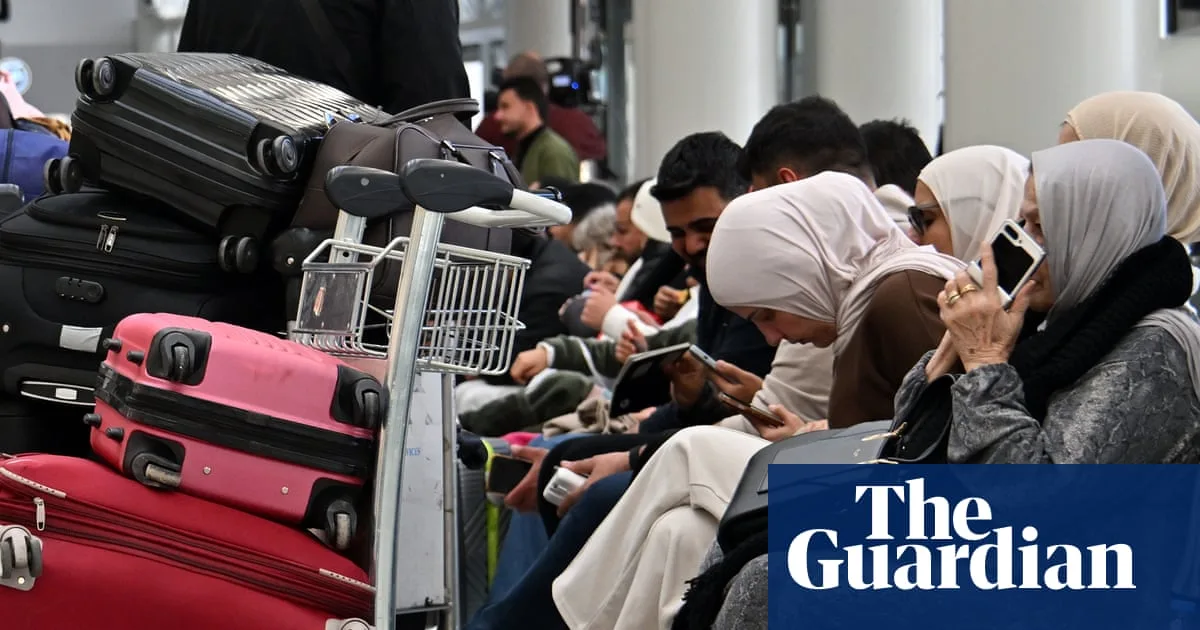
The UK government is planning one of its largest ever evacuations as airspace closures across the Middle East leave hundreds of thousands of travellers stranded or diverted. More than 76,000 British citizens have registered their presence in affected areas, with the number expected to rise.
Key transit hubs in Dubai, Abu Dhabi and Doha have halted operations after countries including Israel, Iran, Iraq, Kuwait, Qatar, Syria and Bahrain shut their airspace. The United Arab Emirates announced a temporary partial closure, leading to the cancellation of thousands of flights by major carriers such as British Airways, Virgin Atlantic, Emirates, Qatar Airways and Etihad.
Dubai International Airport, the world's busiest for international traffic, sustained damage from Iranian retaliatory strikes, with four people injured. Abu Dhabi's Zayed International Airport reported one death and seven injuries in a separate incident. Over 3,400 flights were cancelled across seven main airports in the region on Sunday alone.
The majority of the 76,000 Britons are believed to be in the UAE, mostly holidaymakers and business travellers. The Foreign Office advises against all travel to Iran, Israel and Palestine, and against all but essential travel to the UAE, Qatar, Kuwait and Bahrain. Those in Saudi Arabia are advised to stay at home, while precautions are urged for Jordan, Oman, Syria, Lebanon, Yemen and Iraq.
Aviation analysts warn of continued disruption. Henry Harteveldt of Atmosphere Research Group said travellers should prepare for delays or cancellations for the next few days. John Strickland, a UK-based analyst, highlighted the logistical challenge: 'It is not only customers, it is the crews and aircraft all over the place.' Iranian airspace is closed until at least Tuesday morning UK time.