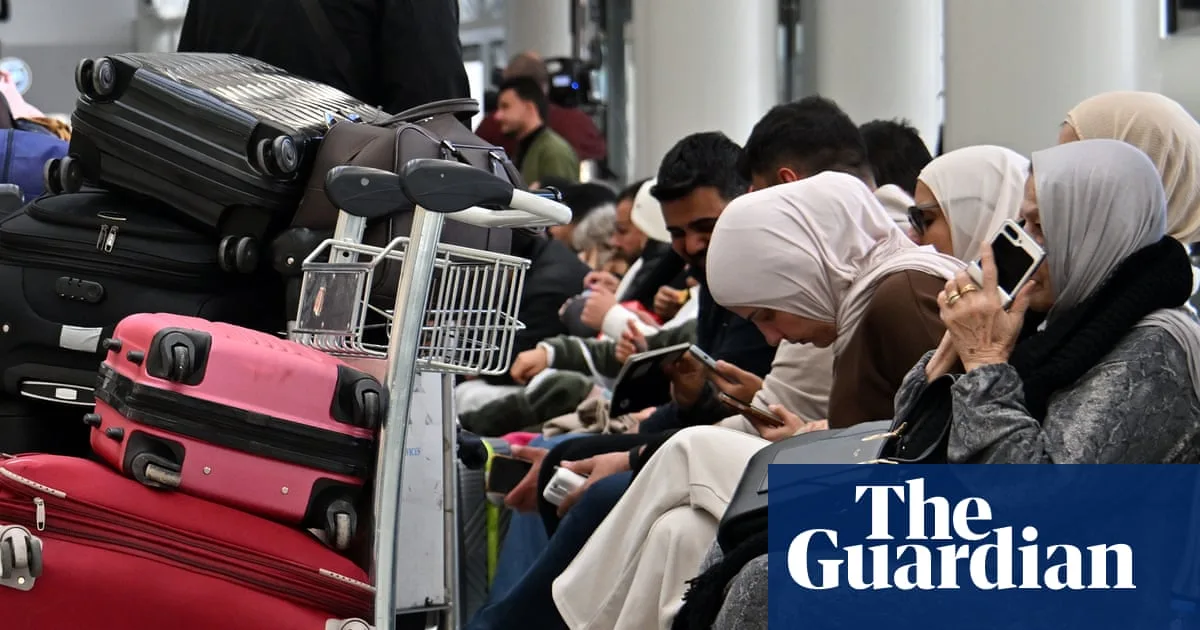
An Etihad Airways flight carrying stranded British nationals from Abu Dhabi has landed at London Heathrow Airport, marking a significant development in the ongoing travel crisis across the Middle East. The aircraft, flight EY67, touched down at Terminal 4 at 7.14pm on Monday evening, providing relief for passengers caught in the region since the outbreak of conflict.
Flight Operations Amid Regional Turmoil
The Abu Dhabi to London service was one of fifteen Etihad Airways flights that departed from the United Arab Emirates capital within a three-hour window. According to flight tracking company Flightradar24, these operations are "likely helping to clear transit passengers who have been stuck there since the start of the conflict."
Meanwhile, Dubai-based airline Emirates announced it would resume operating "a limited number of flights" on Monday night, prioritizing customers with earlier bookings. This partial resumption comes as airlines across the region grapple with unprecedented operational challenges.
Government Response and Registration Efforts
Foreign Secretary Yvette Cooper revealed that approximately 102,000 British nationals have registered their presence in the region through official channels. Speaking to BBC Breakfast, Cooper emphasized the scale of the situation, noting that about 300,000 British citizens are currently in Gulf countries targeted by recent Iranian attacks.
"The latest figure I have from this morning is we have 102,000 people who have responded to our proposal to ask people to register their presence," Cooper stated. "This is deeply stressful obviously for people because we're talking about a lot of people who are holidaymakers, who were transit passengers just passing through or people on business visits to the region."
Travel Advisory and Safety Measures
The Foreign Office has issued updated guidance urging British nationals in Bahrain, Israel, Kuwait, Palestine, Qatar, and the United Arab Emirates to register their presence online. Officials caution that travel advice is expected to change rapidly as the situation develops.
While the government has previously used registration schemes during international crises, this represents the first instance requiring coordination across so many different countries simultaneously. British citizens are being advised to follow local authority instructions while monitoring official updates.
Widespread Flight Disruptions
Airspace closures across the Middle East have grounded numerous commercial flights since attacks began on Saturday. Analytics company Cirium reported that 49 of 144 scheduled flights from the UK to the region were cancelled on Monday alone—representing more than a third of all planned services.
British Airways confirmed it is "closely monitoring the situation" and has cancelled "a number of our flights to the Middle East." Virgin Atlantic similarly axed two Heathrow-bound flights—one from Dubai and another from Riyadh—while rerouting other services to avoid affected airspace.
Potential Repatriation Routes
Government sources indicate that any large-scale repatriation of UK nationals would likely be organized by the Foreign Office. One potential contingency plan involves transporting people by land to Saudi Arabia, from where they could board flights to safer destinations.
"In many of these countries the airspace is currently closed because of the Iranian attacks," Cooper explained, highlighting the logistical challenges facing both travelers and authorities. "We want to make sure people can get safely home."
The situation remains fluid, with airlines and government agencies working around the clock to assist stranded passengers while navigating complex security considerations across multiple jurisdictions.