







The Notwist's Return: Embracing Collective Recording on 'News from Planet Zombie'
Markus Acher reflects with a sense of surprise: "It all went so fast. We've never been this fast at making a record." The frontman of the Bavarian band The Notwist sits in their Munich studio, a space usually associated with meticulous, slow-burn creativity. For a group renowned for layered, thoughtful studio craft, speed represents a dramatic departure from their established methodology.
From Heavy Metal Roots to Indietronica Pioneers
Formed in 1989 in Weilheim, Bavaria, The Notwist began as a heavy metal trio before undergoing a remarkable evolution. Over the subsequent decade, they transformed into one of Germany's most distinctive musical exports. Their 2002 breakthrough album, Neon Golden, masterfully fused indie songwriting with intricate electronic textures, largely shaped by then-member Martin Gretschmann. This album secured their place in the canon of early-2000s indie experimentalism, with Pitchfork naming it one of the best albums of the 2000s.
Markus Acher's soft, fragile, and unmistakably accented voice has remained the constant centrepiece. His Bavarian-inflected delivery, paired with lyrics balancing understatement and melancholy, presented a counterpoint to the bombastic German music often promoted internationally. While bands like Rammstein projected a certain Teutonic hardness, The Notwist embodied a different facet of Germanness: one rooted in introspection, emotional restraint, and a deep, Romantic sense of melancholy.
A Shift in Process: From Tinkering to Togetherness
Nearly 25 years after their formation, Markus and his brother Micha Acher remain the band's core. However, their creative process has undergone a significant transformation. Their previous album, Vertigo Days (2021), embraced collaboration but often through remote means. For their tenth studio album, News from Planet Zombie, the band made a conscious, emotional decision to return to physical presence.
"During Covid, we were sitting in this room, working on whatever we had," Markus Acher explains. "We invited people to collaborate, but everyone was alone in front of their computers. That didn't feel right any more." In response, the band recorded the entire album over a single week at Import Export, a former industrial building in Munich now serving as a nonprofit arts space.
The Experiment of Shared Space
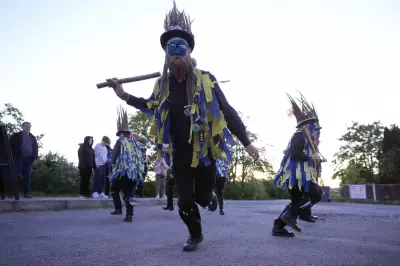
For the first time since their earliest records, The Notwist played together in one room. "More or less live," Acher describes. "It was an experiment." The experiment proved successful, fostering a dynamic, communal atmosphere. Friends and collaborators flowed through the sessions, including photographer Enid Valu on vocals, Haruka Yoshizawa on taishōgoto and harmonium, clarinettist Tianping Christoph Xiao, and jazz musician Mathias Götz on trombone. The building's dual function as a lunch canteen meant occasional outside listeners, creating a far cry from a strict, isolated studio environment.
The result is an album that feels tactile, exposed, and warmly human. Planet Zombie possesses a rougher edge than its predecessors, with spatial qualities emphasised rather than digitally smoothed. You can hear the air moving around instruments and musicians reacting in real-time—a stark contrast to the screen-mediated collaboration that defined the pandemic era.
Political Undertones in a 'Planet Zombie'
This insistence on presence is deliberate. Acher suggests the album is a response to a broader cultural moment: "We felt the need to come together and not separate ourselves." While The Notwist are rarely overtly political, Planet Zombie carries a quiet political charge in its refusal of isolation and its rejection of disembodied digital logic.
The album's title hints at contemporary unease. Zombies represent figures of numb survival, trapped between states. Acher resists a direct message but offers: "Even when it feels like the world is collapsing, life continues. People still meet and make things happen." He notes that horror has always been a way to process collective, primal fears.
When asked who populates this "planet zombie," Acher responds with a question: "Isn't it strange how simple things often are? That people with power are driven by greed, by basic impulses?" The lyrics maintain the band's longstanding preoccupation with alienation, offering poetic fragments rather than clear slogans.
The Radical Modesty of Shared Experience
If the album has a stance, it lies less in explicit statements and more in its very act of creation. In a culture still haunted by lockdowns—by screens, solitude, and interruption—Planet Zombie feels almost radical in its modesty. It captures the sound of people sharing air, time, and uncertainty. There are no grand gestures, only the insistence that meaningful life and art happen between bodies in shared rooms.
The Notwist suggest that if we inhabit a planet of zombies, the cure may be as ordinary, and simultaneously as difficult, as opening doors, gathering, and playing on. News from Planet Zombie is set for release on Morr Music on 13 March, marking a significant chapter in the band's continuously evolving journey.