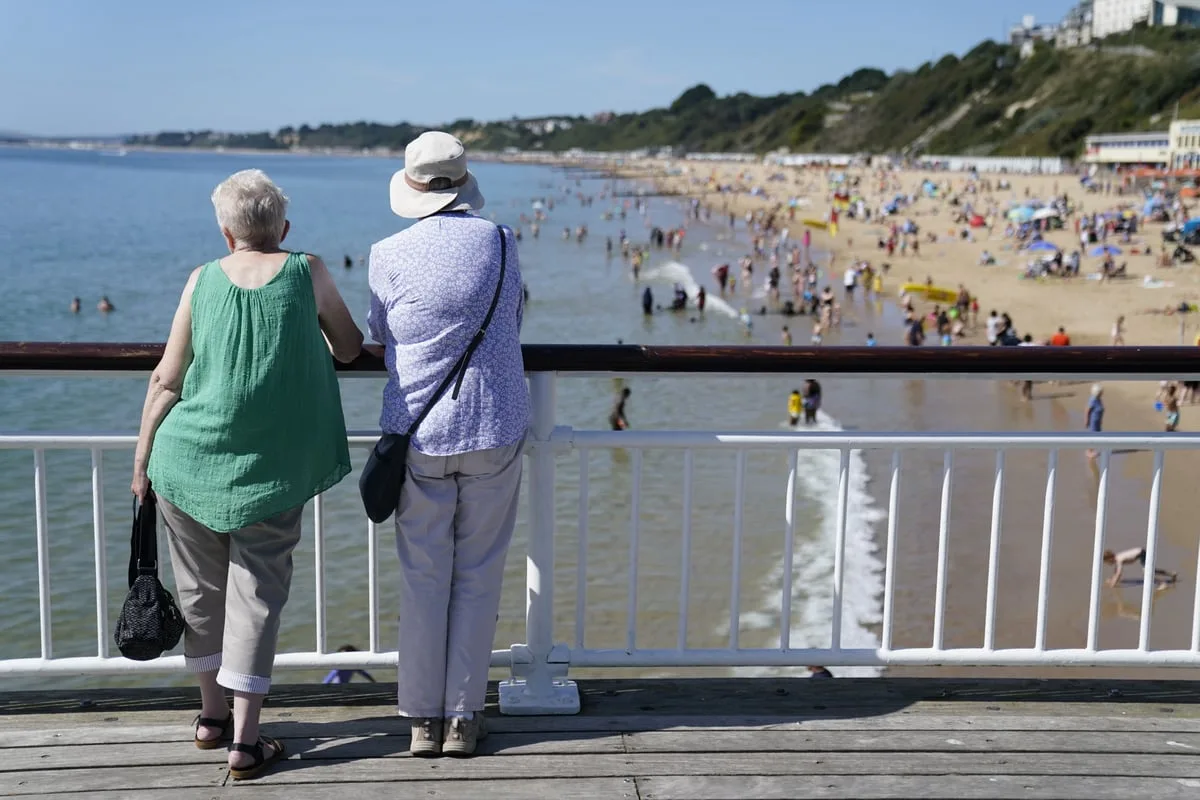
The UK is set for several days of hot weather next week, with temperatures potentially reaching 27C in parts of the country. Forecasters predict conditions will become increasingly warm from Monday, with Wednesday and Thursday likely to be the hottest days.
The highest temperatures are expected in London, Berkshire, Hampshire, and possibly Kent and East Anglia. However, whether any areas will officially experience a heatwave remains uncertain, as the Met Office defines a heatwave as three consecutive days above a threshold that varies by region, with London's threshold at 28C.
Met Office spokesperson Grahame Madge noted that while this would have been a naturally warm spell, climate change is likely adding a degree or so to the expected values. He added that the chance of a heatwave depends on a cold front moving south, which could bring cooler air and clip temperatures.
Dry and sunny conditions are forecast for Sunday's TCS London Marathon, with highs of 22C in the capital. The warm spell follows a difficult period for fire services, which battled wildfires earlier this month after historically low rainfall in March.