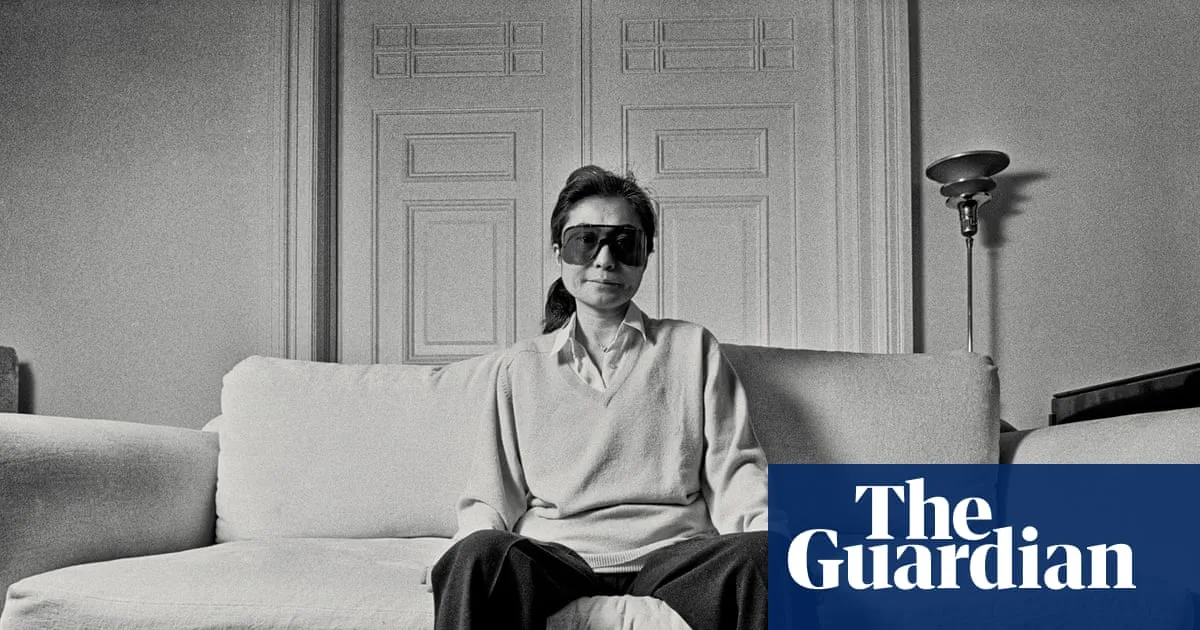
In his new book, 'Love Magic Power Danger Bliss', Paul Morley offers a vivid celebration of Yoko Ono's life and art before she met John Lennon in 1966. The book focuses on her childhood in Japan, her survival of the Tokyo firebombing, and her breakthrough in New York's avant-garde art scene, while largely sidelining her time with the Beatles, referred to as 'that other business'.
Morley portrays Ono as headstrong and questing, born in 1933 into a wealthy banking family. She was the first woman accepted into Gakushuin University's philosophy department but left early, as she also did from Sarah Lawrence College. She found her way to downtown New York, where artists like Nam June Paik and George Maciunas were creating work that challenged traditional galleries.
The book explores Ono's involvement with the Fluxus movement, highlighting works such as 'Cut Piece' (1964), where audience members cut off pieces of her clothing, and 'Bottoms' (1966), a film of close-ups of buttocks. Morley defends Ono's vision of art as 'ephemeral, confounding and non-linear', arguing it rebukes modern authoritarianism.
However, the review notes that the book lacks fresh facts about Ono's personal struggles, such as her time in a psychiatric hospital or custody battles. It also gives short shrift to other female Japanese artists in New York and fails to cite women who have championed Ono's work. Despite these flaws, Morley's celebration of Ono's avant-gardism is compelling, presenting her as a survivor of a fight for freedom.