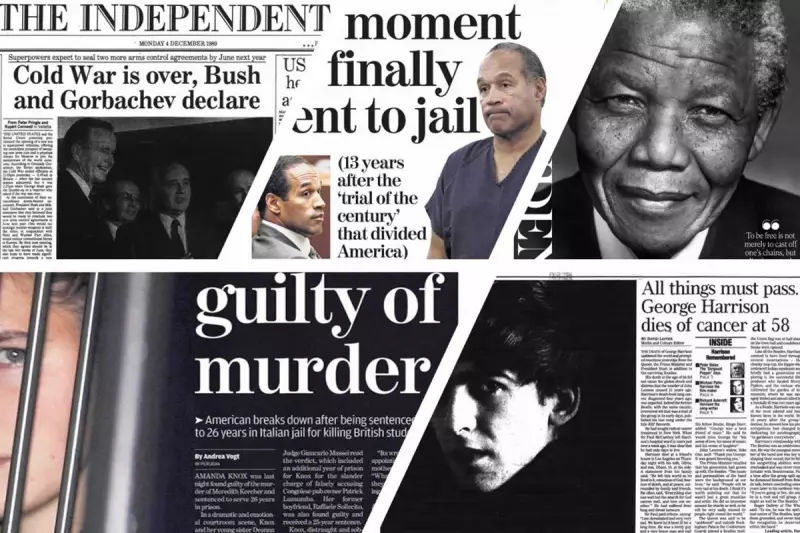
Between the 1st and 7th of December, history has witnessed a remarkable series of turning points, from the end of global conflicts to dramatic courtroom sagas and profound political shifts. The Independent's front pages have chronicled these pivotal moments as they unfolded, capturing the essence of eras defined by change, crisis, and controversy.
Global Shifts and Political Upheavals
On 4 December 1989, a seismic shift in world affairs was announced. Following a summit in Malta, US President George H.W. Bush and Soviet leader Mikhail Gorbachev declared the Cold War effectively over. This historic statement, coming less than a month after the fall of the Berlin Wall, signalled a decisive break from decades of nuclear tension and ideological rivalry.
Domestically, British politics faced its own turmoil. On 7 December 1996, Prime Minister John Major's government was plunged into crisis when a Conservative MP resigned the whip. This move stripped the administration of its parliamentary majority, highlighting deep internal party divisions at a critical moment.

Siege, Scandal, and Financial Storm
The first day of December 1999 saw the city of Seattle descend into chaos as anti-globalisation protesters clashed violently with police during a World Trade Organisation summit. The deployment of tear gas and rubber bullets, alongside a declared state of emergency, created scenes that became a defining symbol for a new era of public dissent.
Financial scandals and warnings also marked this week. The collapse of Robert Maxwell's media empire was confirmed on 6 December 1991, as investigators uncovered massive misappropriation of pension funds following his mysterious death. Years later, on 5 December 2007, The Independent warned Britain was heading towards a financial "perfect storm" as banks stopped lending and the housing market stalled, foreshadowing the global crash to come.
Courtroom Dramas and Cultural Icons
This period has also been marked by high-profile legal battles that captivated global audiences. On 6 December 2008, former American football star OJ Simpson was sentenced to prison for an armed robbery in Las Vegas, a dramatic postscript to his infamous 1995 murder trial acquittal.
A day earlier, on 5 December 2009, an Italian court found Amanda Knox and Raffaele Sollecito guilty of murdering British student Meredith Kercher, a verdict that sparked international debate and was later overturned on appeal.
The week also saw the loss of cultural icons. Music legend and former Beatle George Harrison died on 1 December 2001 at age 58, prompting tributes from around the world, including from the Queen. On 6 December 2013, the world mourned the death of Nelson Mandela at 95, celebrating his journey from political prisoner to president and his pivotal role in ending apartheid.
From the WikiLeaks revelations about Russian business ties on 3 December 2010 to President George W. Bush's defiant Iraq war strategy speech on 1 December 2005, the first week of December repeatedly proves to be a period where history accelerates, leaving an indelible mark on politics, culture, and public memory.