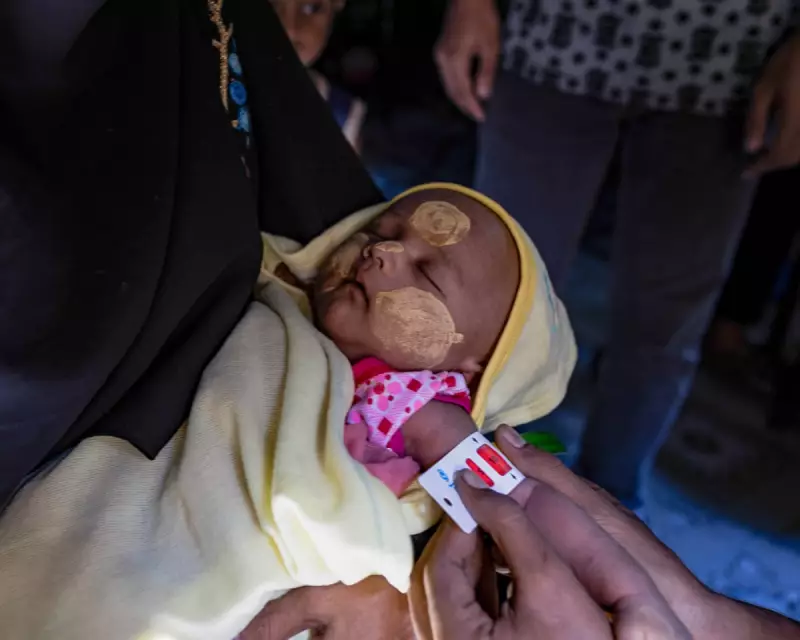
Doctors in Cox's Bazar have reported a sharp and alarming 11% rise in admissions for severe acute malnutrition among children this September, compared to the same period last year. This grim statistic emerges as the world's largest refugee camp, home to over 1.1 million Rohingya people, grapples with a catastrophic 63% shortfall in humanitarian funding.
A Struggle for Survival Amidst Funding Cuts
The lifeline for these refugees is fraying. Recent drastic reductions in international aid have left new arrivals without basic shelter or essential non-food items. A spokesperson for the International Rescue Committee (IRC) confirmed that following cuts from donors like USAID, 48 health facilities were forced to close or severely curtail their services. This has created a desperate scramble for medical care, with families like that of Abdullah Wahed forced into crippling debt. Wahed borrowed 100,000 Bangladeshi taka (£620) to pay for private surgery for his three-year-old son after camp health centres could not provide the necessary treatment.
Inside a UNICEF nutrition facility in Camp 15, the scale of the crisis is viscerally clear. Approximately 300 children are assessed for malnutrition daily in a space so crowded it resembles a conveyor belt system. Dr Owen Nkhoma issued a stark warning: "Come mid-year 2026, we will likely run out of money to continue to provide life-saving support for children. Without effective funding to treat and prevent, you'll soon be reporting on children dying here."

New Lives Born Into Desperation
The crisis touches even the most vulnerable from their first breath. On a single night in a makeshift delivery room in Camp 22, two women, Noor, 23, and Sowkat, 24, gave birth on a torn foam mattress. Their newborns instantly joined a stateless population with almost no rights or opportunities. Bangladesh does not formally recognise the Rohingya as refugees, legally barring them from work, formal education, or earning money.
Nearby, Rajuma, 30 and eight months pregnant, faces the prospect of skipping meals to feed her future child after a series of ration cuts this year. Her story is common. Despite the dire conditions, the influx continues. Since early 2024, close to 200,000 more Rohingya have fled intensified conflict in Myanmar's Rakhine State, adding immense strain to the camp's decimated resources. Of these new arrivals, 76% are women and children.
A History of Persecution, A Future of Uncertainty
The Rohingya, a Muslim minority from Myanmar, have faced decades of persecution, culminating in a brutal 2017 military crackdown the UN called a "textbook example of ethnic cleansing". This drove about 750,000 people into Bangladesh. The current crisis echoes a dark past; in 1979, over 10,000 Rohingya who refused repatriation starved to death in earlier camps.
Today, women like Rahima, 41, who arrived in June 2025 after an eight-day flight from Buthidaung, rely on the charity of other refugees for floor space and basics like soap. She has not heard from her husband or eldest son, who was forcibly conscripted, in six months. Davide Zappa, head of EU Humanitarian Aid in Bangladesh, emphasises the stakes: "Rohingya refugees in Bangladesh don't rely on aid by choice. Less humanitarian aid funding today only multiplies the emergencies of tomorrow."
With the Bangladeshi government continuing its push for repatriation and safe return to Myanmar a distant hope, the Rohingya now stand on the edge of a "funding cliff". As international attention wanes, the world risks once again overlooking a preventable tragedy unfolding in the bamboo and tarpaulin shelters of Cox's Bazar.