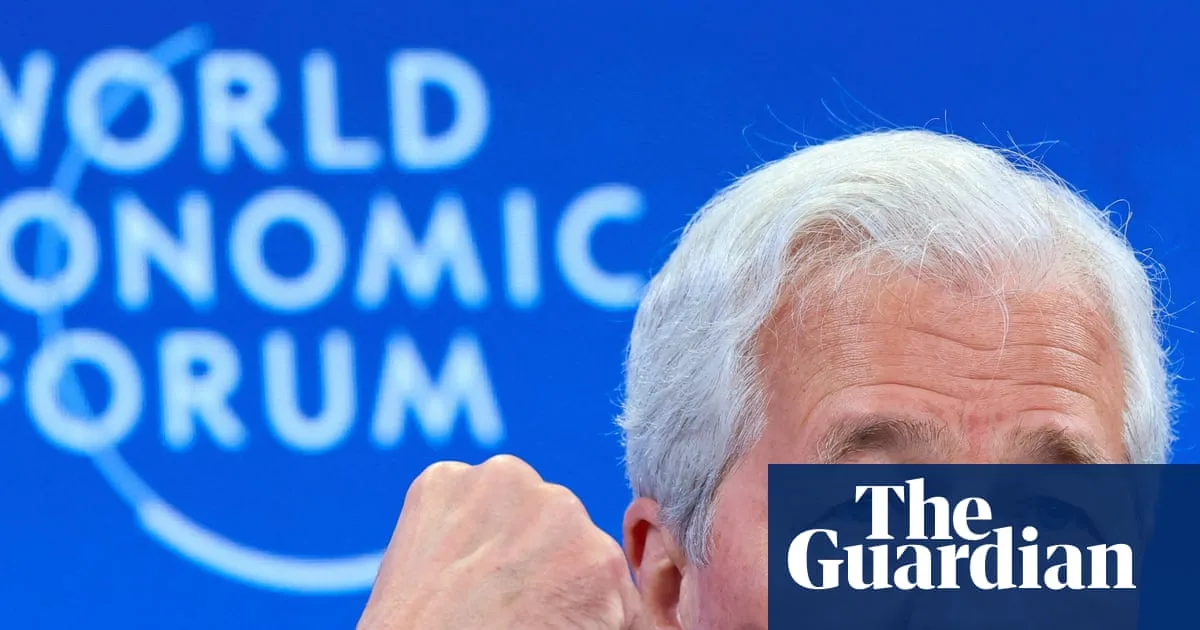
Jamie Dimon, the chief executive of JPMorgan Chase, has issued a stark warning at the World Economic Forum in Davos, Switzerland, suggesting that the rollout of artificial intelligence might need to be deliberately slowed to "save society" from potential civil unrest. Speaking to an audience at the prestigious gathering, Dimon emphasised that while AI promises immense benefits—from boosting productivity to curing diseases—its rapid adoption could displace workers on a massive scale if not managed carefully.
Balancing AI Progress with Societal Stability
Dimon argued that companies and governments cannot afford to ignore the transformative power of AI or "put your head in the sand." He highlighted that JPMorgan itself is likely to employ fewer staff over the next five years as it integrates AI technologies. However, he stressed that this transition must be handled collaboratively to mitigate negative impacts.
"Your competitors are going to use it and countries are going to use it," Dimon stated. "However, it may go too fast for society and if it goes too fast for society that’s where governments and businesses [need to] in a collaborative way step in together and come up with a way to retrain people and move it over time."
Supporting Workers Through Transition
To illustrate the potential risks, Dimon pointed to the example of the two million commercial lorry drivers in the United States. As driverless trucks become more prevalent, these workers could face significant income drops, from around $150,000 annually to as low as $25,000 in new roles. "Should you do it all at once if two million people go from driving a truck and making $150,000 a year to a next job [that] might be $25,000? No. You will have civil unrest," he warned. "So phase it in."
He proposed that local governments implement assistance programmes, including wage support, retraining initiatives, relocation aid, and early retirement options, to help displaced workers adapt. "If we have to do that to save society … Society will have more production, we are going to cure a lot of cancers, you’re not going to slow it down. How do you have plans in place if it does something terrible?" Dimon questioned, underscoring the need for proactive measures.
Diverging Views on AI and Employment
In contrast to Dimon's cautious stance, Jensen Huang, the chief executive of semiconductor giant Nvidia, offered a more optimistic perspective on AI's impact on jobs. Speaking at the same forum, Huang argued that labour shortages, rather than mass layoffs, pose the greater threat in the tech-driven economy.
"Energy’s creating jobs, the chips industry is creating jobs, the infrastructure layer is creating jobs … jobs, jobs, jobs," Huang declared. He described the current AI infrastructure buildout as "the largest infrastructure buildout in human history," which is set to generate numerous employment opportunities.
Job Creation in Tech and Tradecraft
Huang highlighted that many of these new roles are in tradecraft sectors, such as:
- Plumbers and electricians
- Construction and steelworkers
- Network technicians
- Equipment installers for AI rollout
He noted that salaries are already rising in the United States for professionals involved in building chip factories and AI datacentres. Additionally, Huang viewed AI robotics as a "once-in-a-generation" opportunity for Europe, leveraging its strong industrial manufacturing base to potentially surpass Silicon Valley in this emerging field. "This is your opportunity to now leap past the era of software," he urged European leaders.
Broader Political and Social Commentary
Beyond AI, Dimon also addressed broader geopolitical and social issues during his appearance at Davos. He offered a measured critique of former US President Donald Trump's approach to Europe and NATO, advocating for a strategy focused on strengthening alliances rather than fragmentation. "If the goal is to make them stronger rather than fragment Europe, I think that’s OK," Dimon remarked. He suggested that the United States should use its influence to encourage European leadership to act in its own best interests.
Dimon further expressed concerns over Trump's immigration policies, particularly highlighting incidents of violence involving Immigration and Customs Enforcement officers. "I don’t like what I’m seeing with five grown men beating up little women," he said, calling for a reduction in "internal anger" on the issue. He emphasised the valuable contributions of migrants to the US economy in sectors like healthcare, hospitality, and agriculture, stating, "We all know them. They are good people and they should be treated that way."
The discussions at Davos reflect a critical juncture in the global conversation on AI, balancing its transformative potential with the need for societal safeguards and ethical considerations.




