BBC Documentary Uncovers Multi-Billion-Dollar Glass Eel Smuggling Trade
A groundbreaking new BBC documentary has exposed one of the world's most profitable yet clandestine wildlife crimes, revealing how criminal networks are smuggling endangered European glass eels to Asia for enormous profits. Dubbed the 'cocaine of the sea,' these juvenile eels are trafficked through secretive operations that generate thousands of pounds per kilogram.
The 'Billion Dollar Babies' Investigation
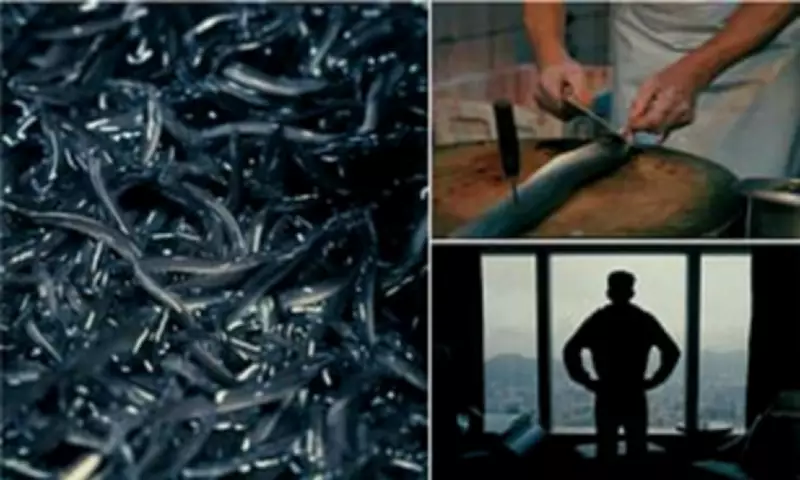
The BBC Eye programme, titled 'Billion Dollar Babies,' released today on iPlayer, has gained unprecedented access to a Hong Kong triad actively engaged in smuggling operations. The brazen criminals describe their enterprise as offering 'high profits and low risks,' with the commodity sometimes surpassing the value of illegal drugs in trade.
One triad member, known as both 'Little Di' and 'Elder Brother,' explained the appeal: 'Smuggling eels offers high profits and low risks. As for drug smuggling: if you get caught, you'll be sentenced for life, if not executed. With eels you are just smuggling food, it's not a serious crime.'

Endangered Species and Soaring Demand
The European eel, once abundant in rivers across Europe and a staple of traditional dishes, has seen its population plummet by 95% since the 1980s. Despite being critically endangered, demand has reached record levels, particularly in Asia where they are served as a prized delicacy. Since they cannot be bred in captivity, the trade relies entirely on wild-caught specimens.
The species' life cycle is remarkable:
- Born in the Sargasso Sea in the North Atlantic Ocean
- Travel thousands of miles to European rivers to mature
- Migrate back to the Sargasso Sea to reproduce and die
- Leave a new generation to drift back to Europe, continuing the cycle
In Britain, the largest concentrations of glass eels are found in:
- The River Severn
- The River Parrett
- The River Brue
- The Thames estuary
EU Ban Fuels Illegal Trade
The European Union imposed a ban in 2010 on exporting glass eels to destinations outside the EU to protect the species, but this has inadvertently driven a thriving illegal trade to Asia. British glass eels were once sold legally in China, but demand for European eels surged when Asian eel populations became scarce.
Another triad member detailed their operations: 'Just one small glass eel is worth around $2 to $3. We smuggle 500kg to 200kg a time. During peak season we usually make around two or three deliveries a week.' The smuggling typically occurs at night, with teams using speedboats or small boats to transfer eels to larger ships equipped to keep them alive during transport to China.
Legitimate Trade and Controversial Exports
Wildlife protection laws in Europe permit eel trading, but require that the majority of specimens be used in conservation projects to help improve their numbers. One key figure in the legitimate business is Peter Wood, a British eel trader who has been exporting baby eels worldwide for over fifty years through his Gloucestershire-based company, 'UK Glass Eels.'
Mr. Wood buys glass eels from local fishermen and secured an export deal with Russia in 2021 after Brexit disrupted EU trade. The UK Government granted him a three-year export licence for up to three million glass eels for a Russian conservation project in Kaliningrad, despite most British trade with Russia being sanctioned.
The recipient company, Goodfish, receives Russian government grants to manage their eel project. While the company insists all eels from Mr. Wood are strictly for conservation, their owner has firms directly related to the fish industry that sell eel products for consumption.
Licence Revocation and Business Impact
In April last year, the British Government revoked Mr. Wood's export licence due to Russia's war against Ukraine. Mr. Wood expressed concern: 'This fishery we've been running here for 50 years will be closed and staff will lose their jobs. If we don't survive, the eel becomes a sort of museum piece.'

He continues to supply markets in Poland and Lithuania, noting the paradox: 'It's a really bizarre situation that Poland can stock but Kaliningrad is unable to stock.' Mr. Wood has denied that his exports help fund Russia's war, insisting they were purely for state conservation projects, and maintains that his staff have never broken any laws.
BBC Eye 'Billion Dollar Babies' is now available to stream on BBC iPlayer and the BBC World Service's YouTube channel, with an audio podcast on BBC Sounds.