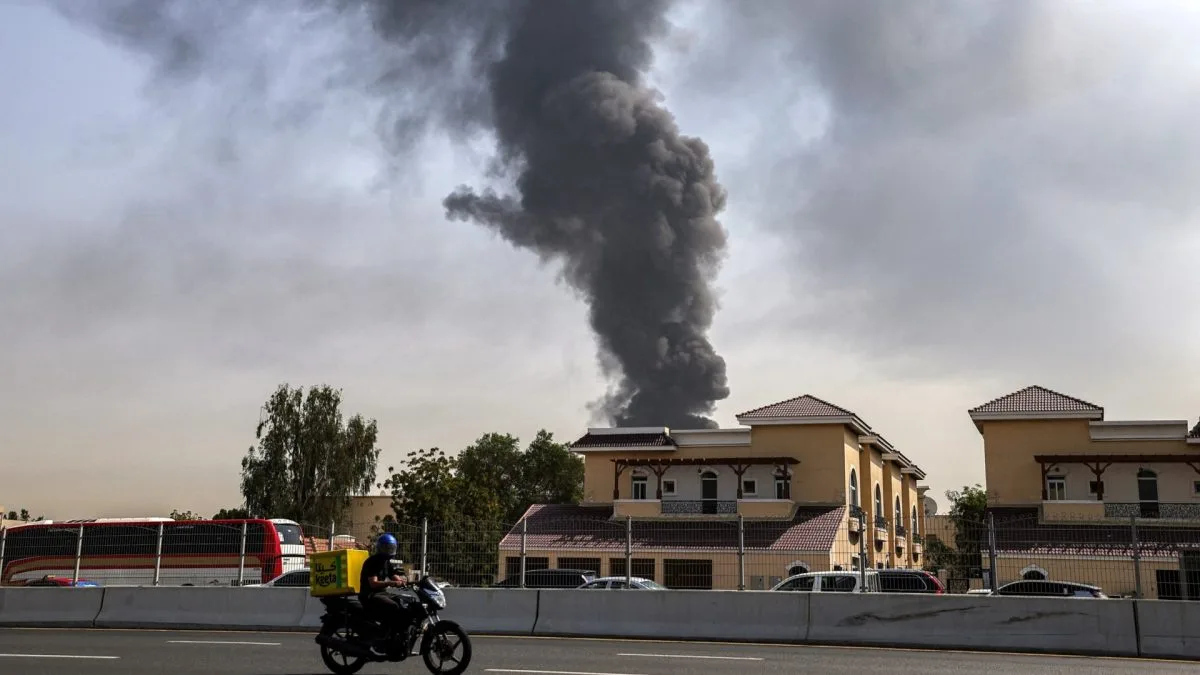
For many years, Dubai has been marketed globally as a glittering, tax-free utopia where ambition is richly rewarded, luxury is commonplace, and street safety is virtually guaranteed. This sun-soaked, financially advantageous lifestyle has proven irresistible to hundreds of thousands of British citizens disillusioned by rising crime rates, bureaucratic red tape, and the soaring cost of living in the United Kingdom. However, that meticulously constructed narrative is now beginning to show significant cracks as disturbing images of explosions, drone strikes, and arbitrary arrests circulate widely.
Expats Detained for Private Communications
In recent days, the advocacy group Detained in Dubai has reported being inundated with cases involving expatriates who have been detained simply for sharing images of drone strikes and explosions, even when those images were sent privately to family members merely to reassure them of their safety. Shockingly, some individuals were inside buildings that were struck during attacks and, despite being survivors of these traumatic events, were treated as criminals by the authorities.
Authoritarian On-the-Spot Searches
In several documented instances, authorities arrived at buildings in the aftermath of incidents, demanding immediate access to residents' mobile phones and reviewing personal content on the spot. Those found to have taken photographs, even if the images were never shared publicly, were promptly arrested. They were then transported directly to police stations where the contents of their phones were systematically deleted, effectively erasing any evidence of the drone strikes. Ordinary residents, including parents, workers, and individuals simply trying to comfort loved ones, have been caught up in this draconian enforcement.
Concurrently, official messaging and influencer content continue to portray Dubai as entirely safe, dismissing genuine concerns as exaggeration or misinformation. For many residents, this portrayal now feels completely detached from reality. People have been killed and injured, and residents are receiving urgent 'take cover' alerts, compelling them to shelter in car parks with their families. Claiming Dubai is safe under these circumstances is, frankly, ridiculous.
The Influencer Propaganda Machine
Arresting individuals for privately sharing images that are already circulating in global media is not about safety; it is about control. Many expats who chose to remain in Dubai have historically been supportive of the emirate, but treating investors and businesspeople as enemies of the state risks inflicting lasting damage to the country's international reputation. While shocking, this reality is not entirely new. The underlying risks, authoritarian practices, and arbitrary arrests have always existed, but the UAE's response to recent attacks has amplified and exposed them on a mass scale for the first time.
Struggling to Reconcile the Two Dubais
Numerous expatriates are now struggling to reconcile the country they once loved with a harsh reality where survivors and ordinary people who meant no harm are being arrested. Their previous perception of Dubai was largely shaped by a pervasive influencer culture that has been actively cultivated by the state. Last year, the government even inaugurated an 'Influencer Academy'—a dedicated school for influencers—as part of a broader strategy to recruit, train, and incentivise content creators to promote the city globally.
Influencers in Dubai have been posting identical videos, viewed millions of times, that emphasise the city's safety. Celebrities like socialite Petra Ecclestone have tearfully described explosions while expressing gratitude for Dubai's prioritisation of safety, and personalities such as Vicky Pattison have claimed the city remains 'one of the safest places in the world.' However, behind these glitzy public relations messages lies a more menacing reality.
Sweeping Cybercrime Laws and Their Reach
This amounts to state-backed propaganda, a deliberate effort to whitewash the on-the-ground situation. Influencers are unlikely to disclose that a negative review can land you in prison, that false accusations and hearsay can lead to detention, or that victims of crime are often silenced through pressure, pay-offs, or threats. The image of Dubai as safe and aspirational is further amplified by reality television shows like Dubai Bling and other productions the city has invested in, creating a glossy version that omits the inherent risks.
At the heart of this system are sweeping cybercrime laws that govern not only what people say publicly but also what they share privately. Under these laws, actions considered trivial in the UK can become criminal offences in Dubai. This includes sending a message containing profanity, sharing a post authorities later deem false or misleading, posting a negative review about a company—as in the case of Craig Ballantine—or even complaining about poor customer service.
Global Jurisdiction and Misuse of the System
There have been cases of individuals detained over private WhatsApp messages exchanged between friends, spouses, flatmates, or colleagues. Others have faced legal action for social media posts made years earlier, outside the UAE, only to be arrested upon arrival, as happened to British national Laleh Shahravesh, who was detained over Facebook comments written in the UK years prior. The reach of these laws extends far beyond Dubai's borders, leaving many visitors exposed.
The system is also prone to misuse. Complaints can be filed by individuals, and once submitted, the process often appears to favour the accuser. We have seen cases where people have reported others out of spite, trawling through years of social media activity to find content that could be interpreted as offensive. In many instances, complaints are used as leverage, with individuals expected to pay substantial sums—sometimes tens of thousands of dollars—simply to have a case closed and a travel ban lifted, a practice that borders on extortion.
Intensified Enforcement and Economic Risks
Amid heightened tensions and recent attacks, enforcement has intensified dramatically. The UAE is one of the most digitally surveilled countries globally, where VPNs are illegal and even private messages can be scrutinised. Authorities, including the Telecommunications and Digital Government Regulatory Authority (TDRA) working with police cybercrime units, monitor online activity and enforce strict laws on what can be said and shared. In such an environment, social media becomes a significant risk, not just for current posts but for past content and its interpretation.
Looking ahead, we are likely to see more of these cases, not fewer. This pattern has been observed before: during periods of instability, enforcement ramps up, complaints increase, and more people are pulled into civil and criminal cases they never anticipated. This has real consequences for Dubai's economy, leading to rising disputes, job losses, called-in debts, and civil matters quickly escalating into criminal cases, travel bans, and even Interpol Red Notices, as seen after the financial crisis and during the Covid-19 pandemic.
Dubai's foundation is built on its reputation, and that reputation is now under serious strain. If investor confidence shifts from perceiving opportunity to recognising risk, the resulting damage will not be easy to reverse, threatening the very allure that has drawn so many to this once-golden paradise.




