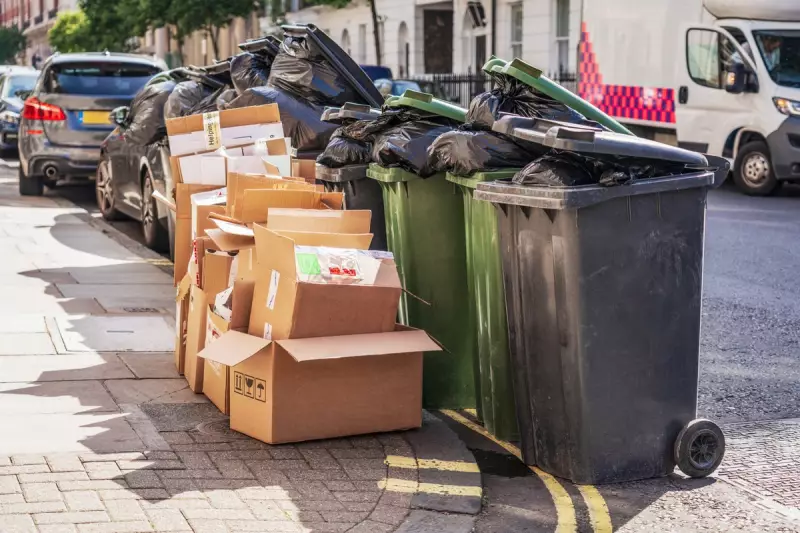
Millions of households across England will see a significant overhaul of their bin collection services from next year, as the government introduces new national rules designed to standardise recycling.
What Are The New 'Simpler Recycling' Rules?
The government's new 'Simpler Recycling' initiative will come into force across England from April 2026. The policy aims to end the current 'postcode lottery' where council collection rules vary wildly, creating confusion for residents. The core change is the introduction of a four-stream waste separation system as a default minimum for all local authorities.
Under the new framework, households will be asked to separate their waste into the following categories:

- Residual (non-recyclable) waste
- Food waste (which can be mixed with garden waste where appropriate)
- Paper and card
- All other dry recyclable materials (including plastic, metal, and glass together)
This represents a major shift. Currently, some councils require more than four bins, asking for glass, metal, and plastic to be kept in separate containers. Others operate an 'all-in-one' recycling policy with no separation required at all. The Department for Environment, Food and Rural Affairs (Defra) stated the 'common-sense changes' will simplify the system by creating consistent rules nationwide.
Key Changes for Households and Councils
For most families, the most noticeable change will be an additional bin. Because paper and cardboard must be collected separately from other dry recycling, many will receive a new container to manage. Councils will retain the flexibility to ask for further separation, but the four-stream system will be the mandatory baseline.
A second crucial change mandates that councils collect food waste at least once a week. Local authorities will keep control over the scheduling of collections for other waste streams. Defra's policy paper emphasises that the reforms are designed to stimulate economic growth and maximise environmental benefits, making it easier for people to recycle correctly wherever they are in England.
A Long-Term Solution to Recycling Confusion
The government has positioned these changes as a long-term fix for England's fragmented waste collection system. Ministers criticised inherited legislation that could have forced households to use up to seven different bins. The new 'default requirement' is not expected to become more complex in the future.
"For too long, households in England have been presented with a muddled and confusing patchwork of approaches to bin collections," a Defra spokesperson said. "We are simplifying the rules to make recycling easier for people in England." The goal is a universal standard so citizens can recycle the same materials at home, work, or school without checking local rules, thereby boosting recycling rates and reducing contamination.