Late Summer Deluge Triggers Flood Warnings and Shark Alerts Across Southern Australia
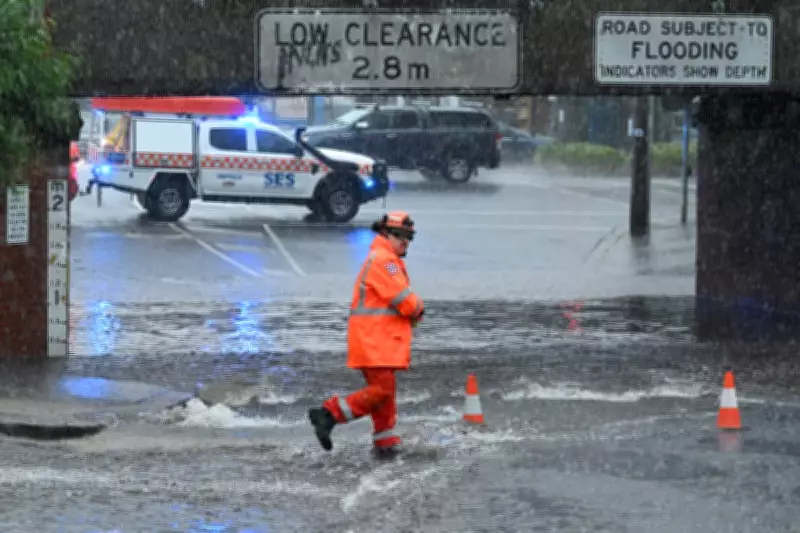
Late summer rain is wreaking havoc across Australia, with South Australia placed on flood watch, Victoria cleaning up after a severe downpour, and Sydney issuing shark warnings following heavy falls. A slow-moving pressure system from central Australia is moving eastwards, affecting nearly all of South Australia, much of western Victoria, and parts of western New South Wales, while Queensland has also experienced significant rainfall.
South Australia Braces for Flash Flooding
South Australian Premier Peter Malinauskas has warned residents to prepare as forecasts predict heavy falls of 50-100mm across much of the state, with flash flooding possible in Adelaide when the system arrives on Saturday. "It is not unusual in South Australia or metropolitan Adelaide to see a 10-millimetre rain event," he stated. "But when we start to see rain events north of 50, 60, 80mm, that starts to represent the sort of conditions where we will see flash flooding. If we see that volume of rain in a short period of time, then we should anticipate flash-flooding events throughout the state."
The Eyre Peninsula has already seen severe falls since Friday morning, with Ceduna recording 71mm, Wudinna 68mm, and Minnipa 98mm, according to the Bureau of Meteorology. In the state's north-east, Moomba has received close to 100mm this week and a total of 189mm in February, exceeding its annual average rainfall of 176mm.

Senior meteorologist Dean Narramore noted that while the rain is mostly welcome after long-term shortages, flash flooding remains a concern. "South Australia has been so dry for so long, this would mostly be welcome. I think generally it's a good news story apart from the flash flooding."
Victoria and Queensland Experience Extreme Rainfall
In Victoria, parts of the state received more than double their average February rainfall overnight on Friday. Horsham airport recorded 96mm, about five times its average of 19mm for the month, while Warracknabeal received 49mm, more than double its average. Areas around Mount Macedon and Gisborne even experienced hail storms. Melbourne is expecting fine weather on Saturday but could see showers from Sunday, with heavier falls forecast for Sunday night and Monday.
Queensland has also faced severe falls in inland areas. The outback town of Birdsville, with an annual average rainfall of 162mm, has received 178mm so far in 2026, including 128mm over three days this week.
Sydney Issues Bull Shark Warning
Meanwhile, sustained rain in Sydney over recent days has led to official warnings about increased bull shark activity due to murky water conditions. The Minns government is urging beachgoers, swimmers, and surfers to exercise caution in Sydney Harbour, other estuaries, and along the NSW coast.
Regional NSW Minister Tara Moriarty advised, "If your local beach is closed due to the weather, shark sightings, or poor water quality, we ask beach goers, swimmers and surfers, to not enter the water for their own safety. If you're on the coastline, by the harbour or on waterways, it's important to understand how the environment can influence shark behaviour and to then take the necessary steps to reduce your risk of a shark interaction." This warning follows four shark attacks in the state at the start of the year, including a fatal incident inside Sydney Harbour that claimed the life of a 12-year-old boy.
Broader Weather Patterns and Climate Context
Narramore explained that the rainfall battering South Australia is expected to continue through the weekend before moving into western NSW and western Victoria, with the system weakening mid-week. Additionally, a monsoon trough over northern Australia is set to strengthen, bringing widespread rain and possible flooding, and a tropical low may develop next week.
The climate crisis is exacerbating Australia's vulnerability to extreme weather events, including intense rainfall. In 2025, the third-hottest year on record, global surface air temperatures averaged 1.48°C above pre-industrial levels. For each 1°C of heating, the atmosphere can hold 7% more moisture, contributing to more severe downpours and natural disasters.