Scrap Dealer's Life Ruined by Sega's Undercover Sting Over Rare Consoles
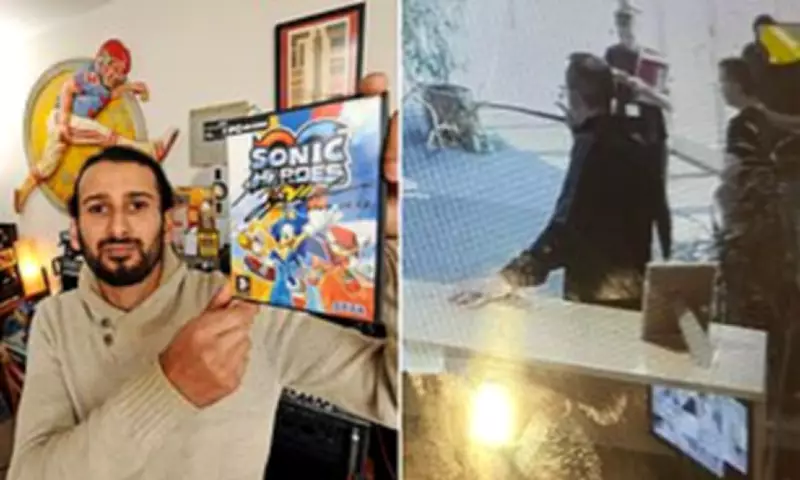
Darius Khan, a 32-year-old scrap dealer from Stratford in east London, claims his life has been devastated after one of the world's largest gaming companies initiated an undercover operation that culminated in police raiding his home. The controversy centres on his purchase of nearly £10,000 worth of rare prototype video game consoles and unreleased games, which were allegedly abandoned at Sega's former headquarters in Brentford.
The Fateful Purchase
Mr Khan, who typically exports furniture and white goods to West Africa, was offered the gaming items by a removals firm authorised to clear out Sega's old offices after the Japanese company relocated to Chiswick. Among the haul were development kits, known as 'dev kits', used for testing games during production, alongside unfinished games that have never been publicly released. These items are highly sought after by collectors and gaming historians.
He planned to sell the consoles for profit, noting that dev kits for older systems like PlayStation 3, Xbox 360, and Nintendo Wii often appear on eBay, fetching hundreds or even thousands of pounds. However, experts warn such sales may be illegal under intellectual property laws.

The Undercover Operation
Sega became aware the consoles were listed for sale online and hired private investigators from Fusion 85, an agency specialising in intellectual property protection with clients including Nintendo. An investigator, posing as the father of an autistic games enthusiast named Paul, contacted Mr Khan after seeing his eBay and Facebook listings.
Paul visited Mr Khan's flat, photographing consoles—some labelled 'Property of Nintendo - not for resale'—and games before disappearing. Weeks later, on July 14, ten plain-clothes officers from the City of London Police's intellectual property crime unit (PIPCU) raided Mr Khan's home, seizing all consoles and prototype cartridges but leaving behind controllers, cables, and other merchandise.
Legal and Ethical Confusion
The case has sparked confusion over ownership and disposal procedures. Intellectual property law experts state dev kits are loaned to companies like Sega by manufacturers such as Sony, Microsoft, or Nintendo under strict agreements prohibiting redistribution. If obtained by unauthorised parties, these machines can be reverse-engineered to pirate games.
Mr Khan argues he legally acquired the items, believing they were abandoned scrap. His position was reinforced when police asked him to sign a form relinquishing ownership, which he refused. He maintains, "Some of the consoles were completely dead. I just assumed they were scrap and that they didn't want them."
Complicating matters, sources suggest a subcontractor for the charity Waste to Wonder, tasked with ethical office clearance, may have mistakenly included the consoles in the clearout after an on-site manager instructed workers to remove everything. Sega had reportedly appointed another firm, ITR Secure, to dispose of IT equipment, but this was not communicated to ground staff. The subcontractor involved was later sacked and arrested as part of the investigation.
Broader Implications for Gaming History
The incident has ignited debate over the preservation of gaming history. Damien Farnham, who runs the Videogame Preservation Museum (VGPM), notes that dev kits frequently end up online despite contracts requiring their return or destruction. He argues that preserving consoles marked for disposal should be lawful, as they hold significant historical value.
"Consoles are supposed to be returned or destroyed, but this doesn't actually ever work. They always end up online," Mr Farnham said. He cited examples of Microsoft dev kits sent for destruction later appearing for sale in China, questioning ownership claims after lawful disposal. The VGPM was poised to purchase some of Mr Khan's consoles before the police intervention.

Ongoing Investigation and Personal Toll
Seven months after being arrested, held for eight hours, and released under investigation, Mr Khan has not been charged. He says the ordeal has ruined his business plans, left him feeling unsafe at home, and caused rifts with neighbours who witnessed the raid. "This is probably the worst seven months of my life. It's caused unbelievable levels of stress," he lamented.
Mr Khan has filed for a judicial review of the search warrant at the Royal Courts of Justice, naming City of London Police, Sega, and Fusion 85 as respondents, and lodged a complaint with the police. He insists the matter could have been resolved civilly, suggesting Sega could have offered to buy back the items. "Forty grand is nothing. That's an accounting error to Sega," he stated.
A City of London Police spokesperson confirmed an ongoing investigation into alleged possession of criminal property, with three arrests and four voluntary interviews. Sega declined to comment pending the investigation's conclusion, while Fusion 85 did not respond to requests for comment.
As the case unfolds, it highlights tensions between intellectual property enforcement and the grassroots efforts of enthusiasts to preserve gaming heritage, leaving Mr Khan in legal limbo and fighting to clear his name.