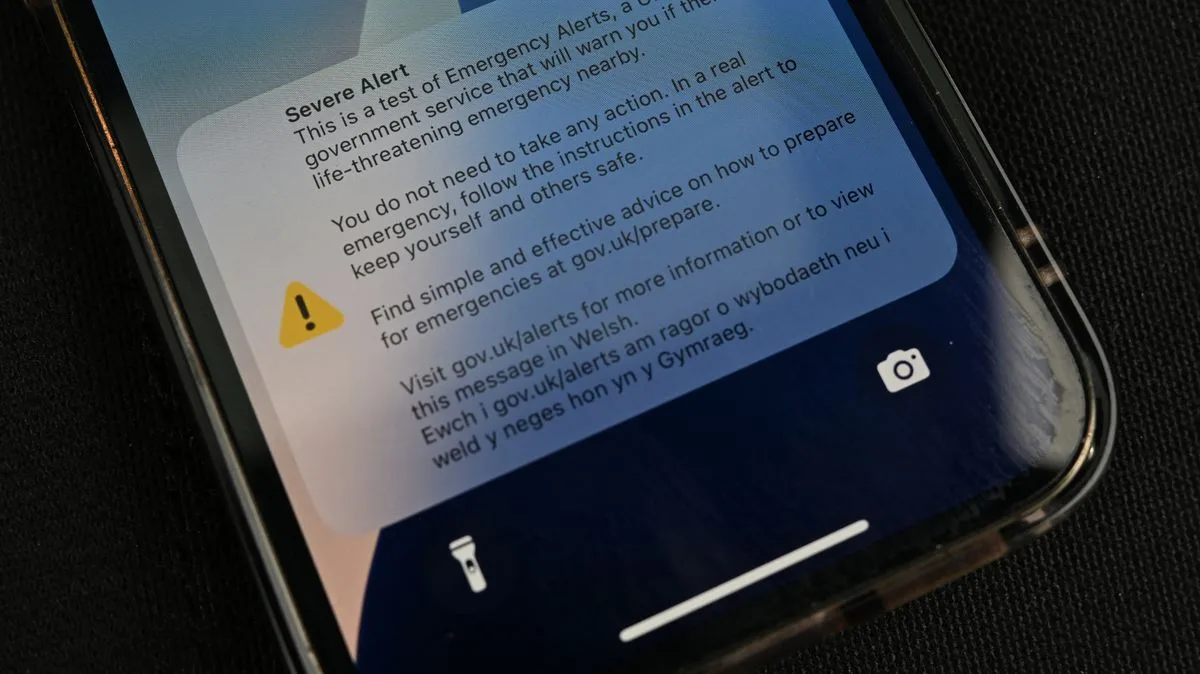
Mobile network providers have been ordered to confirm that the UK's emergency alert system is operational following concerns that wreckage from a Chinese rocket could potentially crash into Britain. Whitehall officials are monitoring debris from the rocket as it plummets towards Earth, with the possibility it might impact the UK.
In an unusual step, telecommunications firms have been instructed to verify their emergency alert infrastructure is prepared for activation, should the debris land in Britain and warnings require immediate distribution to residents near the impact zone. A UK government spokesperson downplayed the threat by emphasising how "extremely unlikely" it is that the space debris will enter British airspace and highlighted that emergency systems were "tested routinely" with partners, including mobile networks.
Government experts are monitoring debris from the Chinese Zhuque-3 (ZQ-3) rocket, which launched in early December and was anticipated to re-enter the atmosphere around midday on Friday. The rocket will probably enter back into the atmosphere whilst Sir Keir Starmer is in China to promote trade and investment. The Prime Minister held talks with Chinese premier Xi Jinping on Thursday, with British officials announcing that relations between the two nations were "no longer in an ice age".

The EU's Space Surveillance and Tracking (SST) agency announced on Wednesday that it was "monitoring the re-entry" of the Chinese rocket, which it suggested could carry a "dummy payload" in the form of a substantial metal tank on board. Around 70 pieces of space debris hurtle past the UK each month whilst, typically, three sizeable chunks of space junk plummet to Earth daily. The overwhelming majority plunges into the ocean or disintegrates over unpopulated areas.
Britain's emergency preparedness teams are keeping an eye on the debris for the unlikely possibility it touches down on UK territory. Telecommunications firms routinely coordinate with government regarding the emergency alert infrastructure, but industry sources disclosed it was rare for Whitehall to explicitly request operators to confirm the system is functioning correctly. The Zhuque-3 Y1 mission blasted off from the Jiuquan Satellite Launch Center in China on December 3, 2025.
Prof Hugh Lewis, an expert at Birmingham University's Space Environment and Radio Engineering research group, said the Chinese rocket body was most likely to pass over Northern Ireland, northern Scotland or northern England. The Chinese rocket had a predicted re-entry time of 12.30pm on Friday, plus or minus 15 hours, according to The Aerospace Corporation's tracker. Prof Lewis said it meant there was a "very large" amount of unpredictability involving where the debris could land.