Bulgaria's Eurovision Entry Dara Reveals the Meaning Behind 'Bangaranga'
Dara on Eurovision Song 'Bangaranga': A Happy Riot

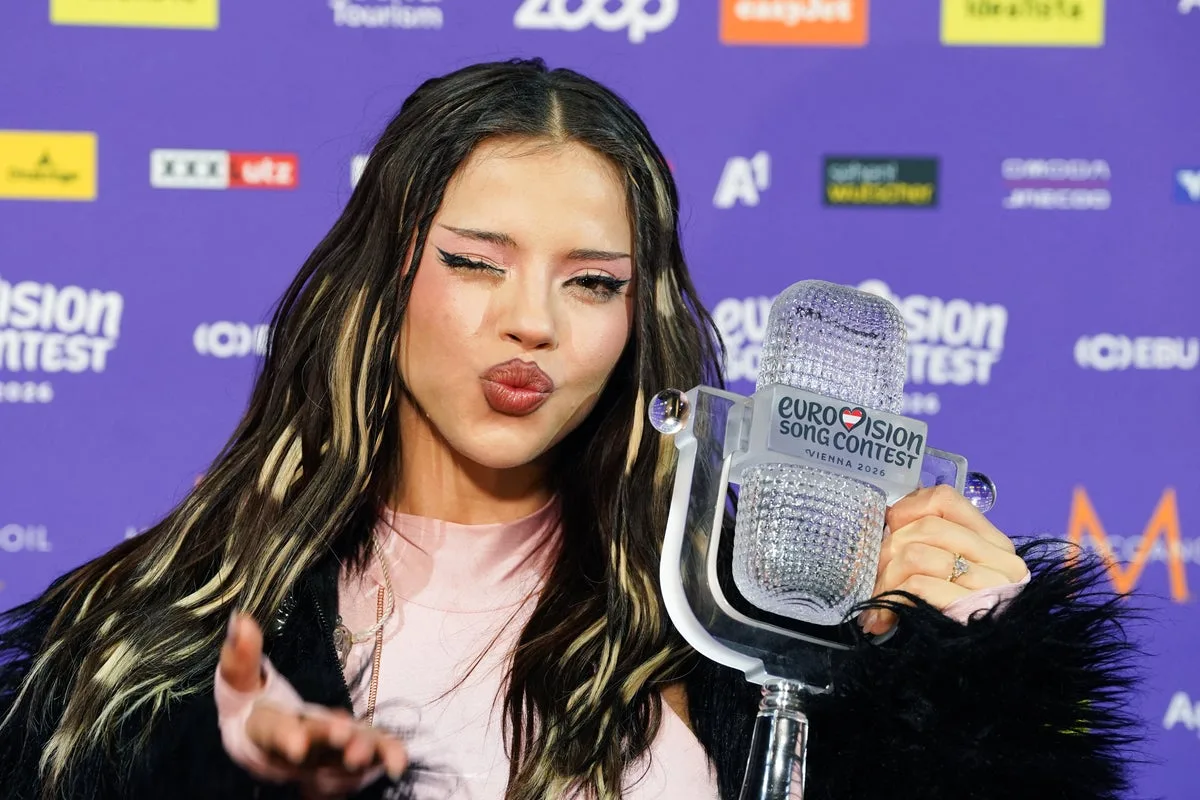
Bulgaria's Eurovision entry Dara has opened up about the meaning behind her intense song 'Bangaranga', which she will perform at the 2026 Eurovision Song Contest in Vienna, Austria. The 27-year-old singer, known for hits like 'Thunder' and 'Call Me', has already achieved a string of number one hits in Bulgaria and mentored on The Voice of Bulgaria in 2021 and 2022. Her latest album, ADHDARA, released last year, was inspired by her diagnosis with ADHD as an adult. Dara will compete in the second semi-final on Thursday, 14 May.

Who Is Dara?

Dara, whose real name is Darina, is a 27-year-old singer and songwriter from Varna, a city on the Black Sea coast of Bulgaria. She grew up immersed in music, attending the National School of Arts in Varna where she specialised in folklore singing. That training in traditional Bulgarian vocal technique, with its microtones and emotional rawness, shaped her musical DNA. She finished third on the Bulgarian X Factor at sixteen, signed to a major label, and has been releasing music in Bulgarian and English ever since. Her most personal album, ADHDARA, was named after her adult ADHD diagnosis and explores themes of chaos, sensitivity, and fire.

The Inspiration Behind 'Bangaranga'

Dara describes 'Bangaranga' as pop music with folklore bones. The word itself comes from Jamaican slang, meaning uproar or beautiful disorder. It has a raw, phonetic power that bypasses translation. The song is deeply inspired by the kukeri, an ancient Bulgarian ritual where men dress in costumes of bells, fur, and animal masks, making ferocious noise to scare away bad spirits. 'That is Bangaranga,' Dara explains. 'It is noise and fire and rhythm deployed as a force for good – to chase away whatever darkness has settled, to shake the room back to life.' The song is a happy riot, an invitation to surrender to the lights and celebrate.

Wide Pickt banner — collaborative shopping lists app for Telegram, phone mockup with grocery list

What Would Winning Mean for Bulgaria?

Bulgaria has been absent from Eurovision for three years, with its best result being Kristian Kostov's second place in 2017. Dara admits that winning would be extraordinary, but what drives her equally is the chance for Bulgaria to be seen. 'We are a small country with an enormous cultural soul,' she says. 'If 'Bangaranga' makes someone look up Bulgaria – its music, coast, literature, people – then I've already achieved something real.'

Pickt after-article banner — collaborative shopping lists app with family illustration