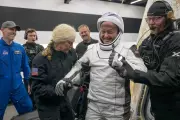
NASA Astronaut Lost Speech in Space, Evacuated from ISS
NASA astronaut Mike Fincke experienced a sudden loss of speech for 20 minutes aboard the ISS, leading to an emergency evacuation and medical investigation into weightlessness effects.


NASA astronaut Mike Fincke experienced a sudden loss of speech for 20 minutes aboard the ISS, leading to an emergency evacuation and medical investigation into weightlessness effects.

NASA astronaut Mike Fincke describes the baffling medical emergency aboard the International Space Station where he suddenly lost his ability to speak, prompting the first-ever medical evacuation from the orbiting laboratory.
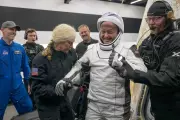
Astronaut Mike Fincke describes a sudden, unexplained medical episode on the ISS that led to NASA's first medical evacuation, with doctors still investigating the cause.
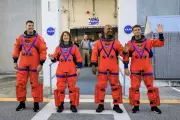
NASA's Artemis II astronauts have ended their quarantine in Texas and are traveling to Florida for a 10-day lunar orbit mission, marking the first crewed Moon journey since 1972.

Shared lists with real-time sync. No signup needed — just open and shop together.
Recommended
Scientists discover a radiation-loving fungus from Chernobyl that could protect astronauts on the Moon and Mars by converting cosmic rays into energy.
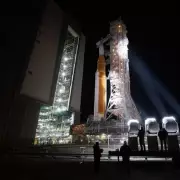
NASA's Artemis 2 rocket is on the launchpad with the countdown set to begin, targeting an April 1 liftoff for the first human moon mission in over 50 years.
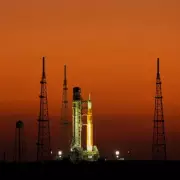
NASA has unveiled seven potential launch dates in April for the Artemis 2 mission, marking humanity's return to lunar orbit after over 50 years. The crew is in quarantine as final preparations intensify.
New research reveals sperm struggle to navigate in microgravity, reducing fertilisation rates by up to 30%. This poses significant challenges for human reproduction during space missions and future planetary settlements.
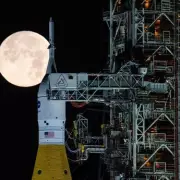
Scientists using China's Chang'e-4 data have discovered a mysterious radiation 'shadow' near the moon that could protect astronauts on future missions by reducing exposure during lunar mornings.
Shared lists with real-time sync. No signup needed — just open and shop together.
Recommended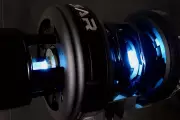
Pulsar Fusion achieves first plasma ignition in a nuclear fusion rocket, promising to reduce Mars journeys from months to weeks and revolutionise space travel.

Scientists at Cern have successfully transported antimatter, the most expensive and volatile substance on Earth, in a pioneering experiment using an unassuming lorry for a careful drive around the campus.
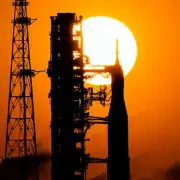
NASA's Artemis 2 mission prepares for launch, with astronauts living in a capsule the size of a Transit van for 10 days. Discover the rocket's specs, crew life, and historic journey details.
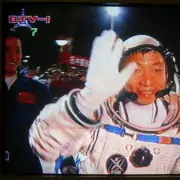
China's first astronaut Yang Liwei reported hearing an unexplained knocking sound during his 2003 space mission, a phenomenon later experienced by other taikonauts.
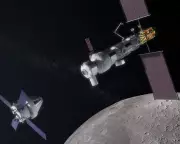
NASA's new chief, Jared Isaacman, announces cancellation of the Lunar Gateway orbiting station, redirecting resources to build a $20bn surface base on the moon within seven years.
Shared lists with real-time sync. No signup needed — just open and shop together.
Recommended
A new study reveals Apollo moon rock samples gave a false impression of a strong magnetic field, with high titanium content explaining the bias and upcoming Artemis missions set to test the theory.
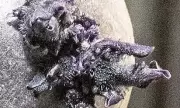
NASA astronaut Don Pettit shared a peculiar photo from the International Space Station showing what appeared to be a tentacled alien object, later revealed to be a potato grown for space agriculture research.
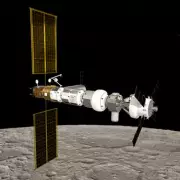
NASA has cancelled its Lunar Gateway space station project, redirecting resources to build a $20 billion base on the moon's surface as part of a major overhaul of the Artemis programme.
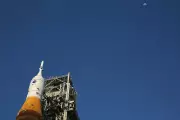
NASA cancels plans for a Moon-orbiting space station, shifting focus to a $20 billion permanent lunar base to establish US presence before China's 2030 landing.
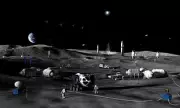
NASA announces a $20 billion plan to build a permanent base on the moon's south pole over seven years, shifting focus from flags to sustained human presence and international collaboration.
Shared lists with real-time sync. No signup needed — just open and shop together.
Recommended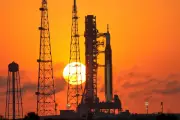
NASA cancels its lunar orbit station, repurposing components for a permanent £16 billion moon base and announcing a nuclear-powered spacecraft to Mars by 2028.
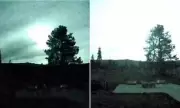
A bright green meteor streaked across the western US sky, seen by over 300 people and causing sonic booms. NASA tracked its path from Chowchilla to Calflax at 35,000 mph.
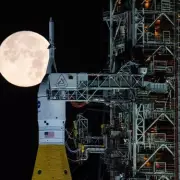
NASA's Artemis 2 mission, the first crewed lunar flight since 1972, faces delays due to hardware issues and safety concerns, with a launch window opening April 1.

NASA's new chief Jared Isaacman cancels the Lunar Gateway station plan, redirecting focus to a $20 billion moon surface base over seven years, reshaping Artemis contracts amid Chinese competition.
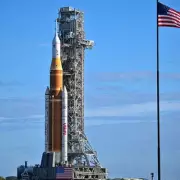
NASA's Artemis II crew begins a 14-day quarantine as the moon rocket returns to the launchpad, targeting an early April liftoff for the historic lunar flyby mission.
Shared lists with real-time sync. No signup needed — just open and shop together.
Recommended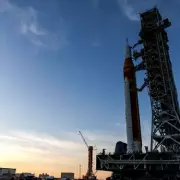
NASA's Artemis II mission will send four astronauts over half a million miles to the Moon, enduring extreme temperatures and high-speed re-entry in a minibus-sized capsule.
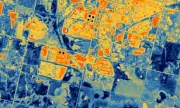
A British satellite capable of capturing high-resolution thermal imagery through walls will launch this week, providing intelligence on nuclear facilities in Iran and North Korea while aiding energy market stability.
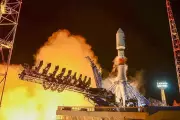
Russia has launched 16 low-orbit satellites as the initial step in creating a domestic internet constellation to compete with SpaceX's Starlink, backed by over $5 billion in funding.

A McDonald's in Shanghai is trialling humanoid robots from Keenon Robotics that wear uniforms, greet customers, and perform tasks, hinting at automation's future in fast food.
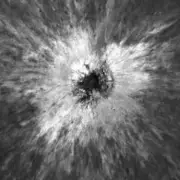
NASA's Lunar Reconnaissance Orbiter has detected a massive new impact crater on the Moon, measuring 225 metres across. Scientists estimate such events occur only once every 139 years, raising concerns for future lunar missions.
Shared lists with real-time sync. No signup needed — just open and shop together.
Recommended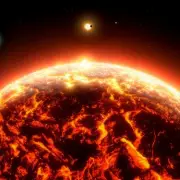
Astronomers uncover TOI-561 b, a molten 'super Earth' 560 light-years away with oceans of lava, an impossible atmosphere, and a side locked in perpetual sunlight.
