UK Startup's Fusion Rocket Breakthrough Cuts Mars Travel Time to Weeks
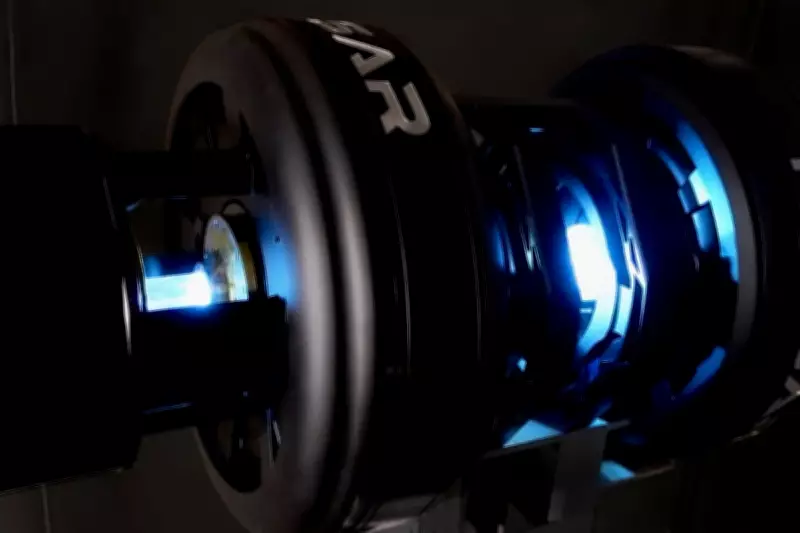
A team of British scientists has achieved the world's first plasma ignition inside a nuclear fusion rocket, marking a pivotal milestone that could usher in a new era of interstellar space travel. This breakthrough, demonstrated by Bletchley-based startup Pulsar Fusion, promises to dramatically reduce journey times to Mars from months to just weeks, making missions to the Red Planet far more feasible and economically viable.
Historic Achievement in Nuclear Fusion Propulsion
Pulsar Fusion showcased this landmark event during a remote live stream at Amazon's MARS conference in California this week. CEO Richard Dinan hailed it as an "exceptional moment" for the company, underscoring its significance in advancing space exploration technology. The first plasma was generated using a sophisticated combination of electric and magnetic fields to guide charged particles through the startup's Sunbird nuclear fusion exhaust test system.
Nuclear fusion involves replicating the natural reactions that power the Sun to produce near-limitless energy, often described as the "holy grail" of clean energy. While harnessing super-hot plasma within an electromagnetic field has proven immensely challenging on Earth, the extremely cold temperatures and near-perfect vacuum conditions of space could make it easier to achieve there. This unique advantage positions fusion propulsion as a game-changer for future missions.

Revolutionising Space Travel with Unprecedented Power
If successfully developed, fusion propulsion could offer up to 1,000 times the power of conventional thrusters currently used in orbit. With a theoretical top speed of around half a million miles per hour (800,000 kph), such rockets would not only slash travel times but also mitigate health risks for astronauts, such as exposure to space radiation and extended periods of microgravity.
The economic implications are substantial. In a statement following the breakthrough, Pulsar Fusion noted that "with the space economy projected to exceed $1.8 trillion by 2035, faster in-space transport isn't just a scientific goal; it's an economic one." This highlights how advancements in propulsion technology could drive growth and innovation in the burgeoning space industry.
Future Plans and Upgrades for Enhanced Efficiency
Looking ahead, Pulsar Fusion has outlined a series of next steps for its Sunbird exhaust system. These include performance testing, superconducting magnet upgrades, and experiments with new types of fuel cycles. Further experiments and enhancements are planned to improve the efficiency of this next-generation propulsion system, building on the momentum of this initial success.
The company began constructing its nuclear fusion rocket in 2023, and this latest achievement represents a critical leap forward. As research progresses, the potential for fusion rockets to transform long-distance space travel becomes increasingly tangible, offering hope for more accessible and sustainable exploration of our solar system and beyond.