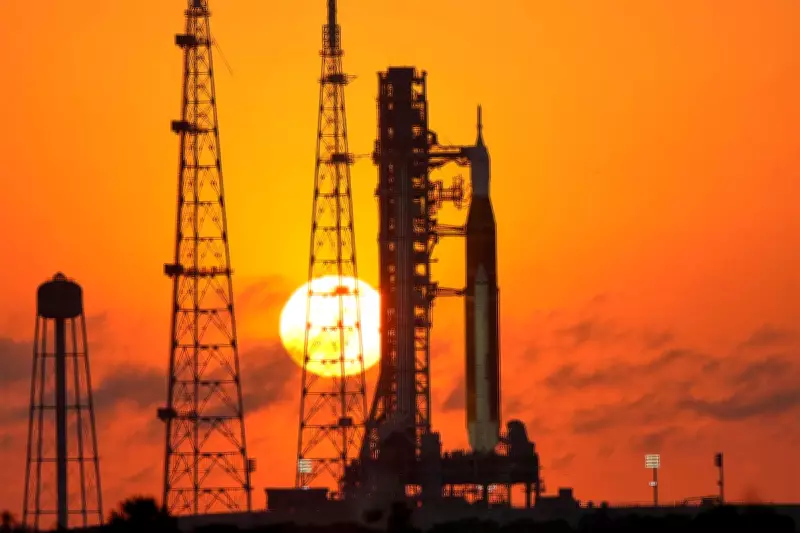
NASA Scraps Lunar Gateway, Pivots to £16bn Moon Base and Nuclear Mars Mission
In a dramatic strategic shift, NASA has cancelled plans for a space station in orbit around the Moon, opting instead to construct a permanent £16 billion base directly on the lunar surface. The agency will repurpose components from the scrapped Lunar Gateway project to achieve this ambitious goal. This overhaul, announced on Tuesday, also includes plans to launch a nuclear-powered spacecraft to Mars before the end of 2028.
Strategic Shift Under New Leadership
Jared Isaacman, appointed by President Donald Trump and leading NASA since December, unveiled these unprecedented changes to the Artemis moon programme. The move aims to significantly expand humanity's presence in space, driven by a competitive urgency to establish a US lunar foothold before China sends its own astronauts there around 2030.
"This revised step-by-step approach to learn, build muscle memory, bring down risk, and gain confidence is exactly how NASA achieved the near impossible in the 1960s," Isaacman said, referencing the historic Apollo program.

Nuclear-Powered Mars Mission Details
NASA disclosed plans for a spacecraft named Space Reactor Freedom to demonstrate advanced nuclear electric propulsion in deep space. This mission represents a major step in transitioning nuclear power and propulsion from laboratory testing to operational spaceflight. Upon reaching Mars, the spacecraft will deploy helicopters to explore the planet's surface.
Repurposing the Lunar Gateway
The Lunar Gateway station, largely built by contractors Northrop Grumman and Intuitive Machines subsidiary Lanteris Space Systems, was originally designed as a research platform and transfer station for astronauts boarding moon landers. "It should not really surprise anyone that we are pausing Gateway in its current form and focusing on infrastructure that supports sustained operations on the lunar surface," Isaacman told an audience of foreign delegates, companies, and Congress members at NASA's Washington headquarters.
This repurposing effort, while challenging, leaves uncertain the future roles of key international partners—Japan, Canada, and the European Space Agency—who had agreed to provide components for the orbital station. "Despite some of the very real hardware and schedule challenges, we can repurpose equipment and international partner commitments to support surface and other program objectives," Isaacman added.
European Space Agency chief Josef Aschbacher, present at the event, stated he would study the new plans and continue discussions with NASA.
Lunar Lander Challenges and Adjustments
Central to the Artemis program is its astronaut lunar lander initiative, with SpaceX and Blue Origin racing to develop vehicles for NASA. Both companies, targeting an initial crewed moon landing in 2028, have fallen behind schedule. NASA's inspector general recently noted SpaceX is two years behind, while both face complex engineering hurdles.
NASA acting associate administrator Lori Glaze indicated that SpaceX is considering alternatives to its current Starship design for the moon lander, aiming for a more streamlined approach to accelerate development. Glaze said NASA will use whichever lander is ready first, abandoning a pre-determined mission order as part of the Artemis shakeup.
Broader Implications and Timeline
The Artemis program, initiated in 2017 during Trump's first term, envisions regular lunar missions as NASA's follow-up to the Apollo program that ended in 1972. Current plans call for landing astronauts on the moon's surface in 2028. The recent changes are reshaping billions of dollars in contracts under the Artemis umbrella, prompting companies to accommodate heightened urgency as China progresses toward its own planned 2030 moon landing.
Plans for the new moon base include:

- Deploying more robotic landers and a fleet of drones.
- Laying groundwork for utilising nuclear power on the lunar surface within coming years.
- Establishing sustained operations to support long-term human presence.
This strategic pivot marks a bold step in space exploration, prioritising direct lunar habitation and advanced propulsion for Mars, while navigating international partnerships and commercial challenges in a renewed space race.