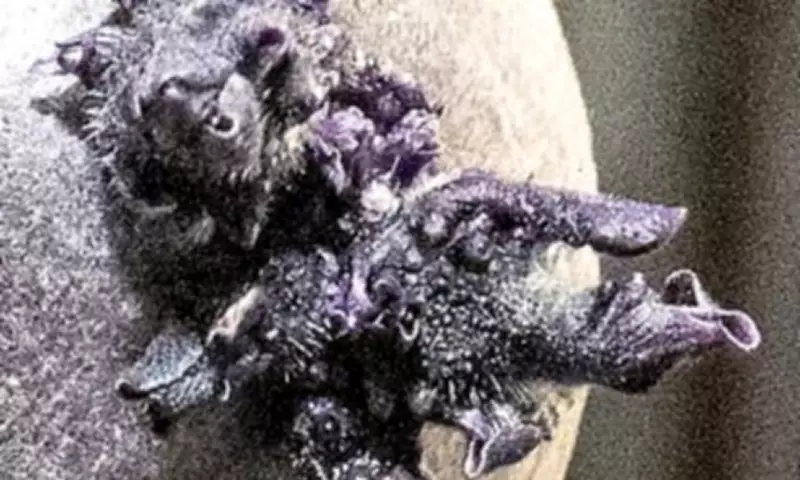
A NASA astronaut has captured and shared a truly extraordinary photograph from aboard the International Space Station, depicting what initially appeared to be a bizarre, tentacled organism growing in the microgravity environment. The image, taken by veteran astronaut Don Pettit during Expedition 72, sparked widespread curiosity and humorous reactions across social media platforms before its mundane explanation was revealed.
The Mysterious Space Object
Don Pettit snapped the intriguing photograph during his mission, which spanned from 23 September 2024 to 18 April 2025. The unusual object bore a striking resemblance to an egg, with dark, root-like tentacles erupting vigorously from its base, creating an alien-like appearance that captivated viewers. The photograph quickly gained viral attention, amassing nearly 100,000 views and generating a flood of imaginative responses from the online community.
Social Media Reactions
Responding to the astronaut's post on X, formerly known as Twitter, users expressed both alarm and amusement at the strange sight. One concerned individual exclaimed, 'Kill it with fire!!!' while another commented, 'Bro I genuinely thought this was some kind of egg hatching.' A third user made a cinematic reference, joking, 'Looks like a mimic hatching out of an egg,' alluding to the 2017 science fiction film Prey. Other humorous remarks included suggestions for a 'zero-g fryer' and observations about the Velcro docking adapter visible in the image.

The Earthly Explanation
Despite its otherworldly appearance, the object had a remarkably ordinary explanation. Astronaut Pettit clarified that the mysterious entity was, in fact, a potato—specifically an early purple potato he had brought to the ISS for personal agricultural experiments. Dubbed 'Spudnik-1,' the potato was part of Pettit's off-duty space gardening activities, anchored in an improvised grow light terrarium using a spot of hook Velcro.
In his detailed explanation on X, Pettit emphasized the scientific rationale behind choosing potatoes for space cultivation. 'Potatoes are one of the most efficient plants based on edible nutrition to total plant mass, including roots,' he stated. The astronaut noted that potatoes' significance for future space exploration had been recognized in Andy Weir's book and subsequent film The Martian, prompting him to begin practical research aboard the ISS now.
Space Versus Earth Cultivation
When questioned by a fan about how space-grown potatoes compare to their terrestrial counterparts, Pettit provided fascinating insights into microgravity agriculture. He explained that in the absence of gravity, the potato's roots grew in all directions rather than following their typical downward pattern. Additionally, he observed that all plants he has cultivated in space, including this potato, have demonstrated significantly slower growth rates compared to Earth-based cultivation.
Broader Context of Space Agriculture
This potato experiment represents just one facet of ongoing agricultural research aboard the International Space Station. To date, astronauts have successfully cultivated a diverse array of fruits, vegetables, and even flowers in the unique microgravity environment. NASA has articulated ambitious plans for expanding space agriculture, with teams at Kennedy Space Center envisioning future cultivation of tomatoes, peppers, berries, certain beans, and other antioxidant-rich foods.
These agricultural endeavors serve multiple purposes beyond nutritional supplementation. NASA has highlighted that antioxidant-rich foods could provide crew members with additional protection against space radiation—a significant concern for long-duration missions. The research aligns with broader preparations for future lunar and Martian exploration, where sustainable food production will be essential for crew survival and mission success.

The International Space Station: A Research Platform
The International Space Station serves as a $100 billion science and engineering laboratory orbiting approximately 250 miles above Earth. Continuously occupied since November 2000, the ISS has hosted 244 individuals from 19 countries, including eight private citizens. Research conducted aboard the station leverages unique conditions such as microgravity and specialized atmospheric composition to advance fields including human research, space medicine, life sciences, physical sciences, astronomy, and meteorology.
NASA allocates approximately $3 billion annually to the ISS program, with additional funding provided by international partners including the European Space Agency, Russian space agency, Japanese space agency JAXA, and the Canadian Space Agency. As the station approaches potential structural limitations beyond 2025, various nations and private entities are planning successor orbital platforms and lunar orbiting stations to continue advancing space research and exploration.