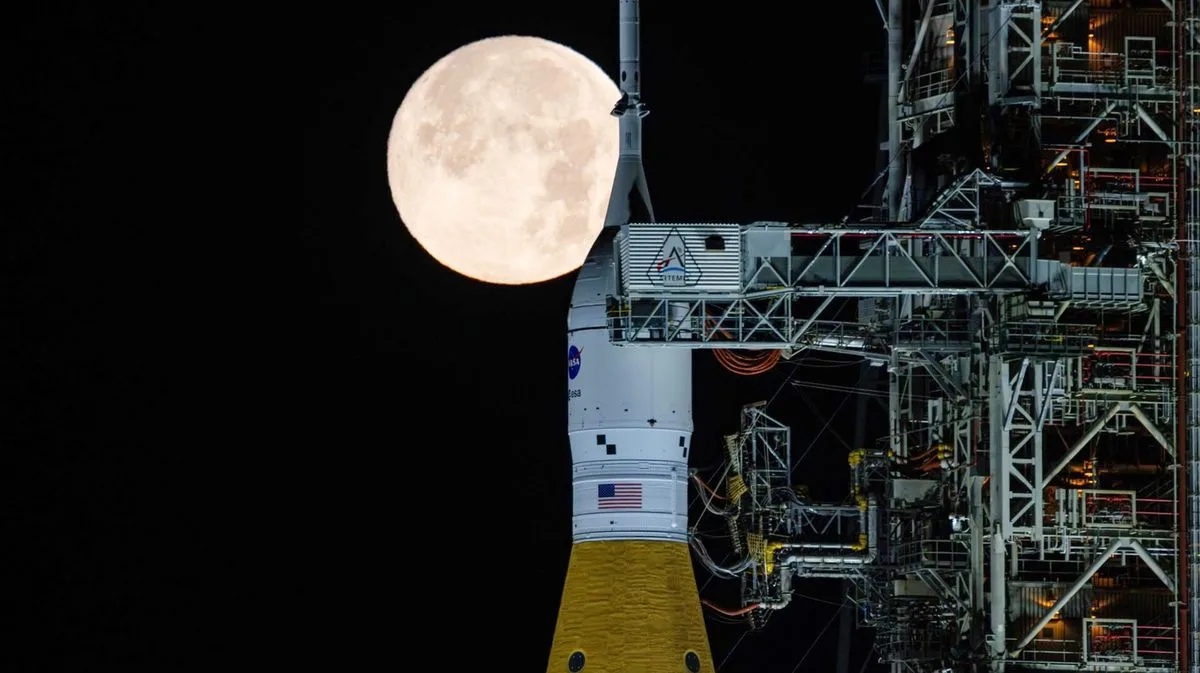
A Chinese lunar probe has detected a mysterious cavity of reduced cosmic radiation between Earth and the Moon, a finding that could enhance astronaut safety on future missions. The discovery, based on data from the Chang'e-4 lander, was published in Science Advances.
Scientists observed that galactic cosmic radiation levels drop by about 20% during the Moon's local morning, just hours after sunrise. This window of reduced exposure could be critical for crewed missions like NASA's Artemis 2, potentially launching as early as April 1.
The phenomenon challenges previous assumptions that cosmic rays spread evenly after passing Earth's magnetic shield. Researchers now believe Earth's magnetic field extends farther into space than expected, creating pockets of lower radiation. Robert Wimmer-Schweingruber of Kiel University said, 'I had not expected to see this shadow or cavity.'

The study analysed data from 31 lunar cycles between January 2019 and January 2022, focusing on quiet solar periods. Instruments tracked protons at various energy levels, confirming a 20% drop in lower-energy protons during lunar mornings. Computer models supported the findings.
Cosmic rays pose a serious threat to astronauts, as they can penetrate spacecraft and human tissue, damaging DNA and increasing cancer risk. The researchers suggest that future lunar landings, likely targeting polar regions, could schedule excursions for the local morning to reduce radiation exposure by about 20%.