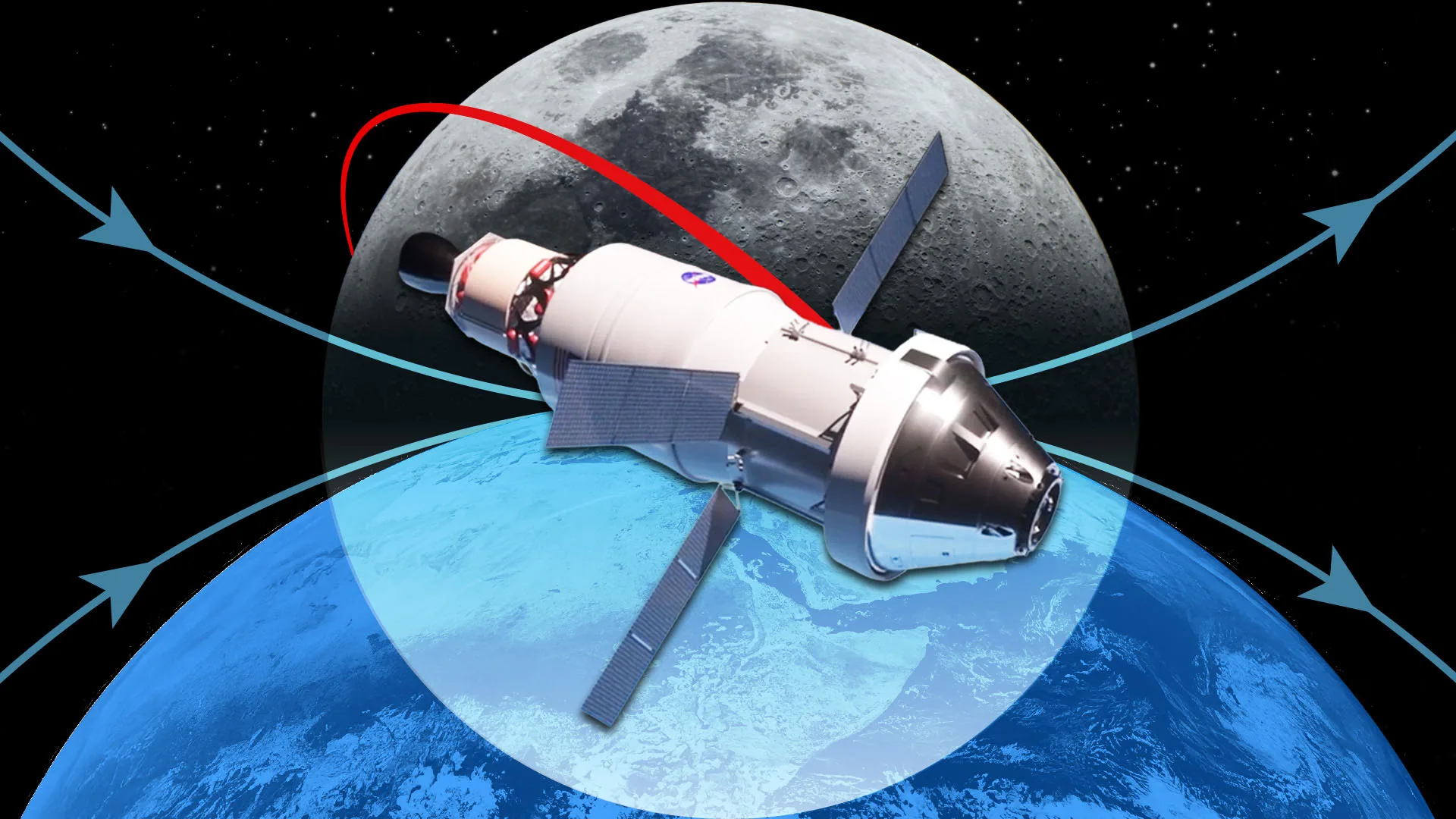
Artemis II Moon Mission Faces Fiery 2,700°C Re-entry at 25,000mph
Artemis II Moon Mission Faces 2,700°C Re-entry at 25,000mph

For the first time in over five decades, humanity is returning to the Moon with NASA's ambitious Artemis II mission, scheduled to launch as early as April 1 from Florida's Kennedy Space Center. This historic voyage will push the boundaries of space exploration, taking four astronauts further from Earth than any human has ever traveled before.

A Journey of Extreme Conditions

The Artemis II crew will embark on a 10-day journey covering more than half a million miles through space. Their return to Earth presents one of the mission's most perilous phases, as their spacecraft will re-enter the atmosphere at a staggering speed of 25,000 miles per hour.

During this fiery descent, the minibus-sized capsule must withstand temperatures reaching approximately 2,700°C - equivalent to half the heat of the Sun's surface. This extreme thermal challenge makes re-entry particularly hazardous for the crew.

Wide Pickt banner — collaborative shopping lists app for Telegram, phone mockup with grocery list

The Crew and Their Vessel

The international team comprises three American astronauts and one Canadian spacefarer, all bringing decades of combined experience to this pioneering mission. Commander Reid Wiseman, a 50-year-old Navy veteran, leads the crew with 16 years of astronaut experience including six months in space.

He is joined by fellow Americans Victor Glover, a 49-year-old former test pilot with 12 years as an astronaut, and Christina Koch, a 47-year-old electrical engineer who made history with the first all-female spacewalk. Canadian Jeremy Hansen, also 50, completes the quartet as a fighter pilot undertaking his first space mission after 16 years of astronaut training.

Technological Marvels and Challenges

The Artemis II spacecraft represents cutting-edge engineering, having never before carried human passengers. Lockheed Martin Space developed the vehicle specifically for this mission, which will separate from NASA's powerful Space Launch System rocket - the most potent launch vehicle ever constructed by the US space agency.

A critical component for crew safety is the heat shield, which sustained damage during the uncrewed Artemis I mission. This protective barrier must endure the searing 2,700°C temperatures during re-entry, with the capsule strategically oriented to ensure the shield bears the brunt of atmospheric friction.

The Return to Earth

Following four days of return travel from lunar orbit, the crew module will separate from the main spacecraft as it approaches Earth. After surviving the intense heat of re-entry, a series of parachutes will deploy to slow the capsule's descent.

The mission concludes with a gentle splashdown in the Pacific Ocean near California, where recovery teams will await the astronauts. Victor Glover has expressed particular anticipation for this moment, noting that seeing the three parachutes deploy will signal to his wife that the most dangerous phase has passed.

Inspiring Future Generations

Beyond its scientific objectives, Artemis II aims to capture public imagination much like the historic 1969 Moon landing. Rod Drury, Vice President of International at Lockheed Martin Space, recalls watching that seminal event as a nine-year-old in Malaysia and believes this mission can spark similar inspiration worldwide.

"I think this mission is going to bring so much excitement around the globe," Drury stated. "It will give so many children the opportunity to talk about space."

Lockheed Martin is expanding its educational outreach, recently announcing plans to bring space exploration expertise and substantial investment to North East England. The company forecasts approximately £1.2 billion in regional investment over the next two decades, creating hundreds of jobs while inspiring students to pursue careers in space science.

Paving the Way Forward

Artemis II represents more than a lunar flyby - it establishes crucial groundwork for future Moon landings and potential lunar base development. The mission will provide unprecedented views of the lunar surface and enhance scientific understanding of the Moon's environment.

As Commander Wiseman describes the experience as "amazing," the crew prepares for their cramped 10-day journey in the compact capsule. Their mission combines visionary ambition with calculated risk, pushing human exploration further than ever before while facing the formidable challenges of space travel.

Pickt after-article banner — collaborative shopping lists app with family illustration