Italian Snowmaking Expert Davide Cerato's Technical Snow to Define Milan Cortina 2026 Olympic Courses
Davide Cerato will play a pivotal role in skiing and snowboarding events at the upcoming 2026 Milan Cortina Winter Olympics, though he won't be competing on the slopes. Instead, as an Italian snowmaking expert, he is responsible for perfecting several of the courses that will feature in the prestigious Games, bringing a meticulous approach to his crucial duties.
Ensuring Elite Performance with Technical Snow
"It's the most important race of their life," Cerato emphasised. "Our duty is to give them the best, to deliver the best courses where they can perform their best after training so hard." He oversees operations at venues where new snowmaking systems have been installed, including in Bormio for Alpine ski racing and ski mountaineering, and in Livigno for freestyle skiing and snowboarding events. Having collaborated with the International Ski and Snowboard Federation and the International Olympic Committee since the 2014 Sochi Olympics, Cerato notes that manufactured snow—or "technical snow" as he terms it—is now integral to ski racing. Olympic athletes routinely compete on it, prioritising courses that remain consistent over multiple training runs and races without becoming too soft or rutted.
Climate Challenges and Massive Infrastructure Investments
With climate change increasingly impacting winter sports, reliable snowmaking has become essential, as Mother Nature cannot always provide optimal conditions. The organising committee estimates the Games will require approximately 946 million litres (250 million gallons) of water for snowmaking, equivalent to nearly 380 Olympic swimming pools. Cerato supervised the development of new high-elevation water reservoirs to store this vast quantity.

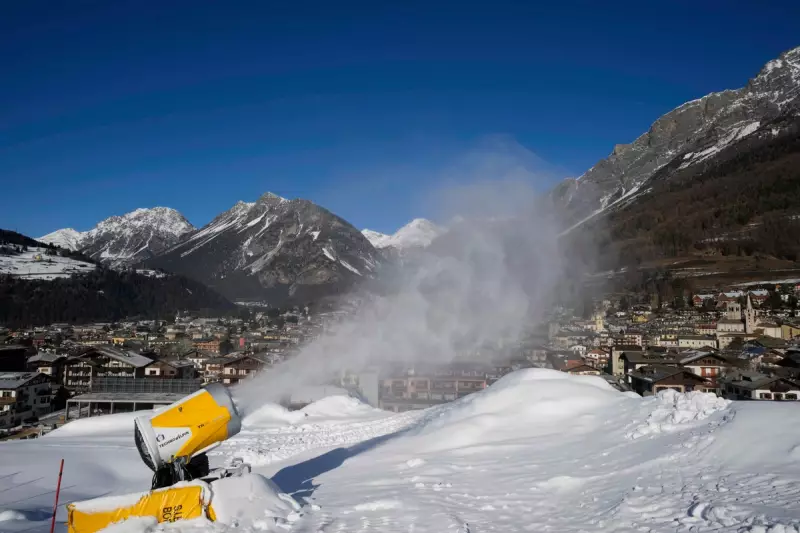
At the Livigno Snow Park, a basin capable of holding about 200 million litres (53 million gallons) of water was constructed, now one of the largest reservoirs on the Italian side of the Alps. Over 50 snow guns were added there, producing around 800 million litres (211 million gallons) of snow in roughly 300 hours. In Bormio, a lake was built at an elevation of 2,300 metres (2,515 yards) to hold 88 million litres (23 million gallons) of water, alongside 75 snow guns for Alpine skiing and ski mountaineering. Cerato proudly compared the enhanced Bormio slope to a "Ferrari with new gears," highlighting the significant upgrades.
Advanced Technology for Fair and Safe Competition
By utilising manufactured snow, organisers can precisely control a slope's quality and hardness, preparing it to meet FIS requirements and ensure consistent conditions. Cerato explained that technical snow is easier to work with because it is compact and safer, as it deteriorates less quickly than natural snow. Injecting water deep into the snowpack allows it to freeze, creating a more stable race surface. "We can deliver better, safer and fair courses," he stated. "That is the difference—a fair course from bib No. 1 to bib No. 50."
Cerato and his team employ state-of-the-art sensors to monitor snow depth, automatically activating snow guns when gaps appear and deactivating them if there is excess. "It automatically adjusts everything, each snow gun, so you can control with just one person sitting in the office, all the mountain," he described. In Bormio, snow groomers equipped with GPS systems further optimise snow quality and levels, conserving time, energy, and water by precisely determining where and how much snow to push. "You produce the minimum amount of snow that you need," Cerato noted. "This is a powerful tool."
Distinguishing Elite and Commercial Snow Preparation
Preparing slopes for elite competition differs markedly from commercial use, where natural snow is highly valued. Personally, Cerato, who was born in the mountains, expresses a preference for skiing in powder, stating, "I love snow." His expertise ensures that the Milan Cortina 2026 Olympics will feature world-class courses, blending advanced technology with a deep respect for the natural environment to support athletes in achieving their peak performances.