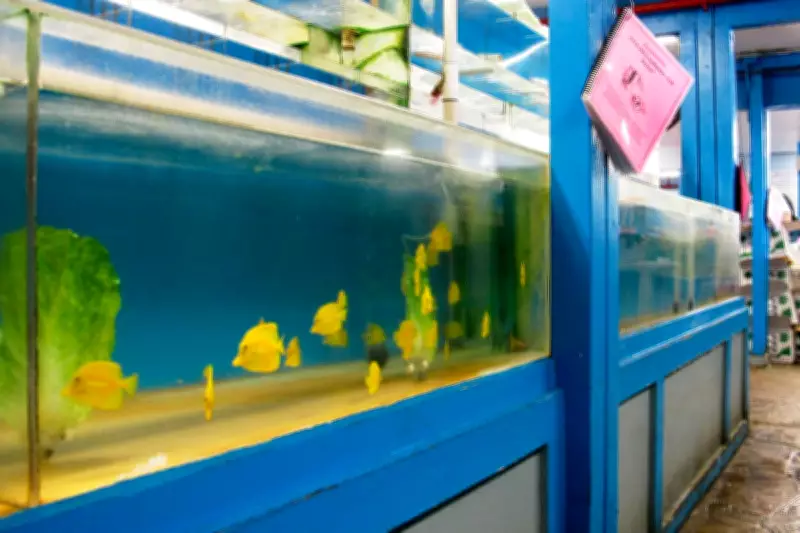
Hawaii's Aquarium Fish Trade Faces Critical Decision: Ban or Revival
Hawaii's long-contested aquarium fish harvesting industry is approaching a decisive moment, with state lawmakers and resource managers locked in a fierce debate over its future on the Kona Coast. The practice, currently halted statewide due to legal battles, faces either permanent prohibition or carefully regulated revival.
Legislative Push for Permanent Ban
Many Hawaii legislators are determined to pass a comprehensive ban during this year's session, following several previous unsuccessful attempts. The proposed legislation, House Bill 2101, has already cleared the House with a decisive 43-8 vote, demonstrating significant political momentum. However, its path through the Senate appears more challenging, with the bill referred to four separate committees—a clear indication of potential resistance.
The proposed ban has generated substantial public engagement, with hundreds of pages of written testimony submitted, predominantly supporting prohibition. The Hawaii County Council has unanimously endorsed the ban, voting 9-0 in January to urge state lawmakers to prohibit commercial aquarium harvests permanently.

State Managers Propose Limited Revival
Simultaneously, state aquatic resource managers are advancing their own regulatory framework to revive Big Island collections for the first time since 2017. Their proposal includes issuing just seven permits to collectors, who would be authorized to harvest over 200,000 yellow tang and other reef species annually.
These quotas closely resemble recommendations from a pet trade industry environmental review conducted five years ago, drawing criticism from local conservationists who question the independence of the proposed regulations.
Industry Perspectives and Economic Realities
The aquarium fish trade represents a multibillion-dollar international industry, with Hawaii's reef species particularly coveted. Veteran collector Ron Tubbs, who operated off O'ahu for decades before court rulings halted the practice, described the economic chain: collectors might receive $20 per fish, wholesalers $40, and pet stores approximately $60.
Since the fishing halt, Tubbs has depleted nearly $100,000 of retirement savings attempting to breed marine species in captivity, now working as an event photographer and mechanic to make ends meet. "The aquarium-fishing halt greatly impacted a lot of people here," Tubbs acknowledged.
Cultural and Environmental Considerations
The debate extends beyond simple fish counts to encompass broader questions about sustainability and cultural values. Marine research scientist Alohi Nakachi emphasizes the need to integrate scientific data with Indigenous knowledge and community observations of environmental changes over time.
"It's holistic. It's not just the fish," Nakachi explained. "It's how the limu will affect the fish that affect the coral reefs. They're all in this integrated, connected system."
State aquatic biologist Bryan Ishida acknowledged that his analysis of whether to reopen collections did not include cultural and ethical dimensions, noting these must be considered alongside biological data.
Alternative Approaches and Industry Adaptation
Some industry participants see opportunity in the shifting landscape. The Biota Group, led by CEO Carsten Buschkühle and local manager James Gorke, has been developing captive breeding of Hawaii's reef species as an alternative to wild harvesting. The company operates large tanks at Hawaii Pacific University's Waimānalo campus and argues that an aquarium harvest ban would encourage greater investment in aquaculture.
"Aquaculture allows Hawaiian reefs to stay stocked with marine life," the group testified, "while still allowing the iconic animals as ambassadors to educate the world about Hawaii's reefs."
Legal Battles Continue
The controversy continues to play out in courtrooms alongside legislative chambers. The Hawaii Island Aquarium Fishers Association filed a 2024 lawsuit seeking to compel the state to issue commercial collection licenses, arguing they fulfilled environmental review requirements in 2021 and are being unfairly singled out among fishing sectors.

Public hearings on the state's proposal to reopen aquarium fishing are scheduled for March 31 (online) and April 1 (in-person at Kealakehe High School in Kailua-Kona), providing further opportunity for community input.
Personal Reflections and Community Impact
Kekoa Alip, a Hawaii island resident who participated in aquarium harvesting as a teenager, now opposes the practice despite benefiting economically from it decades ago. He recalls when yellow tang were so abundant "you could see the waves roll with lau'ipala" but notes concerning declines even during the fishing pause.
"We chose kuleana over cash," Alip said of his decision to stop harvesting. "It's an export trade. Never heard of anyone wanting locally, the fish. And that was concerning to me even back then."
As Hawaii approaches this environmental crossroads, the decision will balance economic considerations, cultural values, scientific data, and competing visions of sustainability that will shape the islands' marine ecosystems for generations.