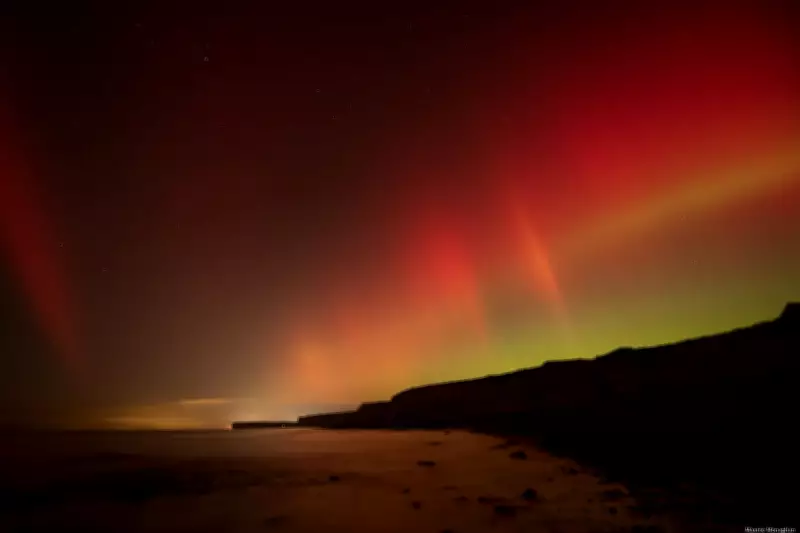
A rare celestial spectacle may grace the skies over 18 US states tonight as a geomagnetic storm creates ideal conditions for viewing the northern lights. The National Oceanic and Atmospheric Administration's Space Weather Prediction Center has issued a storm watch for a G2 geomagnetic event, scheduled to begin at 8 p.m. ET on Wednesday and continue through Thursday at 8 p.m. ET.
States Poised for Potential Aurora Display
According to the NOAA's aurora map, the states where the northern lights may be visible include Alaska, Washington, Oregon, Idaho, Montana, Wyoming, North Dakota, South Dakota, Nebraska, Minnesota, Iowa, Wisconsin, Illinois, Michigan, New York, Vermont, New Hampshire, and Maine. The agency notes that in states closer to the Canadian border, the lights might only become visible if the geomagnetic storm intensifies to approximately a G3 level.
Understanding the Geomagnetic Storm
The G scale for geomagnetic storms ranks events from G1 (minor) to extreme G5 storms. This particular storm results from a coronal mass ejection, which occurs when the sun ejects solar material from its outer atmosphere. When charged particles from the sun interact with molecules in Earth's upper atmosphere, they create the glowing aurora that can sometimes be seen in the night sky.

Geomagnetic storms like the one expected on Wednesday can do more than just create beautiful light displays. The NOAA notes that a G2 storm can disrupt power systems in northern regions, affect spacecraft operations, and cause power fluctuations in weaker energy grids or satellites. Additionally, the storm may impact migratory animals; a 2023 study found that some species of migratory birds tend to delay travel during geomagnetic storms, possibly due to navigation difficulties.
Optimal Viewing Conditions and Timing
The best way to view the northern lights is to find a remote area with a clear view of the northern sky, far from city lights. The aurora will appear more colorful and vibrant in darker skies. March tends to be an active month for auroras in the US, with the weeks before and after the spring equinox on March 20 considered "aurora season." This increased activity is due to the way solar wind interacts with Earth's magnetosphere during these weeks.
While the geomagnetic storm watch provides an exciting opportunity for skywatchers, it also serves as a reminder of the sun's influence on our planet's technological and natural systems. Residents in the affected states are encouraged to take advantage of this rare viewing opportunity while being mindful of the storm's broader effects.