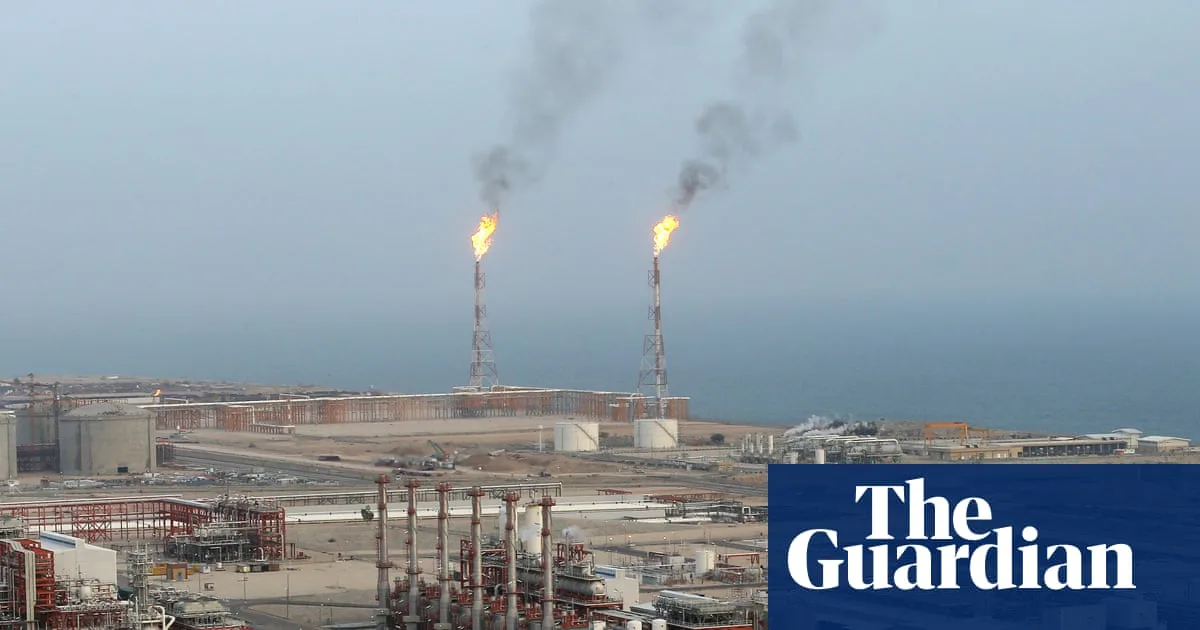
Iran's Revolutionary Guards have threatened to attack energy facilities in Saudi Arabia, the United Arab Emirates and Qatar in retaliation for Israeli strikes on its largest gasfield. The warning comes after state media reported that missiles had targeted the giant South Pars field, the world's largest gas reserves, which Iran shares with Qatar.
The Revolutionary Guards identified Saudi Arabia's Samref refinery and Jubail petrochemical complex, the UAE's al-Hosn gasfield, and Qatar's Mesaieed petrochemical complex and Ras Laffan refinery as targets. They urged civilians and employees to evacuate these areas immediately. The strikes on South Pars were widely reported in Israeli media to have been carried out with US consent, marking a significant escalation in the conflict.
The international oil benchmark surged towards $110 a barrel on Wednesday, while European gas prices rose over 7.5%. A Qatari government spokesperson warned that targeting energy infrastructure threatens global energy security and the regional environment. Iran has already struck the UAE's Shah gasfield, Iraq's Majnoon oilfield, and Fujairah port using drones and missiles.
Daily oil exports from the Gulf have fallen by at least 60% from pre-war levels due to attacks and Iran's blockade of the Strait of Hormuz. However, Iran's own hydrocarbon infrastructure had been largely spared until the South Pars attack. The US recently struck Kharg Island but avoided Iran's oil export facilities, while Iran continues to ship crude through the strait uninterrupted.