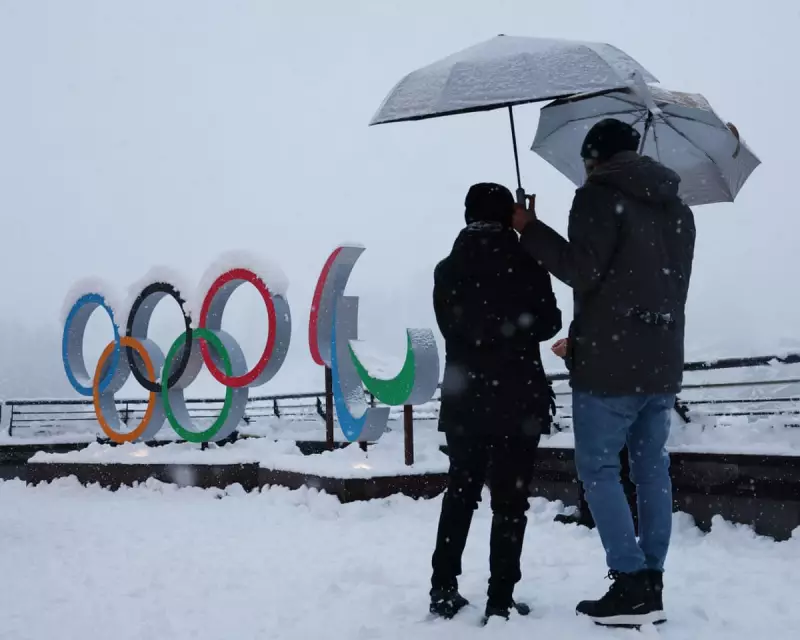
A significant political controversy has erupted in Italy over the planned security role of US Immigration and Customs Enforcement agents during the upcoming Milan-Cortina Winter Olympic Games. The involvement of ICE, an agency notorious for its aggressive immigration enforcement tactics in the United States, has sparked widespread outrage and formal petitions from opposition parties demanding their exclusion from the event.
Political Backlash and Official Petitions
Two prominent opposition parties, the Green and Left Alliance and Azione, have initiated urgent petitions calling on the Italian government and the Olympic organising committee to prevent ICE agents from entering the country and participating in any security operations. These political groups have characterised ICE as a dangerous militia that operates outside democratic norms, citing recent fatal shootings in Minneapolis as evidence of their unacceptable methods.
Mayoral Opposition and Security Concerns
Milan's Mayor Giuseppe Sala has emerged as a vocal critic of the arrangement, declaring the ICE agents "clearly not welcome" in his city. In a radio interview, Sala questioned why Italy couldn't refuse this particular request from the Trump administration, asserting that Italian security forces are perfectly capable of managing protection duties without American assistance. "This is a militia that kills," Sala stated emphatically, highlighting the fundamental disagreement over security philosophy between Italian democratic practices and ICE's controversial approach.

Official Clarifications and Diplomatic Context
Despite the growing controversy, sources at the US embassy in Rome have confirmed that ICE's Homeland Security Investigations unit will indeed support diplomatic security details during the Olympic Games. However, they emphasised that these agents will focus specifically on vetting and mitigating risks from transnational criminal organisations, with all security operations remaining under ultimate Italian authority. The agents will not conduct any immigration enforcement operations on Italian soil.
The situation has been complicated by Italy's current political landscape, with the far-right government maintaining friendly relations with the Trump administration. Reports suggest the government briefly considered blocking ICE participation but faced diplomatic complications, as such a move would represent a significant departure from standard protocols for protecting high-ranking US officials during international events.
Broader Political Reactions
Alessandro Zan, a European Parliament member from the centre-left Democratic Party, echoed the sentiment of many Italian politicians when he declared ICE's presence "unacceptable." He specifically criticised the agency for what he described as human rights violations and operations conducted without proper democratic oversight. This political opposition reflects broader European concerns about American immigration enforcement practices and their compatibility with European values.
Media Coverage and Public Perception
The controversy gained additional momentum when Italian state television RAI aired footage showing ICE agents threatening to break the windows of a vehicle used by their news crew reporting from Minneapolis. This visual evidence has reinforced negative perceptions of the agency among the Italian public and strengthened opposition arguments against their involvement in the Olympic security apparatus.
Speculation about ICE's role had been circulating for days before official confirmation, particularly after Lombardy region president Attilio Fontana mentioned that US Vice-President JD Vance and Secretary of State Marco Rubio would receive protection from ICE bodyguards during the Games. This revelation further inflamed the political debate and intensified calls for the Italian government to assert its sovereignty over security arrangements.

International Implications and Future Developments
The dispute highlights growing tensions between traditional diplomatic protocols and contemporary political values, particularly regarding human rights and appropriate security methodologies. As the February 2026 Games approach, this controversy continues to develop, with opposition parties gathering signatures and political pressure mounting on the Italian government to reconsider the arrangement. The outcome may set important precedents for how host nations balance diplomatic relationships with domestic political values during major international events.