
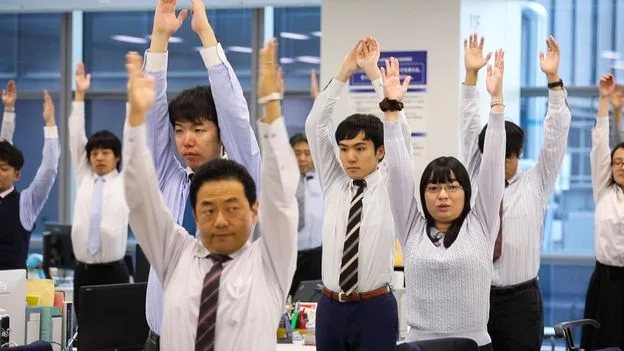
Tens of millions of Japanese people perform a specific exercise routine at least once a week, known as 'rajio taiso' or radio calisthenics. This short, three-minute routine is broadcast daily on Japan's national radio, streamed on YouTube, and followed in parks and schools by all generations. Despite its deep roots in Japanese culture, the tradition has a surprising origin in the United States.
Rajio taiso consists of three routines: 'dai-ichi', 'dai-ni', and 'dai-san'. Dai-ichi is the most familiar, taught from a young age in schools and designed to be accessible to everyone. It comprises 13 movements, starting with gentle arm raises and ending with modest star jumps. The routine requires no equipment, using only body weight and momentum, making it ideal for offices, schools, parks, and homes.
The origins of rajio taiso trace back to a 1920s US public health initiative. Local radio stations in six American cities broadcast 15-minute exercise routines sponsored by the Metropolitan Life Insurance Company. In the 1920s, Japan faced low life expectancy (42 years) and widespread tuberculosis. Two representatives from Japan's health insurance bureau visited Metropolitan Life and brought the idea of daily exercise broadcasts home. By the mid-1920s, rajio taiso was launched, with 20,000 postal workers performing the routines on streets each morning.
Rajio taiso has been broadcast every day since, stopping only briefly after World War II to modify militaristic movements. It is ingrained in childhood, with summer holidays often synonymous with early-morning group exercises. Children use attendance cards, stamped after each session, with prizes for perfect attendance. These cards originated from 1920s 'early-riser meetings' designed to get children to school on time. The Japanese government reports that up to 30 million attendance cards were printed, significantly spreading the exercises.
While some believe rajio taiso contributes to longevity, its light intensity makes it suitable for all ages. As one practitioner noted, 'The great thing about rajio taiso is to be able to activate the entire body if you go through the whole exercise.' Another added, 'I would not feel comfortable standing up abruptly and doing a stretch at work by myself. But when we all do it together, I don't feel shy.'




