
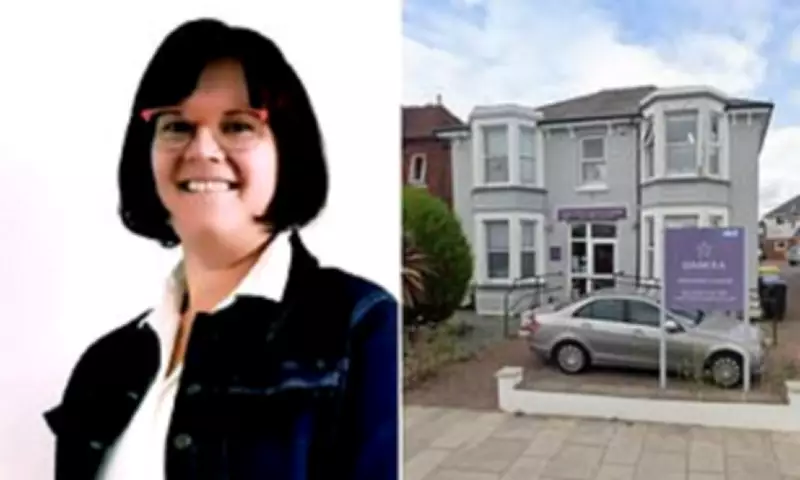
Dentist Wins High Court Appeal Against Racist Comments Strike-Off
A dentist who was removed from the professional register after making a series of racially motivated disparaging comments about 'Indian dentists' has successfully appealed to the High Court and been reinstated, with her punishment reduced to a six-month suspension.
Background of the Case
Hanna Grzelczak, a 48-year-old dentist based in Southampton, qualified in Poland in 2003 before relocating to the United Kingdom in 2009. She began working for Damira Dental Studios in Fareham, Hampshire, in January 2022, initially in a locum position before becoming a permanent associate dentist from May 2022.
In March 2023, Ms Grzelczak submitted her resignation, effective from June 30, 2023. Subsequently, from late July 2023, she sent a series of emails to the practice staff, requesting that her name be removed from the company's website and online materials. In these communications, she made derogatory remarks specifically targeting 'Indian' dentistry.
The Offensive Emails
In one particularly contentious email, Ms Grzelczak stated: 'I am buying private practice. I noticed my name Hanna Grzelczak dentist In Google is connected with Damira practices. I feel low with this connection as Damira is NHS low quality service and this is Indian company! It is a shame to me.'
She further elaborated: 'I don't want to be connected with Indian dentistry. I am not Indian. Please remember I don't provide Indian implants... I provide German technology.'
Disciplinary Proceedings
A formal complaint was lodged with the General Dental Council (GDC), leading to an investigation. Four allegations were presented before a fitness to practise panel, each corresponding to one of the emails. The charges asserted that the communications were 'unprofessional, inappropriate and racially motivated' and that Ms Grzelczak's fitness to practise was impaired due to misconduct.
At the commencement of the committee hearing on September 22, 2025, Ms Grzelczak formally admitted to all allegations. Following a three-day hearing, the GDC's Professional Conduct Committee decided to erase her name from the dental register, citing findings of misconduct and impairment.
The panel justified their decision by stating: 'You have breached a fundamental tenet of the profession, namely the need to treat others with respect and not bring the profession into disrepute. The misconduct that the committee has found, relating as it does to racially-motivated comments, connotes a deep-seated and harmful personality or professional attitudinal issue.'
They further criticized her for downplaying her culpability by referring to her comments as 'illogical', 'nonsense', and 'silly', indicating that she had not fully grasped the offensiveness of her remarks.
High Court Appeal
Ms Grzelczak subsequently mounted a High Court challenge, appealing to Judge Bilal Siddique to overturn the GDC's decision to strike her off. In her defence, she admitted to using 'irrational, racist words to express my frustration and reach my objectives'.
Judge Siddique acknowledged that her comments were 'racially motivated' and that she had 'lashed out in anger, using racist comments because she knew they would be hurtful'. However, he concluded that striking her off was disproportionate.
The judge emphasized: 'Erasure is reserved for behaviour fundamentally incompatible with continued registration, such as an attitudinal concern that is entrenched or irremediable. I accept that Ms Grzelczak's misconduct represented a serious departure from the professional standards expected of a registered dentist, particularly the duties to treat colleagues with respect, to avoid discriminatory behaviour, and not to bring the profession into disrepute.'
He noted that Ms Grzelczak had admitted the allegations in full at the outset, accepted that her conduct amounted to misconduct, and acknowledged that her fitness to practise was impaired. While her explanations were sometimes inadequate and revealed attempts to minimise her conduct, they did not demonstrate an 'entrenched or enduring refusal to acknowledge wrongdoing'.
Judge Siddique further reasoned: 'In my judgment, this evidence falls materially short of establishing the kind of sustained, deep-seated attitudinal defect or persistent lack of insight that would render erasure the only proportionate sanction. My own assessment of Ms Grzelczak's emails is that whilst they were plainly offensive, inappropriate and racially motivated, they do not approach the level of conduct that would give rise to a risk of serious harm of the kind contemplated in the sanctions guidance for a sanction of erasure.'
He highlighted that the emails did not involve patients, nor did they pose any immediate risk to patient safety, clinical care, or the physical or psychological wellbeing of others. Although they had the potential to cause distress, their gravity primarily lay in their unprofessional and racially motivated nature rather than in any capacity to cause serious harm.
Outcome and Implications
Judge Siddique allowed the appeal, substituting the sanction of erasure with a direction that Ms Grzelczak's registration be suspended for a period of six months. He stated: 'The threshold for erasure is met only where the misconduct has caused serious harm or presents a continuing risk of serious harm, or where the behaviour is so fundamentally incompatible with continued registration that no lesser sanction will suffice. That would include, for example, cases where the attitudinal concern is entrenched or irremediable. This is not such a case.'
This ruling underscores the High Court's stance on disciplinary measures, balancing the severity of misconduct with proportionality in sanctions, particularly in cases where racist remarks, while reprehensible, do not meet the threshold for permanent removal from a professional register.




