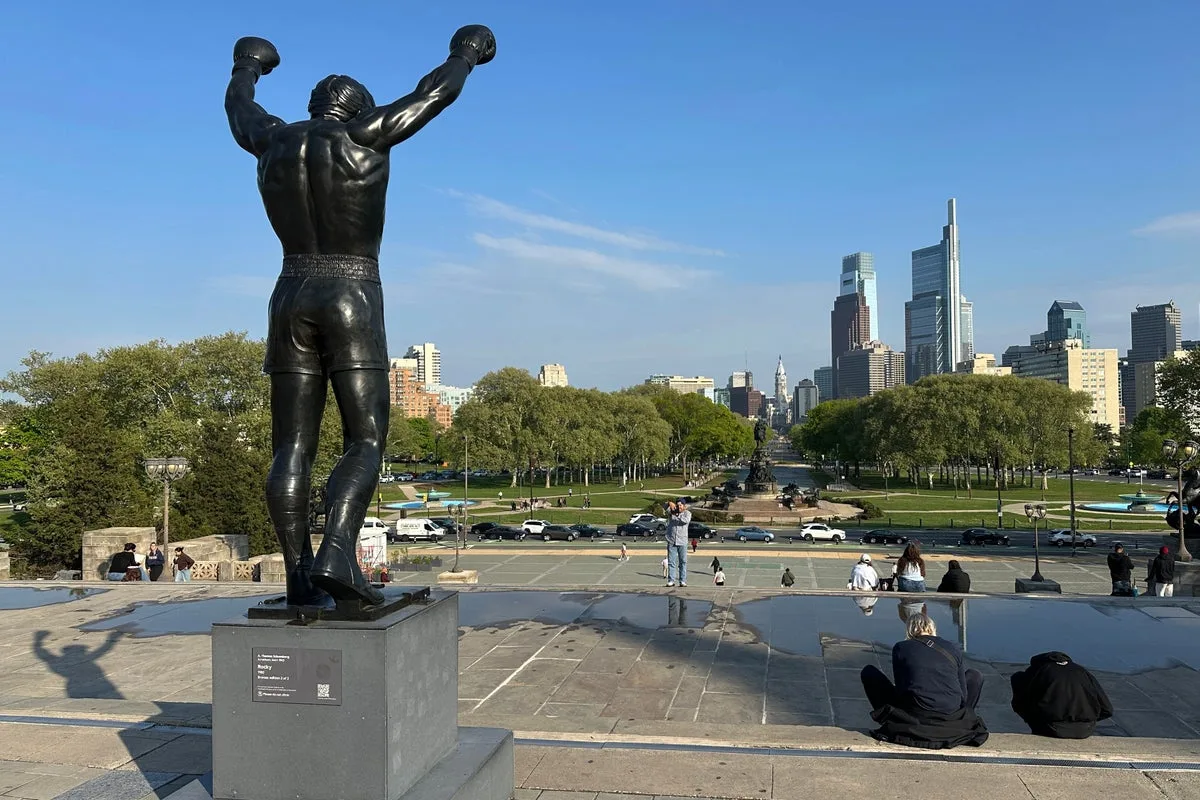
The Philadelphia Museum of Art is finally embracing a statue it once kept at arm's length. For decades, the museum maintained an uncomfortable distance from the bronze figure of Rocky Balboa, the fictional boxer from South Philadelphia who became a global icon. Now, it is inviting Rocky inside.
New Exhibition Celebrates Rocky's Legacy
Opening this weekend, “Rising Up: Rocky and the Making of Monuments” examines how a fictional fighter became a real-world symbol. The exhibition places the statue within the sweep of art history and Philadelphia’s identity. Guest curator Paul Farber spent years exploring the meaning of the statue and public monuments, including through his NPR podcasts, before bringing the conversation into the museum.
The exhibition spans more than 2,000 years of boxing imagery, tracing a thread of human struggle. Louis Marchesano, the museum’s deputy director of curatorial affairs and conservation, explains Rocky’s enduring pull: “The common theme that runs throughout 2,000 years of boxing imagery is that people respond to the body under struggle, a conflict in much the same way today as they did 2,500 years ago. It’s not simply about watching two people beat each other up — it’s about endurance, internal fortitude and internal struggle.”
A Rocky History
When the bronze statue was left on the steps after filming the “Rocky” movies, the museum fought to have it removed. It was eventually relocated to South Philadelphia before returning to the bottom of the steps in 2006. It was welcomed back, but never fully embraced. The city owns the spot where the statue sits — not the museum. “The museum has had — and I hate to say this, no pun intended — a rocky relationship with the statue,” Marchesano said. “It took us decades to come to terms with it. But I’m glad that we did.”
Visitor Attraction
According to the Philadelphia Visitor Center, about 4 million people visit the steps each year — rivaling the nearby Liberty Bell in annual foot traffic. David Muller, a wrestling coach from France who recently brought his students to the steps, said he thinks Balboa’s trials and travails are “good for the next generation.” “The movie ‘Rocky’ is important for the mind of sport and the mind of life,” Muller said, after running with them up the steps as they raised their hands at the top, smiling and punching the air like boxers.
Kate Tarchalska traveled from Poland with family and made the statue one of their stops. “He was my hero when I was younger,” she said. “And now I am so glad I could be in the same spot as him.” Suraj Kumar, visiting his aunt in Philadelphia from St. Louis, made a point to photograph the statue to share with his father, who first introduced him to the films when he was growing up in Bengaluru, India. “When I got to know this statue is here, I was like, I really have to come down here,” he said.
Exhibition Highlights
One gallery places Rocky in the global boxing fever of the 1970s, featuring works by Keith Haring, Jean-Michel Basquiat and Andy Warhol — all created during a time when boxing had the world’s attention. “In the 1970s, we knew minute by minute who the heavyweight champion of the world was,” Marchesano said. “The artists in this gallery are responding to that global frenzy. Sylvester Stallone, in ‘Rocky,’ was doing the same — thinking about internal and external struggle.”
Another gallery turns to Philadelphia itself, presenting photographs of the Blue Horizon boxing gym and a section on Joe Frazier, whose real-life story at least partially inspired Rocky. “Without Joe Frazier, Rocky doesn’t exist,” Marchesano said.
Permanent Home
When the exhibition closes in August, the statue inside will move to a permanent home at the top of the museum’s steps — a place it has never officially held. The statue currently outside remains on loan from Stallone. Rocky’s longtime spot at the bottom of the steps won’t be empty — a statue of Frazier will replace it.