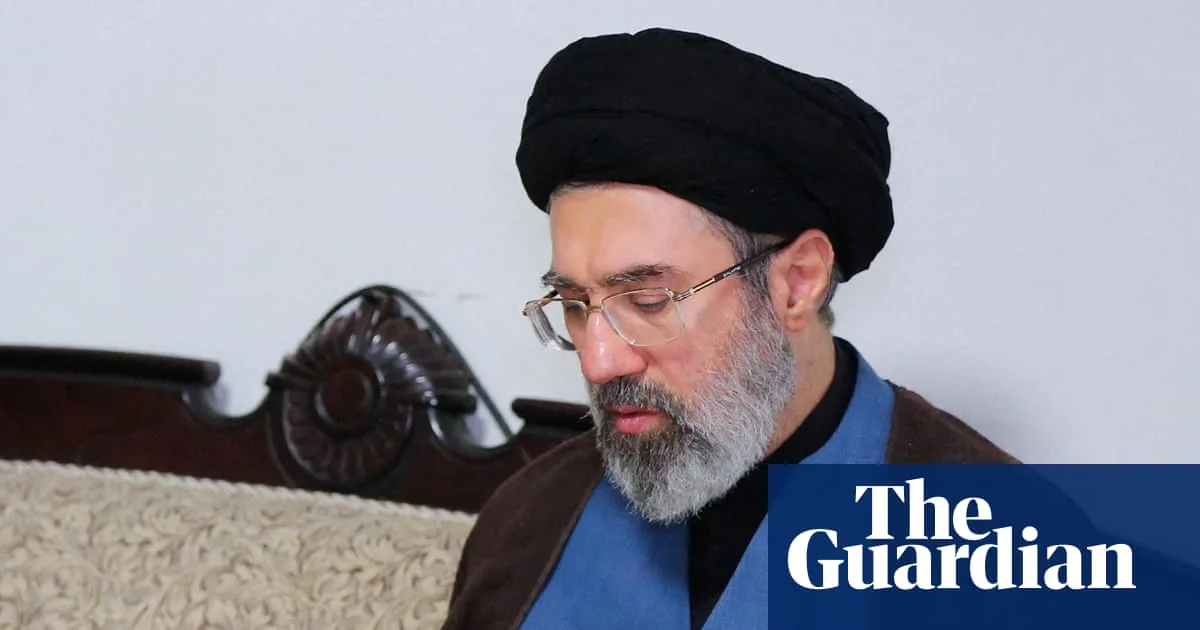
Mojtaba Khamenei, the second son of the late Ayatollah Ali Khamenei, is widely expected to succeed his father as Iran’s supreme leader, according to sources. The appointment would place a hardliner at the helm of the Islamic republic during its most turbulent period in nearly five decades, signalling that the regime has no intention of seeking accommodation with the West.
No official confirmation has been given, and the announcement may be delayed until after Ali Khamenei’s funeral, which was postponed on Wednesday. Mojtaba Khamenei is believed to be the preferred candidate of the Islamic Revolutionary Guard Corps (IRGC). Israeli Defence Minister Gideon Saar has warned that he would be assassinated if appointed.
Ayatollah Seyed Khatani, a member of the Assembly of Experts—the 88-strong body that selects the supreme leader—said the assembly was close to making a choice. The field includes six candidates, but Mojtaba Khamenei is the frontrunner. His election would be a powerful symbol that the government is not seeking an accommodation with the United States, which Secretary of State Marco Rubio described as being run by “religious fanatic lunatics”.
Born in 1969, Mojtaba Khamenei studied theology and served in the Iran-Iraq war at age 17. He rose to prominence in the late 1990s after the defeat of his father’s preferred presidential candidate. He was instrumental in suppressing the 2009 protests and was given the title of ayatollah in 2022, essential for his promotion. He also plays a key role in the administration of his father’s financial empire and the state broadcasting corporation.
His rumoured appointment has long been resisted by reformists. Former Prime Minister Mir Hossein Mousavi noted that rumours of a hereditary succession have persisted for 13 years, questioning why the authorities do not deny them. The Assembly of Experts has dismissed such doubts, insisting it will select the most qualified candidate.
On Tuesday, Israel struck a building in Qom where the assembly was scheduled to meet, but the building was empty, according to IRGC-affiliated media.