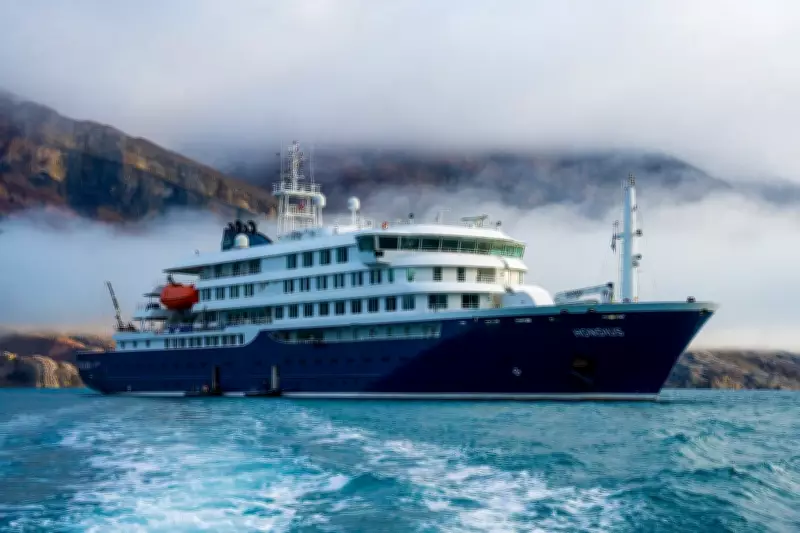
Plans are being made for the safe onward travel of British nationals stranded on a cruise ship linked to a suspected hantavirus outbreak, Prime Minister Sir Keir Starmer has confirmed. The MV Hondius, a Dutch-flagged vessel, is currently off the coast of Cape Verde after a voyage from Argentina.
Government Response
Sir Keir Starmer expressed his thoughts for those affected, stating: "My thoughts are with those affected by the hantavirus outbreak onboard the MV Hondius." He added that the government is working closely with international partners to support British nationals on board and is putting plans in place for their safe onward travel. The Prime Minister emphasised that the risk to the wider public remains very low, and protecting the British people is the government's number one priority.
Medical Evacuations
Medical evacuations are being coordinated, with Dutch authorities leading the efforts. Two patients remain on board and are being prepared for evacuation to the Netherlands for urgent medical care. A British passenger was previously evacuated to Johannesburg on April 27 and is reported to be improving. The World Health Organisation (WHO) has stated that its highest priority is to medically evacuate these individuals to ensure they receive the necessary care.

Tour operator Oceanwide Expeditions described the operation as complex, involving two specialised aircraft equipped with medical equipment and staffed by trained crews. This plan is subject to change. Once evacuations are complete, the ship is expected to move to the Canary Islands for further investigations and disinfection.
Investigation and Transmission
Health leaders are investigating the source of the virus. The WHO's working hypothesis suggests a mixture of transmission routes, including potential exposure to rodents before embarkation and limited human-to-human transmission among close contacts. Dr Maria Van Kerkhove of the WHO explained that the virus might be the Andes virus, a type of hantavirus capable of limited person-to-person spread. She noted that the ship visited multiple islands where rodents are present, adding complexity to the investigation.
Dr Charlotte Hammer, an infectious disease epidemiologist at the University of Cambridge, noted that hantavirus is present in South America and has an incubation period of up to eight weeks, making it likely that cases were exposed during their time in the region.
Current Situation
As of the latest reports, seven individuals among 147 passengers and crew have been reported ill, with three deaths. Two cases have been confirmed as hantavirus. One patient is in intensive care in South Africa but improving, while two others are awaiting evacuation. A further suspected case is asymptomatic and being monitored. Passengers have been asked to remain in their cabins while disinfection and public health measures are carried out.
Oceanwide Expeditions stated that the atmosphere on board remains calm, with passengers generally composed. The company is working to provide clarity and reassurance, expedite disembarkation, and arrange medical screening.
Expert Commentary
Professor Mark Fielder of Kingston University London emphasised that stringent infection control measures, including isolation, handwashing, and monitoring of close contacts, are critical to limiting further spread. Once the ship docks, remaining passengers and crew are likely to be medically assessed and placed in quarantine.
Hantavirus infections, typically spread through rodent urine or faeces, can cause severe respiratory illness and be fatal. While rare, human-to-human transmission can occur. There is no specific treatment, but early medical attention improves survival chances.