
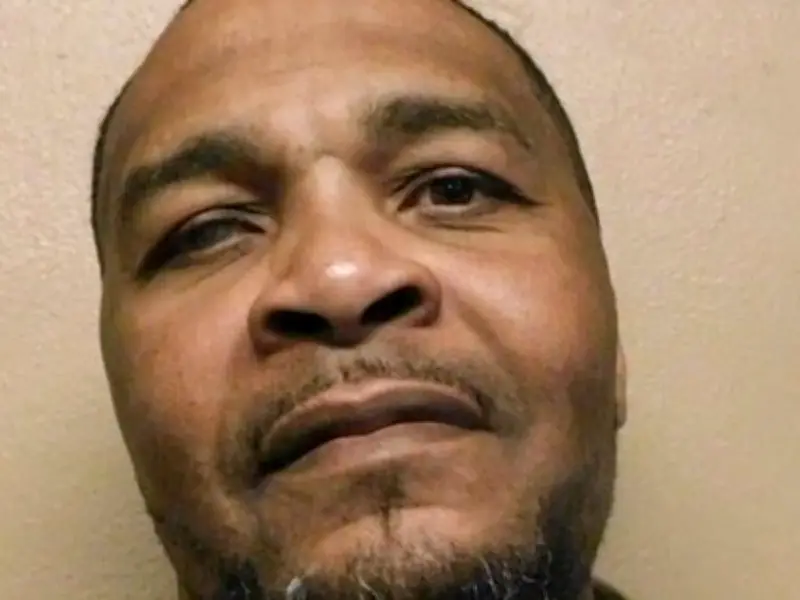
The U.S. Supreme Court declined on Thursday to allow Alabama to carry out an execution using nitrogen gas, after a lower court deemed the method unconstitutional. The justices voted 6-3 not to lift an injunction blocking the state from conducting what would have been the nation's ninth nitrogen gas execution, sparing death row inmate Jeffery Lee, 49.
A spokesperson for the Alabama Department of Corrections confirmed that the execution was called off for the evening and that the state would not pursue an alternative method. The high court did not provide a rationale for its decision, though three conservative justices—Clarence Thomas, Samuel Alito, and Neil Gorsuch—indicated they would have granted Alabama's request to proceed.
Governor and Legal Teams React
Governor Kay Ivey expressed disappointment, stating, "While I am disappointed the Supreme Court did not allow the state to proceed with Lee's chosen method of execution, I remain committed to ensuring that justice is ultimately served for his victims." Lee's legal team celebrated the ruling, noting that his jury had recommended a life sentence, which a judge overruled. "His jury voted for life. Two courts ruled the method unconstitutional. Today, the Constitution prevailed," the team said. "Now Governor Ivey can finish what the jury started: restore the jury's verdict of life without parole."
Legal Battle Over Execution Method
The ruling marked the climax of an intense legal dispute over the humaneness of nitrogen gas executions. Lee had challenged Alabama's protocol as a violation of the Eighth Amendment's ban on cruel and unusual punishment. In May, U.S. District Judge Emily Marks initially ruled the method constitutional, but a three-judge panel from the 11th U.S. Circuit Court of Appeals reversed that decision on Monday, describing the three minutes it could take for an inmate to lose consciousness as an "intolerable" timeframe given the likely suffering. Marks then reevaluated and ruled again on Tuesday, finding that Lee had demonstrated the protocol constitutes cruel and unusual punishment. Alabama appealed to the Supreme Court, arguing that a permanent ban on a legislatively enacted method would be unprecedented and expand the concept of cruelty beyond constitutional bounds.
Lee's Case and Execution History
Lee's lawyers urged the high court to maintain the stay, asserting that Alabama sought to "allow an execution that has been found unconstitutional to proceed." Prison officials reported that Lee did not request a final meal but consumed potato chips, Skittles, water, and Sprite before the scheduled execution. The court injunction did not prevent the state from using other approved methods, such as the electric chair or lethal injection, though it remains uncertain how quickly the state could transition.
Alabama began using nitrogen gas for executions in 2024. The method involves strapping a respirator to the inmate's face and replacing breathable air with pure nitrogen, causing death by oxygen deprivation. Previous nitrogen executions in Alabama have seen inmates shake, pull at restraints, and exhibit labored breathing. During the state's most recent nitrogen execution, 30 minutes elapsed between signs of gas impact and officials closing the viewing room curtain to signal completion. The state maintains the method is constitutional and no more painful than alternatives.
Background on Jeffery Lee
Lee, incarcerated at William C. Holman Correctional Facility in Atmore, was convicted of two counts of capital murder for the December 12, 1998, killings of Jimmy Ellis and Elaine Thompson during a pawnshop robbery. Prosecutors stated that Lee entered Jimmy's Pawnshop with a sawed-off shotgun and shot both victims. The jury voted 7-5 for a life sentence, but a judge overrode that decision and imposed the death penalty. Bestselling author John Grisham called on Governor Ivey to honor the jury's verdict and commute Lee's sentence to life without parole, noting that Alabama abolished judicial override in 2017 after declaring it unconstitutional.




