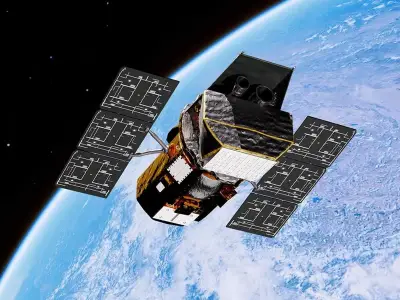
The Ministry of Defence has announced the launch of Titania, a new British military observation satellite designed to help the armed forces monitor military activity on Earth.
The reconnaissance satellite, described as a new “pair of eyes” in orbit, weighs 100kg and is about the same size as a washing machine. It was sent into space on a reusable SpaceX rocket out of California in October, following the launch of a similar satellite called Tyche two years ago.
Constellation of British Military Satellites
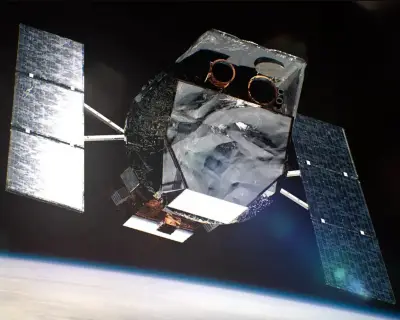
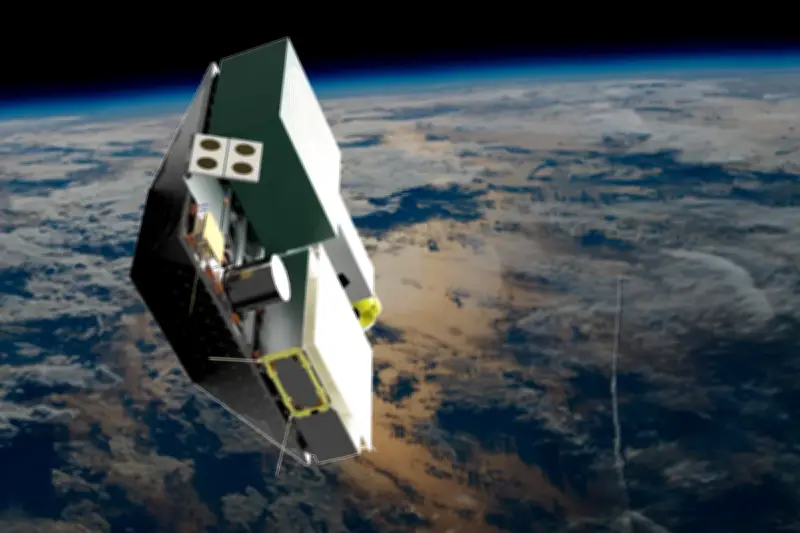
Together, Titania and Tyche will form part of a constellation of British military satellites developed by companies in the UK and operated by Britain’s Space Command. Titania was made by BAE Systems, while Tyche was built by Surrey Satellite Technology (SSTL). They will be followed by Juno, also made by SSTL, and Oberon, developed by Airbus.
The satellites, whose names reference classical and Shakespearean characters, are part of the wider Intelligence, Surveillance, Target Acquisition and Reconnaissance Information programme, also known as ISTARI.
Ground-Based Monitoring and Investment
The MoD also announced it is trialling new advanced ground-based sensors to monitor space from three sites around the world, in a project dubbed Inaros.
Defence Secretary Wes Streeting said: “The new space age is here. Space underpins everything from weather forecasts and financial transactions to sat-navs and mobile phone connections, and it is critical for our national security and military operations.
“Having Titania now in orbit and Project Inaros stepping up how we watch over our satellites means we can see threats sooner, making the UK safer.
“Titania and Inaros are British-built and British-designed, backed by more than £3 billion of investment in space capabilities. That means highly skilled jobs across the UK, a stronger industrial base, and a more secure United Kingdom.”
Military Advantage and Future Threats
Air Chief Marshal Sir Harv Smyth, the Chief of the Air Staff, said: “The ability to observe the Earth from space is critical to both national resilience and military advantage. This will be demonstrated by Tyche and Titania, alongside Juno and Oberon in the years ahead.
“We will monitor these vital satellites using state-of-the-art technology around the world, including our Inaros sensors – to ensure our Armed Forces can fight and win wherever they are.”
In September, Sir Harv warned that Britain’s enemies are posing an increasing threat in space, and announced that a new No 3 Space Effects Squadron would be formed to “disrupt, degrade and deny hostile activity” outside of Earth’s atmosphere.