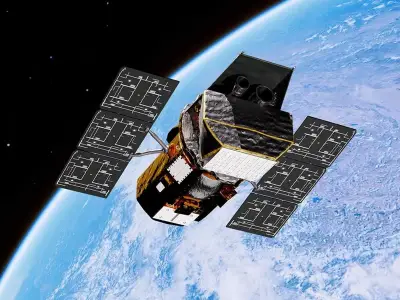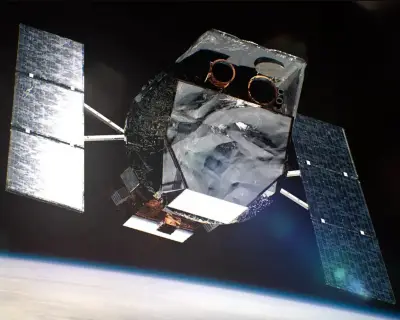
NASA's Neil Gehrels Swift Observatory, weighing nearly 1,500 kg, is set to re-enter Earth's atmosphere within hours after spending 22 years in orbit. The Aerospace Corporation forecasts re-entry at around 10:19 am, though the timing could vary by a couple of hours, while the US Space Force predicts a slightly earlier descent at approximately 9:42 am.
Re-Entry Risk Assessment
There is a one in 2,500 chance that the spacecraft will injure anyone. NASA has stated that the likelihood of being struck by debris from the observatory is extremely low, stressing that for the vast majority of people there is effectively no risk from the re-entry.
Mission History and Purpose
Launched on 20 November 2004, the Swift Observatory was originally expected to operate for just two years. It was built to study gamma-ray bursts, which are powerful flashes of radiation produced by some of the most energetic events in the universe, including collisions between neutron stars. Gamma rays carry vastly more energy than visible light emitted by everyday sources such as lamps and mobile phone screens.
Instead of ending its mission after a short period, Swift remained active for more than 20 years, orbiting around 370 miles above Earth before gradually losing altitude and beginning its final descent.
Descent Path and Impact Zone
The observatory has been travelling in an orbit inclined at 20.6 degrees to the Equator, confining its re-entry path to a band stretching 20.6 degrees north and south of the planet's midpoint. Although the precise location of its descent remains unknown, any debris is expected to come down somewhere within that zone. Regions lying more than 1,420 miles north or south of the flight path are considered highly unlikely to be affected.
According to The Aerospace Corporation, the observatory's ground track crosses parts of Africa, Asia, Australia, and both Central and South America during its final orbits. Dr Alfredo Carpineti, an astrophysicist, said: "It won’t land in your garden. It will mostly burn in the atmosphere. Some surviving bits will fall within 21° of the equator."