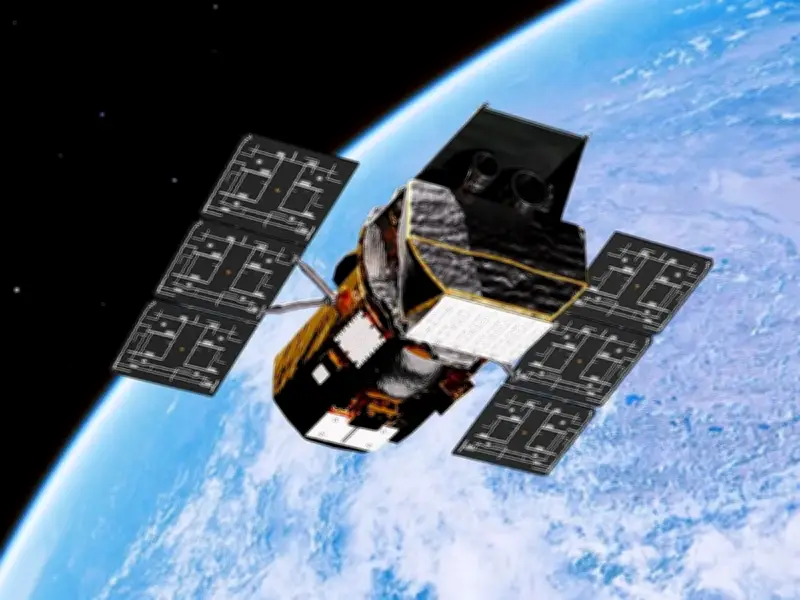
NASA's Neil Gehrels Swift Observatory (NGSO), a telescope designed to record cosmic explosions called gamma ray bursts, is expected to crash back into Earth after a rescue attempt failed to keep it in orbit. The 1,470kg telescope, which weighs as much as a hippo, has floated around the planet since 2004, but NASA warns that the 22-year-old equipment is rapidly deteriorating.
The telescope has already drifted to within 171 miles of Earth. Despite a desperate effort to boost it further away using robots, the device looks set to enter freefall and re-enter the atmosphere before crashing.
Failed rescue attempt
A statement from NASA revealed that, following the failed rescue attempt, "spacecraft was no longer able to compensate for the effects of the increased drag and entered safe mode."
The NGSO is expected to come crashing down at high speed and temperature, although experts are hopeful that any fragments that survive the descent will land safely in the ocean. However, reports indicate that this is not a certainty, with the telescope having a wide possible re-entry zone that includes parts of Asia, Africa and Australia.
What could survive re-entry
While most of the wreckage will likely burn up during the descent, the telescope's titanium, steel and glass parts could survive and potentially cause damage when they land. Most of the 1.5 tonne telescope will be destroyed as it re-enters the atmosphere.
Astronomer John Nousek, who led the control team operating the telescope, warned that the final moments of NGSO would be "catastrophic", although he added that they have "known this day would come since before [the telescope] was launched."
Expert reaction and future plans
Speaking to Space.com, satellite expert Darren McKnight described the failure to 're-orbit' the NGSO as 'unfortunate', but suggested that it was better that the wreckage of the defunct telescope float precariously above Earth. He explained: "People bemoan the reentry of more objects, I am much more upset about the rapid rate of abandoning massive objects above 400 miles."
The telescope, which had originally been designed to orbit Earth for two years, was described by NASA as an "incredible, lasting return on investment", although the space body admitted it was still "exploring" how it would replace it. The director of NASA's Astrophysics Division, Shawn Domagal-Goldman, explained: "In a post-Swift world, we're exploring our ability to use and augment NASA's fleet of existing space telescopes, from fast-to-orbit commercial capabilities to efficient, innovative new missions."