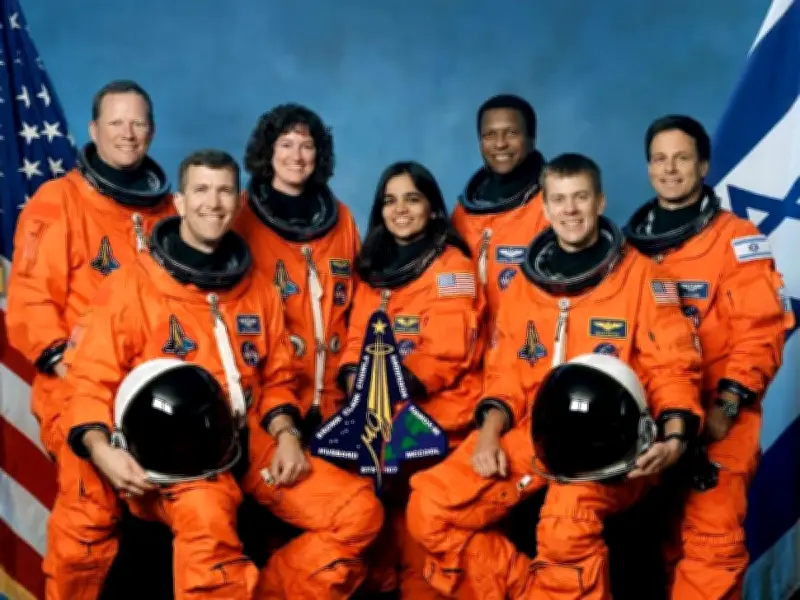
The seven astronauts aboard the space shuttle Columbia were unaware they had just minutes left to live as they prepared for re-entry, with NASA ground staff watching catastrophic data unfold before losing contact.
The mission, which had been delayed 13 times, launched on January 16, 2003, two years after its original date. Columbia, first launched in 1981, was completing its 28th mission after 27 previous flights into orbit. The shuttle carried a seven-strong crew: Mission Commander Rick D Husband, Payload Commander Michael P Anderson, Mission Specialists Kalpana Chawla, Laurel Blair Salton Clark and David M Brown, Mission Pilot William McCool, and Payload Specialist Ilan Ramon.
Fatal damage at launch
Seconds after lift-off, a suitcase-sized piece of foam broke off from Columbia's external tanks and struck the thermal protection tiles on the left wing. While similar incidents had happened before, the damage proved catastrophic. As the shuttle re-entered Earth's atmosphere, hot gases penetrated the heat shield and destroyed the wing structure.
The crew were aware of the foam incident but were reassured by ground staff that everything was safe. As they began their descent, they gave NASA a 10-minute heads-up that they would soon be home, expecting a routine landing.
Descent and final communications
Travelling at 15,000 miles per hour, the crew were 40 miles above Earth's surface. Footage from inside Columbia showed the crew calm, laughing and joking, admiring the rose-hued glow through their cockpit windows. Meanwhile, NASA experts watched erratic data showing missing temperature readings from left wing sensors and vanished tyre pressure measurements.
The final communication from Commander Husband came just before 9am on February 1, where he said "Roger, uh..." before the transmission went dead. On board, a failed wire caused a flight control system to be bypassed, and the master alarm sounded. The shuttle changed to a steeper trajectory, leaving the crew dizzy but conscious.
Break-up and investigation
Just after 9am, the shuttle switched from automatic to manual control, showing the crew were still conscious. McCool attempted to restore hydraulic systems before Columbia began its catastrophic break-up. People in Texas reported seeing strange things in the sky as the shuttle broke apart. A NASA report estimated debris and remains hit the ground by 9.35am.
A 2008 NASA crew survival investigation concluded the astronauts likely survived the initial disintegration before losing consciousness after cabin depressurisation. High-altitude exposure and severe impact trauma were cited as causes of death. The remains of all seven crew members were recovered.